Posted on Leave a comment

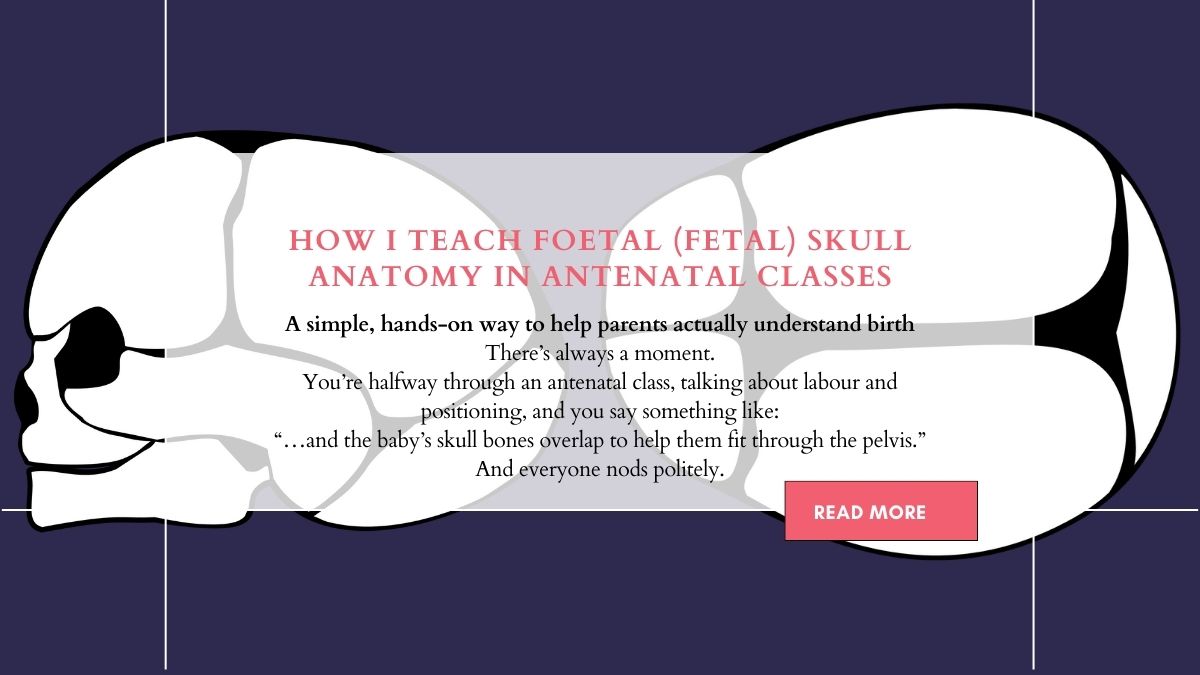
How I Teach Foetal (Fetal) Skull Anatomy in Antenatal Classes

foetal fetal skull anatomy

A simple, hands-on way to help parents actually understand birth

There’s always a moment.

You’re halfway through an antenatal class, talking about labour and positioning, and you say something like:

“…and the baby’s skull bones overlap to help them fit through the pelvis.”

And everyone nods politely.

But you can see it.

They don’t really see it.

Unless you work in birth or anatomy every day, these phrases might as well be in another language. Terms like sutures, fontanelles, moulding, and occiput can be confusing.

I used to explain it with words alone.
Then with a quick sketch.
Then with a slightly wobbly pelvis model that got passed around the room like a party prop.

It worked… sort of.

But when I started using clear, printable foetal (fetal) skull anatomy worksheets, something changed completely.

People stopped nodding.

They started going,
“Ohhhhhh — THAT makes sense now.”

And honestly? That’s the best sound in teaching.


Why foetal skull anatomy matters so much in birth education

If you teach antenatal classes, childbirth education, or Family & Consumer Science, you already know this:

Understanding the foetal skull unlocks everything else.

Suddenly parents understand:

  • how babies rotate during labour
  • why labour can take time
  • what “moulding” really means
  • how the fontanelles (soft spots) protect the brain
  • why positioning matters
  • what midwives and doctors are feeling for during exams
  • why some births feel straightforward and others need a bit more patience

It takes birth from mysterious and scary…
to logical and manageable.

And when something feels logical, it feels less frightening.

That’s huge.

Especially for first-time parents.


The problem with teaching it from memory (or a textbook)

Foetal skull anatomy is very much a see-it-to-get-it topic.

It’s 3D.
It moves.
The bones overlap.

A flat textbook diagram or slide doesn’t quite cut it.

And not everyone has a pelvis and doll model handy (or enough for a whole group).

Plus, drawing skull diagrams on a whiteboard while everyone waits?
We’ve all done it. It’s not our finest artistic hour.

This is where simple, printable foetal/fetal skull anatomy diagrams and labelling worksheets quietly save the day.

Low tech. Zero stress. Surprisingly effective.


What this looks like in my classes

Here’s the flow I use now — and it works every time.

We start with curiosity

I ask:
“What do you think is different about a baby’s skull compared to ours?”

People guess:
“Softer?”
“Not joined yet?”
“More flexible?”

Perfect.

They’re already halfway there.


Then we look at it together

I hand out a clear labelled foetal skull diagram — side view and top (bird’s-eye) view.

Straight away, the pieces click:

Parietal bones.
Sutures.
Fontanelles.
Occiput.

Instead of abstract words, they’re real shapes they can point to.

You can almost see the mental puzzle assembling.


Next comes the hands-on bit (the magic part)

I give them an unlabelled worksheet or understood cut-and-stick labels and let them mark it themselves.

It slows things down in the best way.

There’s chatting.
Comparing answers.
Little “wait, is this the anterior fontanelle?” moments.

That active learning sticks so much better than listening to me talk for ten minutes.

Less lecture. More discovery.


Finally, we talk about moulding

We slide paper pieces over each other or use our hands to show how the skull bones overlap during labour.

And that’s when someone always says:

“So that’s how they fit through!”

Yes. Exactly that.

Suddenly birth mechanics make total sense.

Not scary. Not mysterious. Just clever biology.


Why printable worksheets work so well (especially for busy educators)

I love teaching tools that don’t require:

  • batteries
  • Wi-Fi
  • apps
  • or 20 minutes of prep

Simple printable foetal/fetal skull anatomy worksheets are brilliant because they’re:

  • easy to print for any class size
  • available in colour or black and white
  • great for labelling activities and revision
  • accessible for visual and kinaesthetic learners
  • ideal for antenatal classes, doula training, midwifery education, and Family & Consumer Science lessons
  • something learners can take home to revisit

Laminate them and they’ll last forever.

Pop them in a folder and you’ve got a ready-to-go childbirth education activity any time you need one.

Future you will be very grateful.


The bigger picture

At the end of the day, this isn’t really about memorising anatomy terms.

It’s about confidence.

When parents understand how their baby’s head is designed for birth, you can almost see their shoulders drop.

They trust the process more.

They feel less overwhelmed.

They ask better questions.

And that’s what good birth education is all about.

Clear information.
Less fear.
More “I can do this”.

All from a few small bones and a simple diagram.

Not bad for a bit of paper, really.


If you like having ready-to-print foetal/fetal skull anatomy worksheets, diagrams, and cut-and-stick activities on hand, a set prepared makes life much easier. This is especially true on days when your brain is already juggling ten other things.

Because your time is better spent supporting families… not sketching skulls at the last minute with a dying whiteboard pen.

Find my printable here on my website or for the international market in my TPT shop.

Posted on Leave a comment

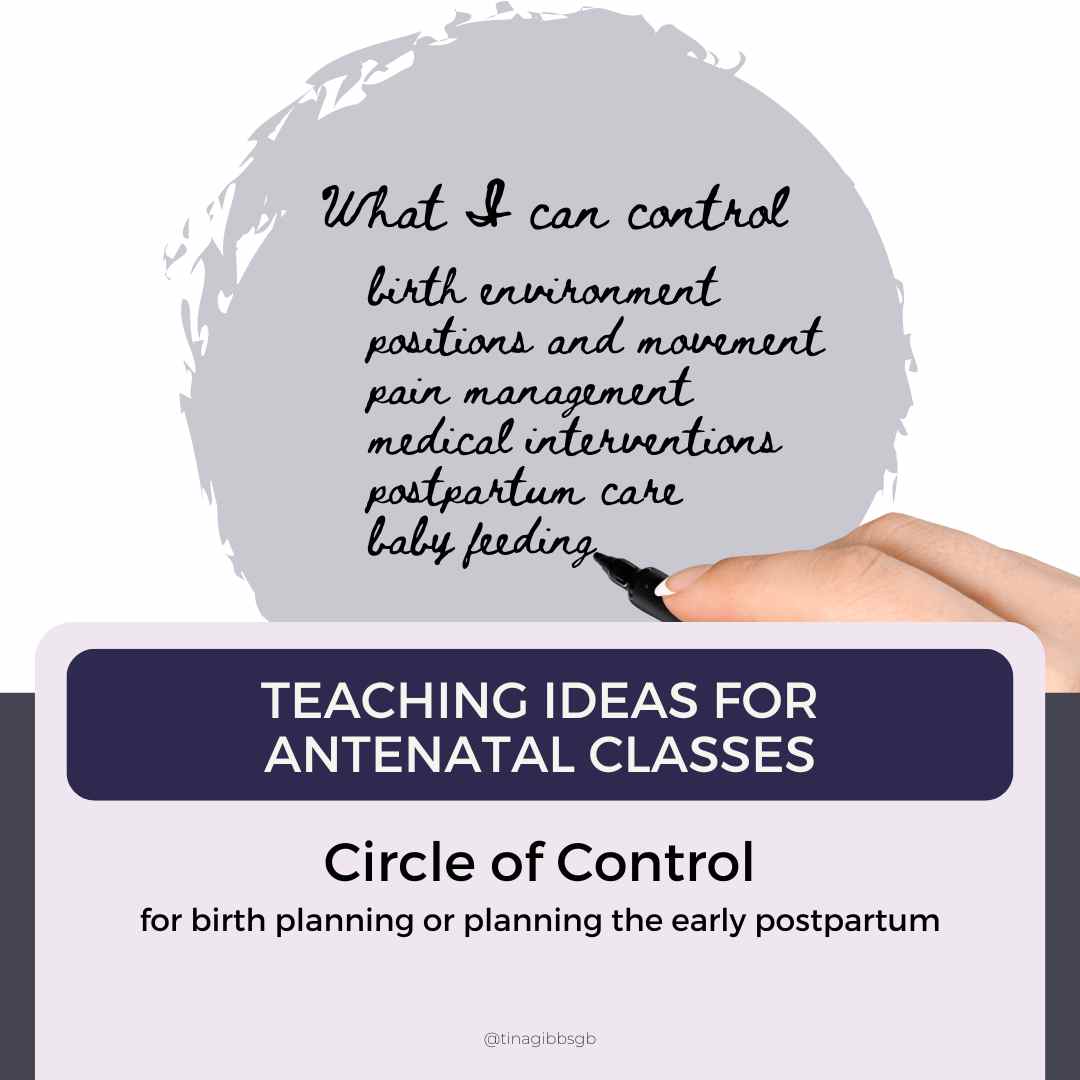
Navigating your childbirth journey: Using the Circle of Control to Write Your Birth Plan

Welcoming a new life into the world is a monumental and empowering experience, and creating a birth plan or writing down your birth preferences can be a valuable tool in ensuring that your birthing experience aligns with your preferences and desires. As expectant parents, it’s natural to feel a mix of excitement and anxiety about the impending arrival of your little one. One powerful concept that can guide you through this process is the “Circle of Control.”

Understanding the Circle of Control

The Circle of Control is a psychological concept that encourages you to focus your energy and attention on things within your control, rather than dwelling on factors beyond your control. This principle can be especially helpful when it comes to writing your birth plan, as there are aspects of the birthing experience that you can influence, and others that are beyond your control.

Identifying Elements within Your Control
  1. Birth Environment: Begin by considering the atmosphere in which you would feel most comfortable giving birth. Think about factors such as lighting, music, and the presence of loved ones. Discuss your preferences with your birth partner, doula, birthing team and explore options that align with your vision.
  2. Labour Positions and Movement: Research different labour positions and movement techniques that can benefit and support the birthing process. Discuss these options with your healthcare provider and express your desire to have flexibility in choosing positions that feel right for you during labour.
  3. Pain Management: Outline your preferences for pain management, whether it’s through natural methods like breathing exercises, massage, or water immersion, or medical interventions such as epidurals. Ensure that your choices are communicated clearly with your healthcare team.
  4. Medical Interventions: Understand the available medical interventions and express your preferences regarding interventions like induction, episiotomy, and fetal monitoring. Discuss the potential benefits and risks with your healthcare provider to make informed decisions.
  5. Postpartum Care: Consider your wishes for immediate postpartum care, including skin-to-skin contact, breastfeeding preferences, and any specific instructions for the care of your newborn.
Elements Outside Your Control
  1. Unpredictable Circumstances: Acknowledge that childbirth is inherently unpredictable. While you can plan for many aspects, unforeseen circumstances may arise. Be open to adjustments and trust your healthcare team to prioritize the well-being of both you and your baby. Use your BRAIN acronym to help you with informed decision-making.
  2. Medical Emergencies: Understand that in certain situations, medical emergencies may necessitate interventions that deviate from your initial plan. Be prepared mentally for unexpected scenarios and trust your healthcare providers to make the best decisions for your safety. Use your BRAIN acronym to help you with informed decision-making.

Crafting a birth plan using the Circle of Control is a powerful way to empower yourself during the birthing process. By focusing on elements within your influence and acknowledging those beyond it, you can approach childbirth with a sense of preparedness and confidence. Communication with your birth partner, doula and healthcare team is key, and the collaborative effort between you, your birth partner, doula, and your medical professionals can help create a positive and fulfilling birthing experience that aligns with your values and preferences. Embrace the journey, trust the process, and celebrate the miracle of life.

Download your Circle of Control worksheet and start your birth planning now!

Sources and further reading

  • LOTHIAN, Judith. Birth plans: the good, the bad, and the future. Journal of Obstetric, Gynecologic & Neonatal Nursing, 2006, 35. Jg., Nr. 2, S. 295-303.
  • MEI, Jenny Y., et al. Birth plans: what matters for birth experience satisfaction. Birth, 2016, 43. Jg., Nr. 2, S. 144-150.
  • MUTONGI, Chipo; MAZHAWIDZA, Rushworth. DEALING WITH THE MINDSET WHEN FACED WITH CHANGE AND DIFFERENT SITUATIONS.
  • Dr Lucy Russell: https://www.theyarethefuture.co.uk/circle-of-control-printable/
Posted on Leave a comment

Navigating Stress in Pregnancy: Understanding the Sympathetic Nervous System

navigate stress in pregnancy

Navigating stress in pregnancy: Understanding the Sympathetic Nervous System. How to spot the signs of stress and how to combat stress during our pregnancy.

Your pregnancy is a beautiful and transformative journey for many women, but it also comes with its fair share of challenges and stressors. Stress during pregnancy is not uncommon and can be triggered by various factors such as hormonal changes, physical discomfort, or concerns about the upcoming responsibilities of parenthood. During these times, the body’s intricate systems, including the Sympathetic Nervous System (SNS), play a crucial role in how a pregnant woman or person responds to and copes with stress.

We will explore the Sympathetic Nervous System and its impact on expectant mothers/pregnant people, shedding light on the importance of managing stress for the well-being of both the you and your developing baby.

Understanding the Sympathetic Nervous System

The nervous system is divided into two main branches: the Central Nervous System (CNS) and the Peripheral Nervous System (PNS). The PNS further branches into the Sympathetic Nervous System (SNS) and the Parasympathetic Nervous System (PNS), each responsible for distinct physiological responses.

The Sympathetic Nervous System is often referred to as the “fight or flight” system. When activated, it prepares the body to respond to perceived threats by releasing stress hormones such as cortisol and adrenaline. During pregnancy, the SNS can be triggered by various stressors, including emotional, physical, or environmental factors.

Impact of Stress on Pregnancy

While the body’s stress response is a natural and adaptive mechanism, chronic activation of the SNS during pregnancy can have significant implications for both you and your developing baby. Research suggests that prolonged stress may contribute to adverse outcomes, including preterm birth, low birth weight, and developmental issues.

  1. Preterm Birth: High levels of stress hormones circulating in your bloodstream can lead to uterine contractions, potentially triggering preterm labour. Babies born prematurely may face health challenges and require specialized care.
  2. Low Birth Weight: Chronic stress during pregnancy has been linked to lower birth weight in infants. Low birth weight can increase the risk of health complications for the baby and may impact their long-term development.
  3. Developmental Issues: The developing fetus is sensitive to the hormonal fluctuations caused by maternal stress. Studies have suggested a correlation between maternal stress and an increased risk of behavioral and cognitive issues in children.
Navigating Stress during Pregnancy

Recognizing the impact of stress on pregnancy underscores the importance of implementing effective stress management strategies. Here are some techniques for you to incorporate into your routine:

  1. Mindfulness and Relaxation Techniques: Practices such as meditation, deep breathing exercises, and guided imagery can help activate the Parasympathetic Nervous System, promoting relaxation and reducing stress.
  2. Regular Exercise: Physical activity has been shown to have positive effects on mood and stress reduction. Engaging in safe and appropriate exercises during pregnancy can contribute to overall well-being. Try pregnancy yoga, pilates or swimming.
  3. Support System: Building a strong support system is crucial during pregnancy. Whether it’s through friends, family, or support groups, having a network to share experiences and concerns can alleviate stress. Meet and make friends with other expectant parents during your antenatal classes.
  4. Healthy Lifestyle: Maintaining a balanced and nutritious diet, staying hydrated, and getting enough sleep contribute to overall well-being and can help mitigate stress.

Your pregnancy is a unique and transformative journey, and managing stress is an essential aspect of ensuring the health and well-being of both you and your developing baby. Understanding the role of the Sympathetic Nervous System and implementing effective stress management strategies can contribute to a more positive and fulfilling pregnancy experience. By prioritizing self-care and seeking support, you can navigate the challenges of pregnancy with resilience and grace.

Online Birth Preparation Course only £35!

Please also check out my online course! No videos, just text and images to learn in your own time. Includes hypnobirthing mp3s, scripts, workbook, handouts, infographics and much more! Lots and lots of information at your fingertips! Includes:

  • hypnobirthing mp3s
  • hypnobirthing scripts
  • written information
  • infographics and other imagery
  • printable handouts
  • printable workbook/journal
Posted on Leave a comment

Umbilical Cord Ties or Clamps what do you prefer?

Umbilical Cord Ties or Clamps

In the process of giving birth, even the smallest things are important, like how the umbilical cord is managed after the baby is born. Lately, there has been more interest in using umbilical cord ties instead of the plastic clamps that doctors have been using for a long time.

Umbilical Cord Clamps

Umbilical cord clamps have been commonly used by healthcare professionals for a long time. They are usually made of plastic and are used to seal the umbilical cord after it has been cut. This clamp stays in place until the remaining cord stump dries and falls off naturally, which usually happens one to two weeks after the birth of your baby.

Benefits for Healthcare Professionals:

  1. Ease of Application: Clamps are straightforward to apply, making them convenient for healthcare professionals.
  2. Standardization: Clamps offer a standardized method of cord closure, ensuring consistency across different healthcare settings.
  3. Familiarity: Healthcare professionals are well-trained in the application of clamps, reducing the risk of errors during the process.

Benefits for Parents:

  1. Peace of Mind: Parents often find reassurance in the visible presence of the clamp, which serves as a tangible reminder of their newborn’s recent birth.
  2. Low Maintenance: Clamps require minimal maintenance and are designed to remain securely in place until the cord naturally separates. They cannot accidentally come undone.

Umbilical Cord Ties

Umbilical cord ties, typically made of soft material such as cotton, have gained popularity as an alternative to clamps in recent years. They offer a more flexible and gentle approach to cord closure.

Benefits for Healthcare Professionals:

  1. Flexibility: Cord ties provide healthcare professionals with greater flexibility in managing the umbilical cord, allowing for easier positioning and handling during childbirth.
  2. Reduced Waste: Unlike clamps, cord ties are often brought to the birth by the parents and can be carried in reusable containers.

Benefits for Parents:

  1. Comfort: Cord ties are softer and more pliable compared to clamps, reducing the likelihood of discomfort for newborns as they adjust to life outside the womb.
  2. Aesthetic Appeal: Many parents appreciate the aesthetic appeal of cord ties, which can come in a variety of colors and designs, adding a personalized touch to the birthing experience.
  3. More environmentally friendly: Most cord ties are made from cotton which is biodegradable.

Conclusion: Making Informed Choices in Childbirth

In the realm of childbirth, the decision between umbilical cord ties and clamps ultimately depends on individual preferences, healthcare protocols, and medical considerations. While both methods serve the fundamental purpose of securing and sealing the umbilical cord, each offers unique advantages for babies, parents, and healthcare professionals alike.

By making informed choices, you can actively participate in shaping your birth experience and ensuring the health and well-being of your baby from the very first moments of life.

Posted on Leave a comment

When to do a hypnobirthing class?

When to do a hypnobirthing class

What is hypnobirthing? When to do a hypnobirthing class? What are the benefits of hypnobirthing?

What is hypnobirthing?

Hypnobirthing is a type of childbirth education. It focuses on relaxation techniques and self-hypnosis to help expectant mothers experience a more calm and comfortable birth. In addition to that, hypnobirthing, especially Mindful Hypnobirthing can help you deal and come to terms with (sudden) changes during your pregnancy and childbirth journey. Hypnobirthing teaches you techniques to calm your body and mind in any situation helping you achieve a more satisfying (birth) experience.

When to do a hypnobirthing class?

Basked in the warmth of expectant anticipation, the journey of pregnancy holds boundless possibilities. Embracing this transformative phase, hypnobirthing serves as a gentle beacon, guiding you towards a serene and empowering birth experience. By attending your hypnobirthing class between 21-30 weeks, you gracefully intertwine knowledge and practice, nurturing a profound connection with your body, baby, and the birthing process.

During these immersive sessions, you will delve into the intricacies of hypnobirthing techniques, equipping yourself with a rich toolbox of relaxation exercises, visualization practices, and deep breathing methods. This precious time devoted to learning and self-discovery ensures that you absorb the wisdom imparted by your course, allowing sensations of tranquility and confidence to take root within you.

As you embark on this path, make the conscious decision to prioritize self-care and integration. Carve out moments in your schedule to indulge in self-reflection, savoring the invaluable opportunity to unwind and surrender to the present moment. Remember, practice is the key to unlocking the full potential of hypnobirthing. By dedicating time to honing your skills, you cultivate an innate sense of calmness and resilience, ready to embrace the birthing journey with unwavering grace.

As you honour your body’s innate wisdom and the innate wisdom of your baby, embrace the affirmations that flow through hypnobirthing. Enveloped in an atmosphere of love, trust, and empowerment, you harness the strength of your mind and spirit, harmoniously co-creating a positive childbirth experience.

Embrace this transformative passage, for it is an invitation to embark on a sacred and empowering journey. Through the art of hypnobirthing, discover newfound serenity, reclaim your inner power, and paint an exquisite portrait of birth, woven with love and grace.

What are the benefits of hypnobirthing classes?

The benefits of attending a hypnobirthing class are numerous. During a group hypnobirthing class you’ll meet like-minded people embarking on their journey to parenthood at a similar time. By learning effective relaxation and breathing techniques, hypnobirthing can help reduce anxiety, fear, and tension during labour, making the experience more positive and enjoyable.

In a hypnobirthing class, you can expect to learn various techniques such as deep relaxation, visualization, affirmations, and self-hypnosis. These techniques are designed to help you achieve a state of deep relaxation and promote a more efficient and comfortable labour. The classes are typically taught by certified hypnobirthing practitioners who guide you through the process and provide ongoing support throughout your pregnancy journey.

It’s important to note that hypnobirthing classes are beneficial for all types of births, whether you are planning a natural birth or have opted for medical interventions. The techniques learned in hypnobirthing can be applied in any birthing scenario and can help you stay calm, focused, and in control.

If you’re considering attending a hypnobirthing class, it’s recommended to do your research and find a reputable practitioner in your area. Many classes offer both in-person and online options, allowing you to choose the format that suits you best. Remember, hypnobirthing is not just about the birthing day but also about preparing mentally, emotionally, and physically throughout your pregnancy for a positive birthing experience. So, take the time to explore this wonderful approach to childbirth and embrace a more relaxed and empowered journey into motherhood.

Online Birth Preparation Course only £35!

Please also check out my online course! No videos, just text and images to learn in your own time. Includes hypnobirthing mp3s, scripts, workbook, handouts, infographics and much more! Lots and lots of information at your fingertips! Includes:

  • hypnobirthing mp3s
  • hypnobirthing scripts
  • written information
  • infographics and other imagery
  • printable handouts
  • printable workbook/journal
Posted on Leave a comment

Floppy Face Floppy Fanny

“Floppy Face Floppy Fanny” a magic technique to make childbirth easier, more enjoyable and reduces tearing. How?

During childbirth, the process of delivering a baby can be both physically and emotionally intense for the expecting mother. It is natural to feel some level of fear, tension, or discomfort during this journey. However, there is an intriguing technique that some believe can help make the birthing experience easier, more enjoyable, and even reduce the likelihood of tearing. This technique is known as “Floppy Face Floppy Fanny.” The phrase was first said by American midwife Ina May Gaskin.

The concept behind Floppy Face Floppy Fanny is based on the interconnectedness of our facial muscles with those in our pelvic floor, vagina, and vulva. According to this technique, when the face is relaxed, especially the muscles around the mouth and jaw, it has a profound impact on the relaxation of the pelvic area as well. By consciously relaxing the face, the woman aims to create a ripple effect, allowing the muscles in her birthing canal to also relax, making it easier for the baby to pass through.

The idea of linking facial relaxation with childbirth may sound unconventional, but proponents of this technique suggest that it can have a significant impact on the overall birthing experience. By practicing deep breathing exercises, visualization, and consciously relaxing the facial muscles, women may find increased comfort, reduced pain, and a smoother delivery process.

It’s important to note that its effectiveness may vary from person to person. Every woman’s/birthing person’s experience with childbirth is unique, and there are many factors involved in the ease and outcome of the process. It is always recommended to consult with a healthcare professional or midwife for personalized guidance and support during pregnancy and childbirth.

So why am I saying Floppy Face, Floppy Fanny rather than relax your mouth and jaw? To make it more memorable for expectant parents. I’ve also been using the “loose lips, loose hips”.

Here are some flashcards for breathing techniques to help you to keep your jaw, lips and mouth relaxed. One of the most memorable but simple technique is “horse lips”.

Online Birth Preparation Course only £35!

Please also check out my online course! No videos, just text and images to learn in your own time. Includes hypnobirthing mp3s, scripts, workbook, handouts, infographics and much more! Lots and lots of information at your fingertips! Includes:

  • hypnobirthing mp3s
  • hypnobirthing scripts
  • written information
  • infographics and other imagery
  • printable handouts
  • printable workbook/journal

Sources and Further Reading

  • Emmer, Helene et al. “Obstructive sleep apnea syndrome is associated with overactive bladder and urgency incontinence in men.” Sleep vol. 32,2 (2009): 271-5. doi:10.1093/sleep/32.2.271
  • Fischer MJ, Riedlinger K, Gutenbrunner C, Bernateck M. Influence of the temporomandibular joint on range of motion of the hip joint in patients with complex regional pain syndrome. J Manipulative Physiol Ther. 2009 Jun;32(5):364-71. doi: 10.1016/j.jmpt.2009.04.003. PMID: 19539119
  • Dr Lauren Keller: https://drlaurenkeller.com/blog/2022/5/23/5xlrzq50dx7n127nsavetabxr7jseg
  • Mamastefit: https://mamastefit.com/breathing-our-pelvic-floor-and-labor/
  • Talasz H, Kremser C, Talasz HJ, Kofler M, Rudisch A. Breathing, (S)Training and the Pelvic Floor-A Basic Concept. Healthcare (Basel). 2022 Jun 2;10(6):1035. doi: 10.3390/healthcare10061035. PMID: 35742086; PMCID: PMC9222935.
  • Van der Velde, J., & Everaerd, W. (2001). The relationship between involuntary pelvic floor muscle activity, muscle awareness and experienced threat in women with and without vaginismus. Behaviour Research and Therapy, 39(4), 395–408. doi:10.1016/s0005-7967(00)00007-3
  • Van der Velde, J., Laan, E., & Everaerd, W. (2000). Vaginismus, a component of a general defensive reaction. An investigation of pelvic floor muscle activity during exposure to emotion inducing film excerpts in women with and without vaginismus. Submitted
  • WombWisdom: https://www.wombseedwisdom.com/
Posted on Leave a comment

Free Pregnancy Checklist

You are pregnant! Congratulations. Now is the time to get organised. This pregnancy checklist is a gentle reminder of your options, recommendations and appointments…

WhatWhen
The recommendation is to start taking Folic Acid and Vitamin D supplementsAs soon as you found out that you are pregnant
Register with your community midwife. Check with your GP surgery on how to do that.Before week 7
Booking appointment (First appointment) with your community midwifeBetween 8-12 weeks
Get and sign your maternity exemption certificate (free prescriptions and dental appointments)At your booking appointment
Ask your midwife about Healthy Start Vouchers and check if you are eligibleAt booking appointment
First ultrasound offered (dating scan)Around 12 weeks
Second ultrasound offered (anomaly scan)Around 20 weeks
Book your antenatal classesBetween 12 and 22 weeks
Get your Mat-B1 certificate from your community midwifeBetween 22-25 weeks
If you are employed: Inform your employer in writing incl. your Mat-B1 certificate about your maternity leave plans If you are unemployed or self-employed: Find out if you’re eligible for Maternity AllowanceMust be 15 weeks before your due date – Between 22-25 weeks
Find out if you are eligible for a sure start maternity grantAround 29 weeks
Check out your local maternity services. See if you can book a visit or if they have a virtual tour…Around 30 weeks
Start writing your birth preferences and include some “what if…” options (birth plan)Around 30 weeks
Start packing your birth bagsFrom 30 weeks
Start practising your hypnobirthing techniques at least once a dayFrom 30 weeks
Arrange care plans for pets and older siblings or any other care commitmentsFrom 30 weeks
Create your important contact lists and contact preferences and share with your (birth) partner or doula (where applicable)From 32 weeks
Create your birth playlistFrom 34 weeks
Create your birth vision boardFrom 34 weeks
Create your birth affirmationsFrom 34 weeks

Contact your midwife or healthcare professional if you

  • think your contractions have started
  • feel that your waters have broken
  • experience any bleeding in pregnancy
  • feel a change in your baby’s usual movements
  • want reassurance about anything in your pregnancy

Download your free printable Pregnancy Checklist

Newsletter for expectant and new parents

Online Birth Preparation Course only £35!

Please also check out my online course! No videos, just text and images to learn in your own time. Includes hypnobirthing mp3s, scripts, workbook, handouts, infographics and much more! Lots and lots of information at your fingertips! Includes:

  • hypnobirthing mp3s
  • hypnobirthing scripts
  • written information
  • infographics and other imagery
  • printable handouts
  • printable workbook/journal
Posted on 1 Comment

Top 9 Childbirth Affirmations

positive birth affirmations

Before I share my personal top 9 childbirth affirmations, I’d like to explain a little bit more about them.

What are affirmations?

Affirmations, aka positive affirmations, are phrases that you repeat to yourself over and over again to change your mindset. You can say them out loud our in your head. Receive them as part of treatment with your hypnotherapist or other therapist. Most commonly they help you to change a negative into a positive thought or negative into positive thinking.

Affirmations can help you feel more in control and empowered during your birth experience.

Affirmations can improve your ability to problem-solve and decision-making while under stress such as during labour and birth. Making the right decisions for you and your birth enables you to feel empowered while birthing your baby!

My top 9 affirmations for childbirth are:

Writing your childbirth affirmations

Remember, that our conscious and subconscious usually only process the key words. Words such as “don’t” or “no” get lost in the process. So rather than saying to yourself “I mustn’t forget to take my keys” say “I must REMEMBER to take my keys”. For example, if I ask you to NOT think about pink elephants, all you can do is think about just them, the pink elephants. The elephants in the room. So, when you are writing your affirmations for birth, remember to pick statements and trades that are true and important to you.

Now, you are all set up to write your affirmations!

I also have a hypnobirthing affirmation script (including recording) available from my shop. The script has room for your own affirmations and tick-boxes for the ones that you like!

Please also check out my online course! No videos, just text and images to learn in your own time. Includes hypnobirthing mp3s, scripts, workbook, handouts, infographics and much more! Lots and lots of information at your fingertips! Includes:

  • hypnobirthing mp3s
  • hypnobirthing scripts
  • written information
  • infographics and other imagery
  • printable handouts
  • printable workbook/journal

Sources and Further Reading

Posted on Leave a comment

Birth Partner Do’s and Don’ts

Birth Partner do's and don'ts

You are going to be a birth partner? Here are some Birth Partner Do’s and Don’ts! Well do’s really. You’ll get the don’ts from looking at them!

To be a supportive, confident and well-informed birth partner try the following:

  • Attending childbirth preparation classes with your partner will help with your understanding of what is going on and what she is talking about. There is also some new vocabulary you may wish to learn.
  • Be available by phone, especially closer to the due date.
  • Have your own hospital or homebirth bag including: change of clothes, swimming trunks to wear in the birthing pool, your own drinks and snacks (please don’t drink/eat hers!) and maybe some comfortable shoes or slippers.
  • Make sure you know how to fit the car seat and keep it in the car.
  • Be familiar with the route to the hospital or birth unit and that your car is filled up with petrol regularly.
  • Make sure you know where her maternity notes are.
  • Discuss who to tell and when to tell them that your baby was born. Make a list of contact details.
  • Make sure your camera is charged and the memory card is empty or a new film is in it – maybe have it ready in your bag!
  • Support your partner where you can and try to take over some tasks like shopping, cooking, laundry, cleaning to give her some time to rest before and after the birth of you baby.
  • Make sure that you know and understand your partner’s wishes in her birth plan and add your wishes, too. Or even better: write the birth plan together!
  • If this is not your first baby or you have pets, make sure you know who will look after the older one(s) / pets and how to contact them.
  • If it is not your first baby, wherever you can, take over looking after / entertaining the older one(s) to give mum a break before and after the birth.
  • To practice for labour and birth offer a massage and / or slow dance twice a week before the birth of your baby.  Use these techniques during labour to make your partner more comfortable.
  • Practice some affirmations with your partner. You can download free affirmations here and there are some examples below! Alternatively, you can purchase and download some mp3s here.

I hope you find these ideas useful. If you have already been a birth partner, share with us what worked for you and your partner. We’d love to know!

My Birth Preparation Course (online) is for Birth Partners, too!

Please also check out my online course! No videos, just text and images to learn in your own time. Includes hypnobirthing mp3s, scripts, workbook, handouts, infographics and much more! Lots and lots of information at your fingertips! Includes:

  • hypnobirthing mp3s
  • hypnobirthing scripts
  • written information
  • infographics and other imagery
  • printable handouts
  • printable workbook/journal
Posted on 2 Comments

Informed decision-making for birth

Why is Informed decision-making for birth so important?

Often, pregnancy is a woman’s or pregnant person’s first significant introduction to the healthcare system. Suddenly, you have to make all sorts of decisions for you, your baby and your family unit. You’ll be faced with difficult choices around your healthcare during your pregnancy and birth. Often you’ll be influenced by healthcare professionals, your family and friends, media, social media, books, memories, etc. All claiming to know what’s best for you and your baby and in the end leaving you torn…

Whatever choices you are contemplating, you can positively impact your ability to make informed choices you’ll be happy with and you’ll feel empowered by. You can help yourself making informed decisions for your birth.

One frequently used acronym in childbirth education or hypnobirthing classes is BRAIN(S) or BRIAN. Here is a visual to help you remember it:

meet brian

BRIAN aka BRAIN is a simple acronym to help you in gathering all the information you need to make informed decisions about your own and your baby’s health care. When you join my hypnobirthing classes you’ll get to meet BRIAN (my weighted baby doll). We will help you with your informed decision-making for birth! 

Alternatively, if you prefer a self-paced online course, you can now enrol in my online childbirth preparation course. The online course includes all my antenatal mp3 recordings, the scripts as well as a 20 page printable workbook!

Benefits:
What are the benefits of the treatment/procedure/etc? Is this what is usually done? How do the usual benefits apply to your personal, individual care?

Risks:
Are there any risks? What risks are there with the treatment/procedure/etc? Is this what is usually done? How do these apply to your personal and individual care?

Intuition:
How do you feel about the treatment/procedure/etc. offered? What does your gut tell you?

Alternatives:
What are the alternatives? Where can I get a second/third opinion?

Nothing:
What would happen if I do nothing? Is it an emergency? How much time have we got to think about it? Do we have to make a decision now?

With this simple and memorable acronym you can make informed decisions without having to memorise or read all the available statistics and research. You will feel more in control of the birth as well as more empowered and happier with your individual birth experience.

And that’s why informed decision-making for childbirth is so important.