Posted on Leave a comment

Supporting the Childbirth Process

Supporting the childbirth process

A Guide to Helping Parents Bring New Life into the World

Supporting the childbirth process: A Guide to Helping Parents Bring New Life into the World

Childbirth is one of the most significant moments in a parent’s life. While it is a natural process, it can also be physically and emotionally challenging. Support during labour and birth plays a crucial role in making the experience more positive and manageable. Whether you are a partner, family member, friend, or birth worker, knowing how to offer the right support can make all the difference.

Understanding the Childbirth Process

Labour typically unfolds in three stages:

  1. First Stage – This is the longest phase, where contractions gradually open the cervix. It includes early, active, and transition phases.
  2. Second Stage – This is when the baby is born as the parent pushes through contractions.
  3. Third Stage – The placenta is delivered, and medical staff ensure the parent’s well-being.

Knowing what to expect at each stage helps supporters provide reassurance and encouragement.

Emotional Support: The Power of Reassurance

A calm and confident presence can ease a labouring parent’s stress. Encouraging words, holding hands, and offering gentle reassurance help them feel safe and supported. Simple phrases like “You’re doing amazingly” or “I’m right here with you” can be powerful.

It’s also important to respect their preferences. Some may want quiet, while others benefit from verbal motivation. Being attentive to their needs ensures they feel in control and cared for.

Physical Comfort Measures

There are many ways to provide physical comfort during labour:

  • Massage and Touch – Gentle back rubs, counter-pressure on the lower back, or a warm hand on the shoulder can relieve tension and discomfort.
  • Breathing Techniques – Encouraging slow, deep breaths helps manage pain and anxiety. Practising these beforehand can be helpful.
  • Position Changes – Movement and different positions (such as squatting, standing, or leaning) can ease pain and help labour progress.
  • Hydration and Nutrition – Small sips of water and light snacks (if permitted) help maintain energy levels.

Advocating for the Labouring Parent

In the intensity of labour, communication with medical staff can be overwhelming. A supportive birth partner can help by ensuring the parent’s preferences are respected. This includes reminding healthcare professionals of their birth plan and asking for explanations about medical procedures if needed.

Advocacy does not mean making decisions on their behalf but rather ensuring they feel informed and empowered. Respecting their choices is essential for a positive birth experience.

Managing Pain: Options and Encouragement

Pain relief choices vary for every person. Some prefer natural methods, while others opt for medical pain relief such as gas and air, pethidine, or an epidural. Supporting their decision, without judgement, is crucial.

If they choose to avoid medication, distraction techniques such as music, dim lighting, warm baths, or hypnobirthing practices can help. If they decide on medical pain relief, encouraging them through the process and reminding them that every birth journey is unique can be reassuring.

If you are a birth worker reading this, you might find some of my printable activities helpful for your childbirth education classes and session. Below you’ll find my latest offers:

The Importance of Post-Birth Support

Supporting the childbirth process doesn’t end once the baby is born. The postnatal period is a time of physical recovery and emotional adjustment. Encouraging rest, helping with newborn care, and offering emotional support are just as important after birth as they are during labour.

Small actions, like bringing a meal, holding the baby while the parent naps, or simply listening to their experiences, can make a huge difference. Reassure them that it’s normal to feel a mix of emotions and encourage them to seek support if needed.

Final Thoughts

Supporting someone through childbirth is a privilege and a responsibility. Being informed, compassionate, and adaptable allows you to provide meaningful help. Every birth experience is different, but the right support can make it a more positive and empowering journey for the parent bringing new life into the world.
Posted on Leave a comment

What are antenatal classes?

antenatal classes nottinghamshire

Antenatal classes are educational sessions designed to prepare expectant parents for childbirth and early parenthood. These classes provide valuable information and practical skills to help parents navigate this transformative journey with confidence. While the format and content of antenatal classes may vary, they typically cover topics such as pregnancy health, labour and birth, pain management techniques, self-help techniques, breastfeeding, infant feeding, newborn care, newborn sleep, postnatal/postpartum recovery, postnatal/postpartum depression and postpartum support.

Who goes to an antenatal class?

It is recommended for both parents to attend antenatal classes whenever possible. This allows both partners to gain a comprehensive understanding of the childbirth process and actively participate in decision-making. Attending these classes together can also strengthen the bond between parents, as they learn and share experiences, concerns, and expectations together.

However, while antenatal classes are usually attended by couples or expectant mothers and their birth partners, they can certainly benefit lone parents as well.

Are antenatal classes suitable for lone parents or single parents?

Being a lone parent during pregnancy and childbirth can bring unique challenges and concerns. Antenatal classes can provide a nurturing and supportive environment for lone parents, offering them a chance to connect with other expectant parents and gain essential knowledge and resources. These classes can help lone parents build confidence, develop practical skills, and establish a support network.

Lone parents can learn valuable techniques to manage the physical and emotional demands of childbirth, as well as techniques to promote bonding and create a positive environment for their soon-to-arrive little one.

Furthermore, antenatal classes often cover newborn care, including topics like breastfeeding, nappy changing, bathing, and soothing techniques. For lone parents who may not have immediate family or partners to rely on for support, these classes can be particularly beneficial in equipping them with the knowledge and skills needed to care for their newborn.

It’s worth noting that these educational classes not only provide practical information but also serve as a platform for expectant parents to share their experiences, concerns, and questions. For lone parents, these classes can be a safe space to connect with others who may be facing similar circumstances, fostering a sense of community and reducing feelings of isolation.

In conclusion, antenatal classes can be incredibly valuable for lone parents, offering them education, support, and a network of peers who can empathize with their unique journey into parenthood. Participating in these classes can empower lone parents, helping them feel more prepared and confident as they embark on this exciting new chapter in their lives.

Who provides antenatal classes?

One popular provider is the National Childbirth Trust (NCT). Some NHS trusts and children’s centers also offer classes and your local doulas will be able to help you prepare for the birth of your baby!

Who is Tina Gibbs?

I am an NCT-trained antenatal teacher and now offer antenatal classes in a group or 1:1 setting, in my home, yours or online. My antenatal courses that aim to inform, empower, and connect parents with each other and their baby/babies. I am an experienced antenatal teacher and have supported 1000s of expectant and new parents. While there is a cost associated with my antenatal classes, many parents find the investment worthwhile as they receive evidence-based information, access to a supportive network, and the opportunity to build friendships with other soon-to-be parents.

Book classes or workshops with Tina Gibbs here or contact me to arrange your private group or 1:1 classes.

Are antenatal classes worth it?

Attending antenatal classes, whether through the NCT or other providers, can provide numerous benefits for expectant parents. These classes not only offer valuable knowledge and practical skills but also help alleviate anxiety, increase confidence, and provide a supportive community during this special time. It’s worth considering if you’re seeking comprehensive preparation for the journey ahead.

Please also check out my online course! No videos, just text and images to learn in your own time. Includes hypnobirthing mp3s, scripts, workbook, handouts, infographics and much more! Lots and lots of information at your fingertips! Includes:

  • hypnobirthing mp3s
  • hypnobirthing scripts
  • written information
  • infographics and other imagery
  • printable handouts
  • printable workbook/journal

Posted on Leave a comment

5 Things to look for when choosing your childbirth education

5 things to look for when choosing your childbirth education

You want to be prepared to for the birth of your baby or babies. Here are 5 Things to look for when choosing your childbirth education!

As the birth of your baby approaches, you may have a lot of questions. What does a contraction wave feel like? How will I know when to call the midwife? What kind of breathing techniques can I use? How do I know when it is time to push?

You may also experience a range of emotions such as excitement, nervousness, stress, and even anxiety. The good news are, you can ease your fears and gain confidence in birthing your child when you prepare for the birth of your child. Choosing the right type of childbirth course for you (and your partner) is crucial. Your childbirth preparation course should give you practical knowledge about the physiology of birth as well as where to find practical and emotional support.

5 Things to look for when choosing your childbirth education

1. Does the course agree with your idea on childbirth?

Whether you are you planning for a vaginal birth, caesarean birth, waterbirth, homebirth, etc… you want to ensure that your chosen childbirth education course supports your wishes and preferences. How you choose to give birth is up to you.

Knowing the general philosophy of the birth course you are considering is essential. The techniques that you’ll be learning should be something that you can see yourself doing and something that you believe in. The techniques should support you to achieve the birth you are aiming for.

2. Which topics are covered during the course?

If this is your first birth experience, your childbirth preparation course should cover everything your need to know about your options and what to expect. If you have given birth before, then you may wish to choose a refresher course for you. You may also wish to prepare the older sibling(s) for the birth of their little brother or sister. Learning the about childbirth may lessen your anxiety and help you make informed choices when birthing your baby. Choosing the wrong type of course for you may increase anxieties, so choose your childbirth course and their leader carefully.

3. Who created the course?

Who created the childbirth preparation course? Are they a medical professional or a teacher? Are they an expert in childbirth education? Check their certifications and experience! You want the person and organisation offering your childbirth preparation course to be established and reputable. Ask them to show you proof of their qualification(s).

4. What format is the course in?

Check the format of the course. You may prefer a course which focuses on the birth only, or one that includes practical baby care. If you are interested in hypnobirthing, does the course include hypnobirthing or maybe you prefer a stand-alone hypnobirthing course.

Are partners also coming to the classes or learn anything during the course or is the course for mothers/birthing folks only? Which format do you prefer?

5. Practical things to consider

  • Where and when is the course held? Are the dates, time and venue convenient for you?
  • What is your budget? What are your options at your budget?
  • For an in-person course
    • is there parking available or is it easily accessible via public transport?
    • Is the venue clean and spacious?
    • What are the chair/seating arrangements like? Do you want/need to bring a birthing ball, cushions etc.?
    • Are refreshments included?
    • Accessibility of the venue (where needed)
  • For an online course
    • are you confident in using the platform the course is being offered on?
    • is it a live course or has live elements or is it fully self-paced? – for live elements: are they recorded? If not can you make all the sessions?
    • Is your internet connection reliable?
    • Have you got a pc or laptop to access the course on? This will make your online course a more positive experience.
    • Have I got a comfortable (seating) setup where I can join the online childbirth preparation course?

What type/style of childbirth preparation course you choose is entirely up to you! Use your B.R.A.I.N. acronym when choosing the right course for you:

Brain acronym

What are the benefits, risks (or repercussion), alternatives (for each option)? Trust your gut, your intuition. And think about how you might feel if you do nothing, i.e. you don’t choose a childbirth preparation course?

If you are looking for a childbirth preparation course (1:1) in Nottinghamshire, check out my offers. I also have a fully self-paced online course for just £35. Including hypnobirthing, mp3s and much, much more!

Online Birth Preparation Course only £35!

Please also check out my online course! No videos, just text and images to learn in your own time. Includes hypnobirthing mp3s, scripts, workbook, handouts, infographics and much more! Lots and lots of information at your fingertips! Includes:

  • hypnobirthing mp3s
  • hypnobirthing scripts
  • written information
  • infographics and other imagery
  • printable handouts
  • printable workbook/journal

Posted on Leave a comment

Birth Partner Do’s and Don’ts

Birth Partner do's and don'ts

You are going to be a birth partner? Here are some Birth Partner Do’s and Don’ts! Well do’s really. You’ll get the don’ts from looking at them!

To be a supportive, confident and well-informed birth partner try the following:

  • Attending childbirth preparation classes with your partner will help with your understanding of what is going on and what she is talking about. There is also some new vocabulary you may wish to learn.
  • Be available by phone, especially closer to the due date.
  • Have your own hospital or homebirth bag including: change of clothes, swimming trunks to wear in the birthing pool, your own drinks and snacks (please don’t drink/eat hers!) and maybe some comfortable shoes or slippers.
  • Make sure you know how to fit the car seat and keep it in the car.
  • Be familiar with the route to the hospital or birth unit and that your car is filled up with petrol regularly.
  • Make sure you know where her maternity notes are.
  • Discuss who to tell and when to tell them that your baby was born. Make a list of contact details.
  • Make sure your camera is charged and the memory card is empty or a new film is in it – maybe have it ready in your bag!
  • Support your partner where you can and try to take over some tasks like shopping, cooking, laundry, cleaning to give her some time to rest before and after the birth of you baby.
  • Make sure that you know and understand your partner’s wishes in her birth plan and add your wishes, too. Or even better: write the birth plan together!
  • If this is not your first baby or you have pets, make sure you know who will look after the older one(s) / pets and how to contact them.
  • If it is not your first baby, wherever you can, take over looking after / entertaining the older one(s) to give mum a break before and after the birth.
  • To practice for labour and birth offer a massage and / or slow dance twice a week before the birth of your baby.  Use these techniques during labour to make your partner more comfortable.
  • Practice some affirmations with your partner. You can download free affirmations here and there are some examples below! Alternatively, you can purchase and download some mp3s here.

I hope you find these ideas useful. If you have already been a birth partner, share with us what worked for you and your partner. We’d love to know!

My Birth Preparation Course (online) is for Birth Partners, too!

Please also check out my online course! No videos, just text and images to learn in your own time. Includes hypnobirthing mp3s, scripts, workbook, handouts, infographics and much more! Lots and lots of information at your fingertips! Includes:

  • hypnobirthing mp3s
  • hypnobirthing scripts
  • written information
  • infographics and other imagery
  • printable handouts
  • printable workbook/journal
Posted on Leave a comment

How long does labour last?

How long does labour last?

How long does labour last? What is the average time for labour & childbirth?

In medical terms labour is divided into three stages:

  • 1st stage – where your uterus and body are getting ready. Your cervix is softening and will begin to open until it is fully open (dilated). It is sometimes referred to as the “up stage” because the sensations are pulling/moving upwards. .
  • 2nd second – the second stage begins when you’ll feel the urge to push. It is sometimes referred to as the “pushing stage” or “down stage” because the sensations are pushing downwards. At the end of this stage, your baby will be here.
  • 3rd stage – the birth of the placenta. After your baby is born, you’ll have to give birth to the placenta. This is what is happening in the 3rd and final stage of labour.

So, how long does labour last? According to the NHS, the average first labour lasts between 8-12 hours and subsequent births will be significantly quicker (approx. 5 hours). However, your midwives will only record the timing from when you are considered to be in established labour, which is when your cervix is already around 4cm dilated (open). That means that the contractions and sensations that you are experiencing until then are not officially ‘counted or measured’. However, birthing folk themselves will usually add that time on when they describe their experience. It will take hours or sometimes days (first birth) from your baby dropping (lightening) to the beginning of established labour (4cm). Use this time to rest when you can, hydrate and keep your positive energy up!

Although the NHS and other healthcare providers divide labour and birth into three stages, it is not always that simple… Each medical stage can itself be divided into further smaller steps and stages. When speaking to women and people who have given birth and/or attended births, they describe the birthing process in many more steps. Milli Hill, for example, divides the birth into 15 steps in her Positive Birth Book (affiliate link).

Here is a graphic to show a timeline of childbirth:

How long does labour last?
Childbirth/labour timeline

Posted on Leave a comment

The role of the birth partner

role of the birth partner at a caesarean birth

The role of the birth partner includes many different ‘hats’. But it could be as simple as being there… The key is the partner’s presence. Being there in the moment, being the guardian of oxytocin, the birth keeper, the advocate. Your role will be led by the birthing mother/person who you are supporting.

Who can be a birth partner?

A birth partner could be the father or other parent of the baby, the pregnant woman’s/person’s partner, a friend, a family member or a professional birth partner such as a doula.

What does the birth partner’s role include?

During the birth, the role of the birth partner may include:

  • offering massages
  • reading hypnobirthing scripts
  • advocating for the birthing mother/person
  • reminding to go to the loo
  • keeping the birthing woman/person hydrated and engergized
  • supporting words and touch
  • protecting the birthing space
  • ….

Here is a great example of a birth partner advocating for the birthing woman’s options:

How can I prepare for the role of the birth partner?
  • Have a discussion with the pregnant mother/person about their wishes and birth preferences.
  • Plan the route to hospital/birth centre and which entrance to use at different times of the day or night – although google maps timings are pretty accurate
  • Know where the birth bag is
  • Familiarise yourself with the contents of the birth bag aka hospital bag, maybe get involved in packing it, so that you can find things quickly if you need them
  • Think about ideas how to time contractions without a watch/clock – watching the clock may create unwanted tension in the mother’s/birthing persons’ mind and body. Be creative!
    • I’ve seen families watching a series with approx. 30 minute-length episodes and they’d count how many contractions they had in 30/60 minutes.
    • Others had a 30/60 minute playlist and would count the number of contraction waves they had during that time.
  • You may need to speak to the health care professionals during the birth, if the person you are supporting cannot. Knowing the birth plan/birth preferences and being able to communicate wishes and symptoms clearly is beneficial
  • Look after your own needs, too. You can only support others when you are well and comfortable. The birth may take quite some time, so bring spare clothes and refreshments for yourself, too.
  • Bring a charger for your phone so that you are able to contact your family and friends when you need to (if that is what you have decided/agreed to do).
  • Most vending machines and car parks accept contactless payments now or you can pay by phone. You may not need loose change, but you may wish to check with your local hospital/chosen birth place.
  • Join the pregnant mother/person for their antenatal appointments and childbirth classes
  • I also offer live virtual birth partner workshops, where we look at different practical support options and practice movement, massage and breathing techniques. A workshop for you both to attend, to work together as a family/team.
  • Do your research about options, procedures and birth.

Please also check out my online course! No videos, just text and images to learn in your own time. Includes hypnobirthing mp3s, scripts, workbook, handouts, infographics and much more! Lots and lots of information at your fingertips! Includes:

  • hypnobirthing mp3s
  • hypnobirthing scripts
  • written information
  • infographics and other imagery
  • printable handouts
  • printable workbook/journal
Posted on Leave a comment

Hypnobirthing FAQ

Hypnobirthing FAQ

Who is a hypnobirthing course for?

My hypnobirthing workshops are aimed at anyone who wants to give their baby a gentle and loving start in life. If you want a positive experience of birth that you can look back and treasure – for the rest of your life, then my workshops are for you. Suitable for all types of birth including induction and caesarean birth. Expectant parents are bombarded with images, videos and stories of childbirth as a negative event. During my hypnobirthing workshops we’ll explore your thoughts, fears and experiences and help you regain your faith in your body and choices. Empowering you to make the right choices for your positive birth experience; and look forward to your birth experience.

When should I go to a hypnobirthing course?

Hypnobirthing courses are suitable from 20 weeks of gestation. Ideally, you’d like to give yourself and your partner some time to practice the techniques you learn during the course. The more you practice, the better it’ll work for you. However, most expectant parents join a class around 32-35 weeks of pregnancy.

Does my birth partner have to attend the course?

I strongly encourage birth partners to attend the course. Your birth partner is an essential part of your day and they’ll benefit from learning about your options and challenges during birth. It’ll help them to be more confident in supporting you.

Do I have to have a birth partner?

That’s up to you. Some mothers decide to have their partner or/and a doula or friend present at the birth, others chose to be on their own. It can be beneficial for the birthing process to have a familiar face in the room to keep you grounded, calm and comfortable. If you do have a birth partner, please encourage them to come along to the workshop!

I have experienced a birth trauma/negative birth experience – is hypnobirthing for me?

I am a trauma-informed doula and hypnobirthing practitioner. Hypnobirthing is your chance to do things differently this time, and maximise your body’s ability to have a positive and satisfying birth experience. Depending on whether you have or not dealt with your experience, you may also benefit from my birth trauma services before you are giving birth or trying to conceive.

What if I had a previous caesarean birth?

My hypnobirthing workshops can help you towards a VBAC (vaginal birth after caesarean) by helping you to stay calm and confident throughout the birth. I have worked with many clients towards a positive VBAC experience. If you would like another caesarean birth this time, my hypnobirthing workshop can help you towards a gentle caesarean birth.

Does hypnobirthing replace medical pain relief options?

The short answer is no. The techniques you learn can be used instead of or alongside medical pain management options. However, using hypnobirthing techniques does increase your chances of using fewer pharmaceutical pain management options.

How does hypnobirthing work?

See my post “how does hypnobirthing work?”

What do midwives think about hypnobirthing?

That depends of course on the midwife… However, many midwives are also trained in hypnobirthing and teach hypnobirthing. If your midwife is not supportive, ask for a different one!

Do I have to have a homebirth?

No. Hypnobirthing is suitable for any birth environment.

Does hypnobirthing work for subsequent births?

Yes. Hypnobirthing works (if you practice!) for any birth.

How can my partner support me with hypnobirthing?

Coming along to the hypnobirthing workshop is a great start! Your partner may also wish to read up about hypnobirthing but that’s not essential. Have a look at my blog post “How does hypnobirthing work?” to find out about the science of hypnobirthing.

Posted on 5 Comments

What to pack in my hospital bag for childbirth?

Hospital Bag for Childbirth Homebirth Bag

Top tips on how when and what to pack in your hospital bag for childbirth.

You can pack your birth bag whenever you like but ideally would like to have it ready at least 3 weeks before your due date.

If you have a birth partner, get them involved in packing the hospital bag. That way they know where things are for the birth!

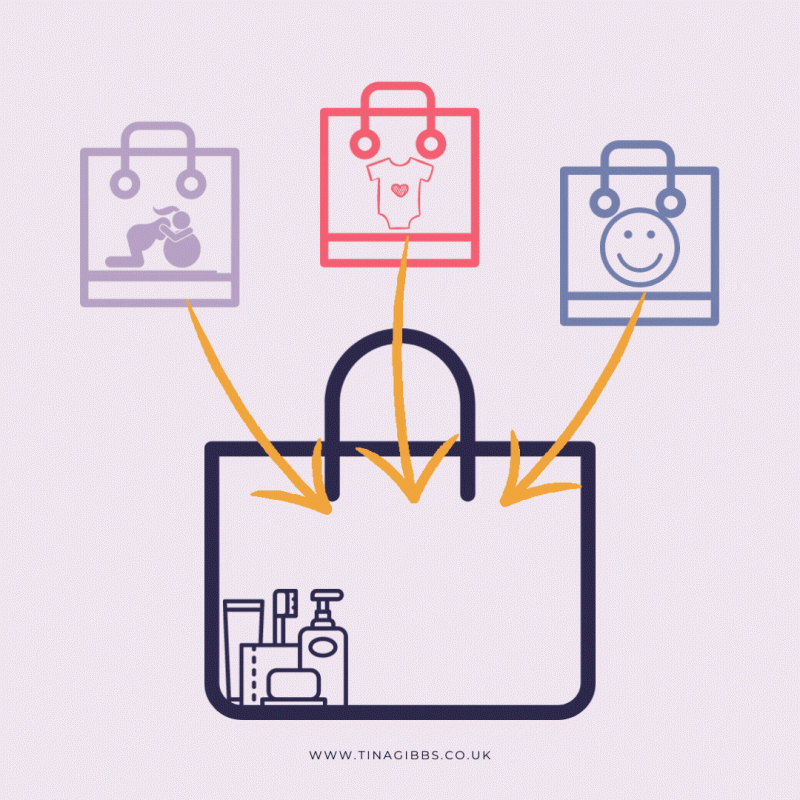
Use one large bag as your hospital bag which will contain your ‘overnight stuff’. Then pack three smaller bags to fit into you large hospital bag for childbirth!

Hospital Bag for Childbirth Hombirth Bag
Top Tip for your Hospital Bag: Pack Smaller bags into one larger bag or suitcase!

Bag for mum/birthing person

  • Your birth plan and maternity notes
  • Comfy, lose-fit dressing gown
  • Nighties  (ideally ones that opens at the front for breastfeeding access)
  • Comfy loose clothes – big baggy jogging bottoms, zip-up hoodie, tops that undo down the front for skin-to-skin/feeding
  • Slippers that you can slide your feet into rather than pulling on – if you have a Caesarean Birth bending over is tricky.
  • Socks – often women get cold feet during labour
  • Slip-on shoes
  • Flip-flops to wear in the shower
  • Hand Sanitiser
  • Wash bag including shower gel with a hook, so you don’t have to bend over in the shower, hand cream as constant hand gel use makes hands very sore,
  • lip balm as air is dry
  • Packs of waisted Bridget Jones massive cotton knickers in case you have a Caesarean Birth – dark colours are best and a couple of sizes up from your usual
  • Arnica and/or witch hazel for piles and bruising relief
  • Maternity pads packs
  • Nursing bras
  • Large pack Breast pads in case of boob leakage or washable ones
  • Pillow and/or pillowcase from home
  • Towel – hospital ones are scratchy
  • Eye mask (it’s never dark!)
  • Face mask (if you’d like your washable ones)
  • Earplugs (it’s never quiet!)
  • Hairbands
  • Headphones
  • Phone with labour playlist downloaded (you’re usually allowed to take your phone into theatre and can play music via Bluetooth)
  • Small tripod to prop up your phone/camera
  • Phone charger
  • Phone Power Bank
  • Snacks. If having a Caesarean Birth maybe apricots/prunes to ease constipation – you may not have a bowel movement for several days, and it can be a strain
  • Peppermint Tea Bags. In the case of a Caesarean Birth, it helps to get rid of wind caused by the operation.
  • Sports drink
  • Books/magazines/puzzles – in case you have to stay in hospital beforehand, or after.
  • Tissues for all the crying
  • Photo of your partner for times when they cannot be with you or maybe something that they have given you i.e. love notes
  • Photo of older children
  • Photo of you pet(s)

Bag for baby

  • Muslins 
  • Nappies – newborn size 1 fits most babies – newborns go through approx 12 nappies a day
  • Cotton wool pads/balls
  • Baby clothes – at least vests,  sleepsuits/babygrows,  jumpers/cardigans, hat  including a going home outfit
  • Baby blankets  (cotton or cellular or wool)

Bag for partner

  • Change of clothes
  • Snacks
  • Phone & Chargers or power bank
  • Change for vending machines (shops may not be open for as long) and car park
  • Phone list (if you’d like to tell people right away)
  • Car seat to take your baby home. Practice putting in/out car beforehand!
  • Maybe keep a book/magazine in the car in case you have to wait in the car until after mother’s initial assessment (This is a ‘new’ thing which started during the COVID-19 pandemic. Not all hospital trusts will still operate that way. Ask your midwife/trust to check).

I hope this list is useful for some of you and please if you have anything to add or adapt contact me and I’ll add it to the list!

Posted on 1 Comment

Birth Partner Hacks

Birth Partner Hacks

Birth Partner Hacks, 5 simple hacks all birth partners should know about!

Are you a birth partner? You are not sure where to start when it comes to supporting the birthing mother/person? Maybe you feel like you don’t know where to start? You would like to know more about how to support your partner during labour and birth?

Here are some Birth Partner Hacks to get you started!

💜 The Hip Squeeze – a favourite of many birthing mothers/people

Put constant pressure on the hips during surges and push your weight into the birthing mother/person.

💜 Figure of 8 ball sit – some gentle movement

During surges, the birthing mother/person sits on an exercise/birth ball and moves their hips in a figure of eight pattern while leaning forward over the back of a chair.

💜 The slow dance – more gentle movement

Have a slow dance together. The mother’s/birthing person’s hips moving side to side. This will help you to find a rhythm in labour.

💜 Shake the apple tree – relaxes pelvic floor area

Touch the mother’s/birthing person’s thigh with both hands. Shake their thigh one at a time. Repeat for the other thigh. This can help to relax and release the pelvic floor to support the birthing process.

💜 Effleurage – light/gentle touch to engage the parasympathetic nervous system

This word means “gentle friction/touch.” Use both hands to gently sweep over the mother’s/birthing person’s body. This helps to engage the parasympathetic nervous system.

Would you like to learn more about childbirth and how to support the birthing woman or person during labour? Then why not hire a doula or book one of my workshops? I offer group and 1:1 workshops in Nottinghamshire, Lincolnshire and Leicestershire. All my services are also available as an online/virtual format!