
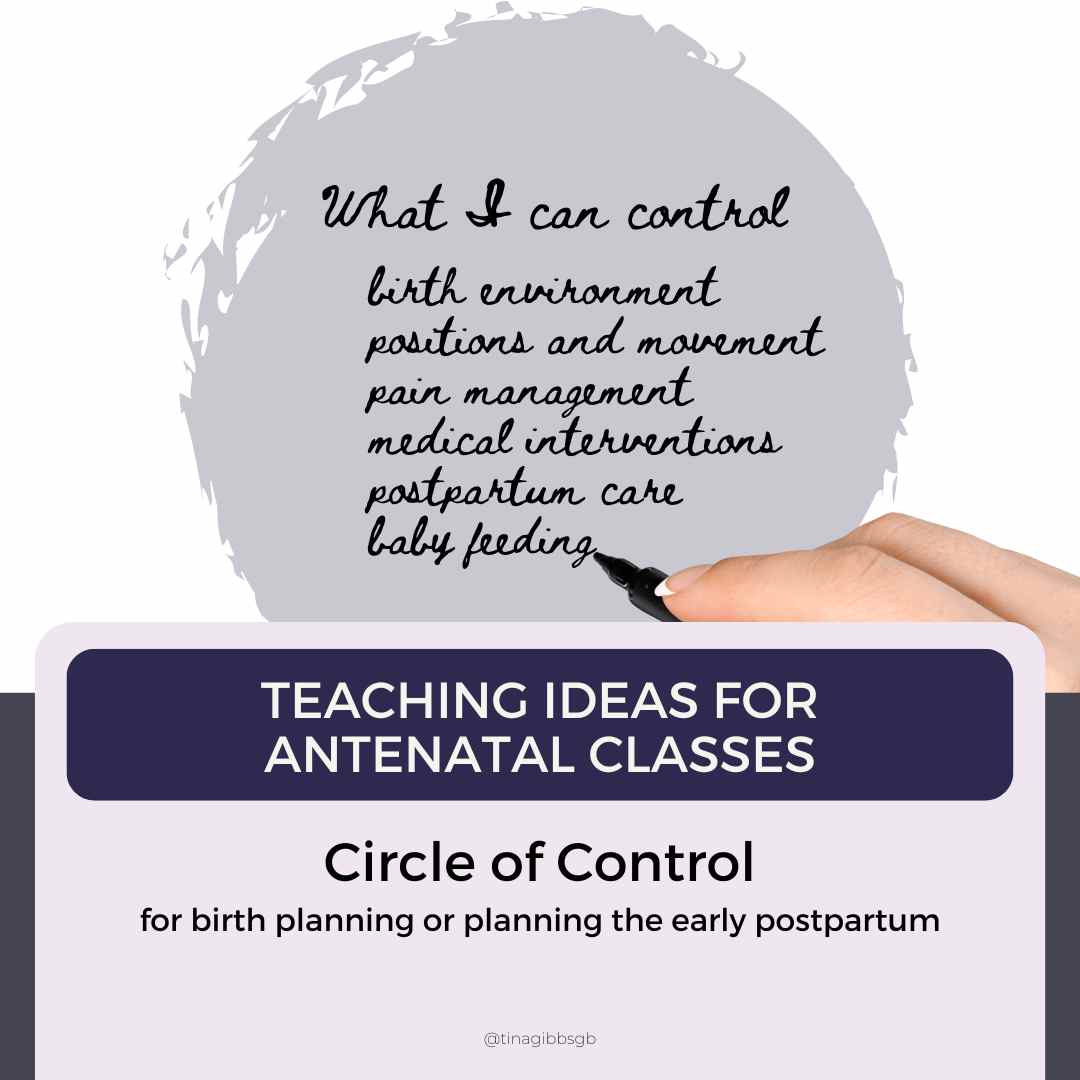
Welcoming a new baby is a huge, empowering experience, and writing down your birth preferences (a birth plan) can help make sure your birth reflects what matters to you. It is natural to feel a mix of excitement and anxiety as your due date approaches. One helpful idea to guide you through the process is the “Circle of Control”.
Understanding the Circle of Control
The Circle of Control encourages you to focus your energy on the things you can control, rather than worrying about things you can’t. This is especially useful when writing your birth plan, because some parts of birth you can influence, and others are beyond anyone’s control.
Things within your control
- Birth environment: Think about the atmosphere in which you would feel most comfortable, such as lighting, music and who you would like with you. Talk about your preferences with your birth partner, doula and midwife.
- Positions and movement: Find out about different positions for labour and birth and how movement can help. Let your midwife know you would like the freedom to choose positions that feel right for you.
- Pain relief: Write down your preferences, whether that is breathing techniques, massage or water, or medical options such as gas and air or an epidural. Make sure your choices are clear to your birth team.
- Medical interventions: Learn about possible interventions such as induction, monitoring and assisted birth and episiotomy, and note your preferences. Discuss the benefits and risks with your midwife or doctor so you can make informed decisions.
- After the birth: Think about your wishes for the first hours, such as skin-to-skin contact, delayed cord clamping, how you plan to feed your baby and any other care for your newborn.
Things outside your control
- The unexpected: Birth is unpredictable. You can plan for many things, but circumstances can change. Try to stay open to adjustments, and include your preferences for different scenarios (for example, an induction or a caesarean) in your plan.
- Emergencies: Occasionally a medical emergency means plans have to change quickly. Preparing mentally for this possibility can help. Whenever there is time, use the BRAIN acronym to ask questions and make informed decisions.
Using the Circle of Control to write your birth plan is a powerful way to feel prepared and confident. By focusing on what you can influence and accepting what you can’t, you can approach birth with a sense of calm. Good communication with your birth partner, doula and healthcare team is key, and working together can help create a positive birth experience that reflects your values and preferences.
Birth workers: for more ideas on helping clients with their plans, read Teaching about Birth Preferences and Birth Plans.
Sources and further reading
- Lothian, J. (2006) Birth plans: the good, the bad, and the future. Journal of Obstetric, Gynecologic & Neonatal Nursing, 35(2), pp. 295–303.
- Mei, J.Y., et al. (2016) Birth plans: what matters for birth experience satisfaction. Birth, 43(2), pp. 144–150.
- Mutongi, C. and Mazhawidza, R. Dealing with the mindset when faced with change and different situations.
- Dr Lucy Russell: Circle of Control exercise