Posted on — Leave a comment

When to do a hypnosis for birth class?

When to do a hypnobirthing class

What is hypnosis for birth? When should you take a hypnosis for birth class? And what are the benefits?

What is hypnosis for birth?

Hypnosis for birth is a type of birth preparation that focuses on relaxation techniques and self-hypnosis to help you have a calmer, more comfortable birth. Some approaches combine hypnosis with mindfulness, which can also help you cope with sudden changes during pregnancy and birth. Hypnosis for birth teaches you techniques to calm your body and mind in any situation, helping you feel more positive about your birth experience, however it unfolds.

When should you take a hypnosis for birth class?

Many teachers recommend starting a hypnosis for birth course somewhere between 20 and 30 weeks of pregnancy. This gives you time to learn the techniques and, just as importantly, to practise them regularly before the birth.

During the course you will build a toolbox of relaxation exercises, visualisations and breathing techniques. Practice is the key to getting the most out of hypnosis for birth, so try to set aside a little time each day to listen to relaxation tracks, rehearse your breathing and read your affirmations. The more familiar the techniques feel, the easier they are to use when labour begins.

What are the benefits of hypnosis for birth classes?

In a group class you’ll meet like-minded people who are becoming parents at a similar time. By learning relaxation and breathing techniques, hypnosis for birth can help reduce anxiety, fear and tension during labour, making the experience feel more positive.

You can expect to learn deep relaxation, visualisation, affirmations and self-hypnosis. These techniques are designed to help you stay relaxed, which may make labour more comfortable. Classes are usually taught by trained teachers who guide you through the process.

Hypnosis for birth is useful for all kinds of birth, whether you are hoping for an unmedicated birth, planning an epidural or having a caesarean. The techniques can help you stay calm, focused and in control in any birth scenario.

If you are thinking about a hypnosis for birth class, do some research to find a reputable, trained teacher in your area. Some NHS trusts offer free sessions, so ask your midwife, and many independent teachers offer both in-person and online courses. Remember, hypnosis for birth isn’t just about the day itself; it is about preparing mentally, emotionally and physically throughout your pregnancy for a positive birth and a calmer start to parenthood.

Please note: this content is for educational and information purposes only. It is not medical advice and is not a replacement for advice from your midwife or doctor. Always seek advice from your healthcare professional.
Posted on — Leave a comment

5 Things to look for when choosing your childbirth education

5 things to look for when choosing your childbirth education

Want to feel prepared for the birth of your baby (or babies)? Here are 5 things to look for when choosing your childbirth education.

As the birth of your baby approaches, you may have a lot of questions. What does a contraction wave feel like? How will I know when to call the midwife? What kind of breathing techniques can I use? How do I know when it is time to push?

You may also feel a mix of emotions – excitement, nervousness, stress, even anxiety. The good news is that preparing for the birth can ease your fears and build your confidence. Choosing the right childbirth course for you (and your partner) is key: it should give you practical knowledge about the physiology of birth, and tell you where to find practical and emotional support.

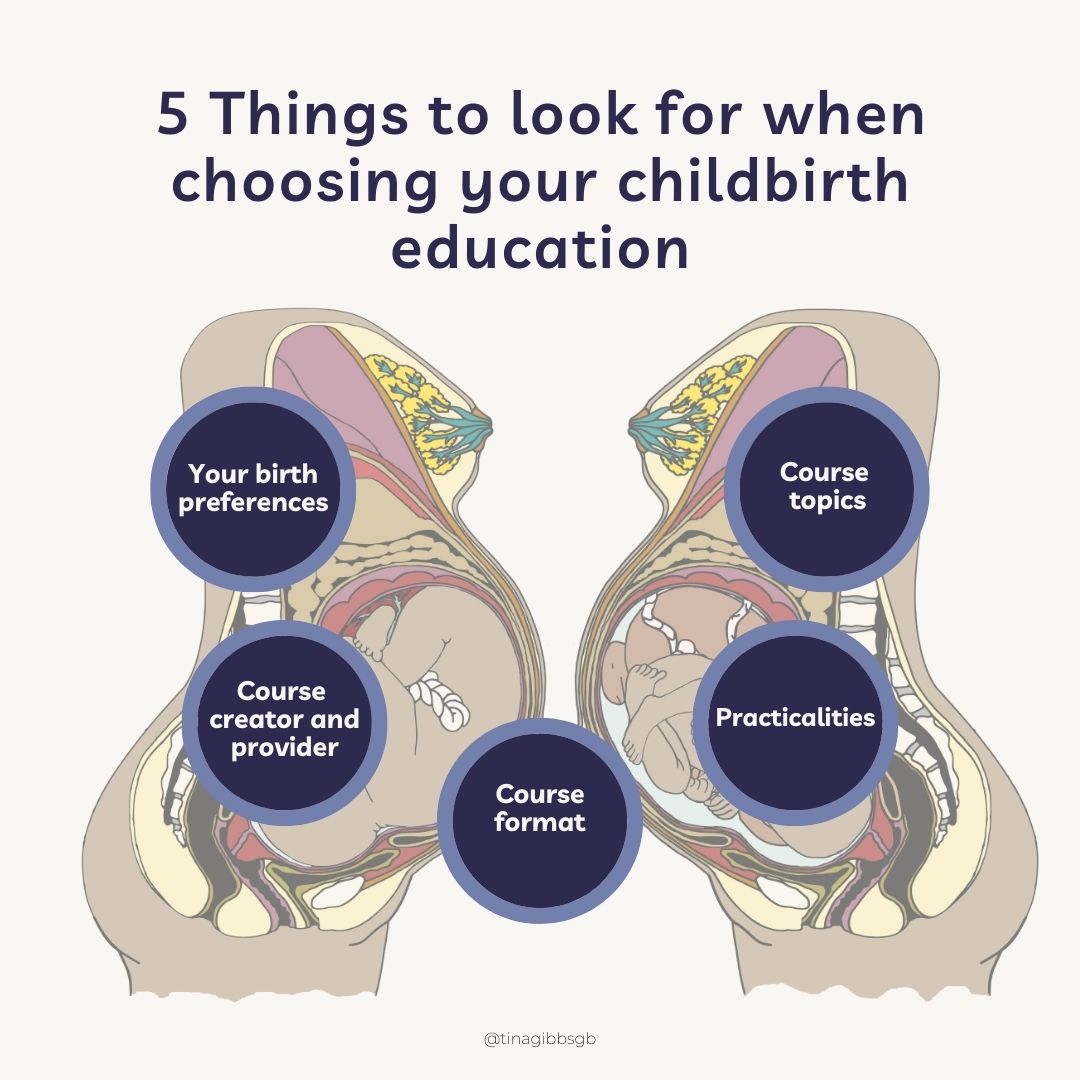
5 Things to look for when choosing your childbirth education

1. Does the course match your ideas about childbirth?

Whether you’re planning a vaginal birth, caesarean birth, waterbirth, home birth or something else, make sure your chosen course supports your wishes and preferences. How you give birth is up to you.

Knowing the general philosophy of the birth course you are considering is essential. The techniques you’ll learn should be something you can see yourself doing and something you believe in. They should support you to achieve the birth you are aiming for.

2. Which topics are covered during the course?

If this is your first baby, your course should cover everything you need to know about your options and what to expect. If you’ve given birth before, you may prefer a refresher course – and you may also want to prepare older siblings for the arrival of their little brother or sister. Learning about childbirth can ease anxiety and help you make informed choices, but the wrong type of course can increase anxiety, so choose your course and its leader carefully.

3. Who created the course?

Who created the childbirth preparation course? Are they a medical professional or a teacher? Are they an expert in childbirth education? Check their certifications and experience! You want the person and organisation offering your childbirth preparation course to be established and reputable. Ask them to show you proof of their qualification(s).

4. What format is the course in?

Check the format of the course. You may prefer a course that focuses on the birth only, or one that includes practical baby care. If you are interested in hypnosis for birth, check whether the course includes it, or whether you would prefer a stand-alone hypnosis for birth course.

Can partners come along too, or is the course for birthing parents only? Which format would you prefer?

5. Practical things to consider

  • Where and when is the course held? Are the dates, time and venue convenient for you?
  • What is your budget? What are your options at your budget?
  • For an in-person course:
    • Is there parking, or is it easy to get to by public transport?
    • Is the venue clean and spacious?
    • What are the seating arrangements like? Do you want or need to bring a birth ball, cushions etc.?
    • Are refreshments included?
    • Is the venue accessible (where needed)?
  • For an online course:
    • Are you confident using the platform the course runs on?
    • Is it a live course, does it have live elements, or is it fully self-paced? If there are live sessions, are they recorded? If not, can you make all of them?
    • Is your internet connection reliable?
    • Do you have a computer or laptop to access the course on? This will make your online course a more positive experience.
    • Do you have a comfortable spot to sit where you can join the course?

Which type or style of childbirth preparation course you choose is entirely up to you! Use the BRAIN acronym when choosing the right course for you:

BRAIN acronym: benefits, risks, alternatives, intuition, nothing

What are the benefits, risks and alternatives for each option? Trust your gut, your intuition. And think about how you might feel if you do nothing, i.e. if you don’t choose a childbirth preparation course.

You can read more about the BRAIN acronym in The BRAIN Acronym for Childbirth.

Please note: this content is for educational and information purposes only. It is not medical advice and is not a replacement for advice from your midwife or doctor. Always seek advice from your healthcare professional.