Why is informed decision-making for birth so important?
Pregnancy is often a woman’s or pregnant person’s first significant experience of the healthcare system. Suddenly, you have to make all sorts of decisions for yourself, your baby and your family, and some of those choices about your care during pregnancy and birth can be difficult. You’ll be influenced by healthcare professionals, family and friends, the media, social media, books, memories and more – all claiming to know what’s best for you and your baby, and often leaving you feeling torn…
Whatever choices you’re considering, you can help yourself make informed decisions that you’ll be happy with and feel empowered by.
One acronym often used in childbirth education and hypnobirthing classes is BRAIN (sometimes BRAINS or BRIAN). It’s a simple way to gather all the information you need to make informed decisions about your own and your baby’s care:
Benefits: What are the benefits of the treatment or procedure? Is this what is usually done? How do the usual benefits apply to your own individual care?
Risks: Are there any risks with the treatment or procedure? How do they apply to your own individual care?
Alternatives: What are the alternatives? Where can you get a second (or third) opinion?
Intuition: How do you feel about what’s being offered? What does your gut tell you?
Nothing: What would happen if you did nothing? Is it an emergency? How much time do you have to think about it? Do you need to decide now?
With this simple, memorable acronym, you can make informed decisions without having to memorise all the statistics and research. You’re likely to feel more in control and empowered, and happier with your birth experience – and that’s why informed decision-making for childbirth is so important.
What do you need, and where do you start, when facilitating antenatal classes online? How can you keep clients engaged and make your online classes more interactive?
What do I need to facilitate antenatal classes online?
Reliable equipment is key:
A fast, stable internet connection. Test it on a video call with friends or family first – ideally while others in your household are streaming or gaming at the same time.
A PC or laptop that can cope with video and audio streaming and multiple open windows without overheating – especially on hot summer days!
A video conferencing platform such as Zoom or Microsoft Teams. My choice is Zoom, as (at the time of writing) it’s the most flexible platform for interactive group education. If you only run 1:1 sessions or use a lecture-style approach, any platform will do. For group classes, I like being able to split a larger group into smaller ones (breakout rooms in Zoom), giving clients some private ‘away from the teacher’ time and encouraging the group to bond.
Visual content such as PowerPoint, Google Slides or Canva presentations to share from time to time for your visual learners. You’ll find ready-made activities in my digital downloads.
Good lighting, so your clients can see you.
A good camera and microphone, so your clients can see and hear you clearly.
Dress the baby: move the right clothes onto the baby.
Where do I start?
Practise. Before facilitating online for paying clients, practise with family, friends or colleagues. You could also record yourself and watch it back.
Set expectations. Let your clients know in advance what to expect – for example, “Please keep your cameras and microphones on; this is an interactive class,” or “Please mute yourselves” for a lecture.
How do I make my online antenatal classes interactive and fun?
Mix it up! Rather than presenting non-stop, use your slides as visual aids. Use breakout rooms to create smaller groups, and try free* online tools such as Mentimeter, Kahoot! and Padlet for word clouds, quizzes and more.
Should you make some noise during childbirth or not? Which do you think is more helpful for the birth process?
The Mirror recently printed an article about a mother who shared on social media that her doctor had told her to be quiet while giving birth. She felt that was rude – which prompted me to write this post…
So, should you make some noise during childbirth? Yes – make some noise!
Most women and birthing people make some noise while birthing their baby or babies, and you can use it to your advantage! Low, deep sounds from the belly can be especially helpful – and if in doubt, any noise is better than holding your breath. Here are some of the noises I’ve heard at births:
Growling or roaring – most often heard during pushing, when the birthing person summons all their strength to birth their baby.
Low grunting – deep sounds from the belly can help the birth process. They’re most often heard during the second (pushing) stage of labour. Making these deep, low sounds uses your diaphragm, which helps with pushing.
Mantras, affirmations or repeated words – repeating a helpful mantra, affirmation or phrase is another great way to stay calm, strong and focused during birth, and it’s very common. You can sing them, say them out loud, say them in your head or read them. Here are some free affirmations to print, or you can make your own.
Screaming – unlike in the movies, screaming is actually uncommon during childbirth. If the birthing person is screaming, they are most likely panicking and need support to ground themselves, calm down and relax. A touch anchor – such as a hand on the shoulder – can be very helpful in this situation.
Were you surprised by the noises you made while giving birth, or heard at someone else’s birth? Tell us in the comments!
With summer approaching, here are my top tips for keeping your baby cool in hot weather – and, just as importantly, keeping them safe at the same time.
Sleep, bedtime and naps in hot weather
Give your baby a cool bath before bedtime.
Keep your baby’s room cool by closing windows, curtains or blinds during the day.
You could use a fan to circulate air in the room. Placing a bottle of frozen water or a bowl of ice in front of it cools the air as it moves.
Babies sleep most comfortably in a room between 16°C and 20°C, so a room thermometer can be helpful. If you can’t get the room that cool, keep nightwear and bedding to a minimum – on very hot nights, your baby can sleep in just a nappy. For safer sleep advice, see the Lullaby Trust website.
Travelling, out and about, and outdoor play
Never cover your buggy, pram or car seat with a blanket or cloth – the temperature inside can rise dangerously high very quickly. Use a parasol or sunshade instead, so air can still flow.
On long car journeys, take extra breaks and lift your baby out of their car seat.
Keep babies under six months out of direct sunlight, in the shade, and in a sun hat. For babies over six months, use sun cream with SPF 50 or higher.
For toddlers and older children, a paddling pool is a great way to keep cool. Put it in the shade (or create some shade) and supervise children at all times.
Drinks and feeding
0–6 months:
Fully breastfed babies don’t need any water, but they may feed more often on hot days.
If you’re formula feeding, you can give your baby a little cooled boiled water as well as their usual milk feeds.
From 6 months:
Once your baby has started solid foods, offer sips of water from a cup or beaker with meals. Breast milk or formula is still their main drink during the first year. When it’s really hot, you may need to offer extra water between meals.
From 12 months:
Your child’s main drinks should be water, breast milk, or whole (full-fat) cows’ milk or a suitable plant-based milk. On really hot days, ice lollies made from plain water or very diluted fruit juice can help keep them hydrated. Lollies containing juice or other sugars can cause tooth decay, so keep them to a minimum and offer them at mealtimes.
If you prefer visual information, have a look at the Lullaby Trust’s video below!
Being pregnant in hot weather can be uncomfortable. Here are some tips for keeping cool when pregnant during the summer months!
Tips for keeping cool when pregnant in hot weather
Stay cool and safe with these tips and tricks:
☀️ Stay hydrated. Drinking plenty of water helps prevent dehydration. Drink more than you would on cooler days, as you’ll sweat and lose more water in the heat. Keep a bottle of water with you during the day and a glass by your bed at night.
☀️ Wear loose, light clothing. Light-coloured, loose, breathable clothes let air circulate around your skin and help keep you cool. When you’re outside, wear a sunhat, sunglasses and sunscreen – and maybe carry a spray bottle of cold water.
☀️ Take a dip. If you have a birth pool or paddling pool, fill it with cool water and sit in it – immersing your body is a great way to cool down.
☀️ Enjoy cool snacks such as chilled or frozen watermelon and cucumber. Freeze or chill some fruit and vegetables ready to eat.
☀️ Seek shade or stay indoors. If you can, stay inside during the hottest part of the day, and find shade whenever you’re outside.
☀️ Exercise early, late or in water. Adjust the type and timing of your exercise to suit the weather – it’s cooler early in the morning and in the evening, or try exercising in water.
☀️ Put your feet up and rest. Chill out, take a break, and look after yourself and your baby.
☀️ Cool your feet. No bath or pool? Fill a washing-up bowl or bucket with cold water and put your feet in it. It saves water too!
☀️ Use a fan. Top tip: if you’re using a paper fan, add two drops of peppermint essential oil to it.
☀️ Eat ice lollies. Make your own from (sugar-free) fruit juice or flavoured water.
These tips work just as well when you’re not pregnant! What are your top tips for staying cool in the heat?
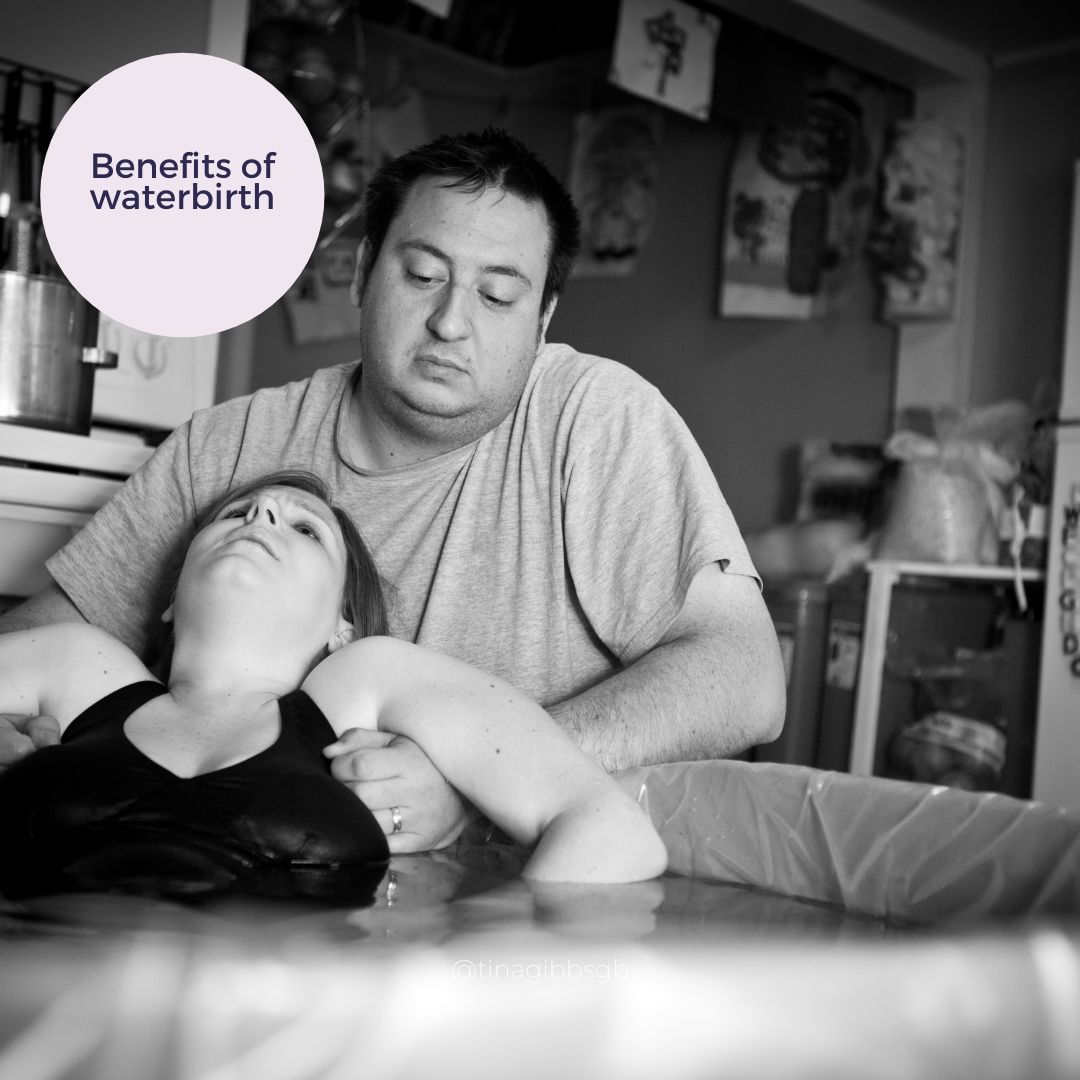
Thanks to its many benefits, waterbirth has become increasingly popular with expectant families in recent years. Let’s explore the benefits, the possible disadvantages and some of the practicalities.
The benefits of waterbirth
Contractions feel more comfortable
No known side effects for baby or mum
The warm water helps you relax
Being relaxed helps your body produce more endorphins (natural painkillers)
Being relaxed helps your body produce more oxytocin (which makes contractions more effective)
Less need for medical pain relief
Less need for drugs to speed up labour
Shorter labour
Added privacy
The water supports your weight, so you feel more comfortable and can move and change position more easily
You are more likely to have an unassisted vaginal birth
A gentler birth for your baby
Breastfeeding can start straight away
Less tearing, as the water relaxes you and softens the perineum (the area between your vagina and anus)
A more enjoyable experience of labour and birth
Comfort measures you can use in or alongside the pool
TENS machine – although you can use it until you get into the pool!
Epidural
Opioids
Possible disadvantages
Not suitable for everyone – in some circumstances, using water for labour and birth may not be recommended
Not available everywhere – your local birth unit or hospital may have few or no pools
Hiring or buying a birth pool for a home birth can be expensive
Your home or hot water system may not be suitable for a pool
Buying or hiring a pool for your home birth?
There are many different suppliers and manufacturers. In my 10+ years in the birth world, I’ve found that pools from Birth Pool in a Box get the best reviews. Look out for a local home birth group, as some have free or low-cost pool hire schemes. If you’re buying a birth pool, or have hired or borrowed one and need extra equipment, get 10% off everything at the Birth Pool in a Box shop! (Please note: this is an affiliate link.)
Please also check out my online course! No videos, just text and images to learn in your own time. Includes hypnobirthing mp3s, scripts, workbook, handouts, infographics and much more! Lots and lots of information at your fingertips! Includes:
Cluett ER, Burns E, Immersion in water in labour and birth, Cochrane Database of Systematic Reviews 2009, Issue 2. Art. No.: CD000111. DOI: 10.1002/14651858.CD000111.pub3. (2009)
Are you pregnant and planning a waterbirth at home, but not quite sure how to sell the idea to your partner? Read this light-hearted ‘guide’ to persuading your partner to have a waterbirth at home 😉
My husband wrote about the birth of our second baby for an NCT (National Childbirth Trust) newsletter back in 2011. He wanted to tell the story from the mother’s point of view – so he did!
Persuading the Hubby, part 2: “Waterbirth in the kitchen”
If you read part 1, you may remember the challenge I set myself: persuading a sceptical Mr Hubby of the virtues of reusable nappies. Persuading the hubby can sometimes feel like cycling uphill into a stiff wind – but, just like the equally stiff winds so often encountered at changing time, it can be overcome with a deep breath and a firm resolve! Compared with the reusable nappies, however, my next challenge was a veritable Tour de France of uphill cycling!
The idea quite literally surfaced while we were swimming at the local pool. It was towards the end of my second pregnancy, and I was floating in the water, enjoying the sheer bliss that only a pregnant woman can feel as eight months of pregnancy weight lifts off her feet. Mr Hubby was throwing our youngest into the air, and they were splashing about wildly, filling the air with giggles. Our little one was two now, and he’d come such a long way since his traumatic hospital birth two years earlier. It suddenly struck me how relaxed I felt in the water with my family around me, and I decided there and then that I would bring that feeling of tranquillity to my next birth. “I’m going to have a waterbirth in the kitchen!” I exclaimed. My sudden outburst caught poor Mr Hubby completely off guard, and he froze mid-throw in stunned bewilderment as our little bundle of joy spiralled through the air and hit the water with a resounding splosh! Without the “1-2-3, breathe” they’d been practising at baby swimming, the little mite came up coughing and spluttering. He was absolutely fine, but a lifeguard had already blown his whistle and several youthful pool attendants were diving athletically into the water! By the time we’d towelled off, thanked the lifeguards for their diligence and smiled meekly at the other swimmers (who were looking at us as if we were completely incompetent parents), Mr Hubby had pulled himself together enough to reel off an immeasurably long list of reasons why ‘waterbirth in the kitchen’ was a terrible idea. “Surely giving birth at home will make a right mess?” “What if something goes wrong while you’re in labour at home?” “Where on earth would we get a pool?” “Are you seriously thinking of the kitchen?” “What if you get in and a wave of water goes everywhere?” “Will you cope without pain relief?” “Will it be massively expensive?” And finally: “Could we do it on the cheap with the little one’s paddling pool and our leaky garden hose?!”
Well, I’m all for winning my man round with a bit of frugality, but after some research online and on the NHS website, it soon became clear that the paddling pool and garden hose idea wasn’t going to fly. Birth pools need to be clean, deep enough to immerse your body, and strong enough to take your weight as you hang over the side catching your breath after a contraction. Luckily, I did find ways to avoid forking out gazillions of pounds. First there was the hire option, with pools available from around £80 for five weeks – but in the end I got a second-hand one on eBay, complete with a hose, for just £24. All I needed then was a new pool liner for £25, and my set-up was complete! That came to around £50 in total, but as I pointed out to Mr Hubby (when the postman turned up with an inflatable birth pool under his arm), parking at the hospital last time had cost over £30 – and this time we’d have needed a babysitter for our little tyke as well – so I reckon we made a saving!
Mr Hubby’s other concerns about home birth were addressed by a couple of interesting encounters. The first was with a very kind midwife who visited us at home and reminded us that giving birth is a natural process and that I could trust my body. She promised to bring plenty of gas and air, and added that a home birth would really help her meet her home birth targets. She was so lovely that we could hardly say no! The deal was sealed later that day by the second encounter: a chance conversation over the fence with the elderly lady next door, who told Mr Hubby that in her day kitchen births were quite the norm. After an hour of listening to stories about births in times gone by, Mr Hubby was quite dazed and in no state to argue any further.
Despite my immaculate preparation, there was one thing I forgot – and I strongly advise you not to: a decent pump. My labour started a few days before my due date and, as Mr Hubby will tell you, home birth pools are very, very large. Very large. With his little bike pump, it took a good hour of frantic pumping to inflate the thing, and halfway through – just as he hit his lowest ebb and his right arm was about to drop off – two very stern midwives arrived just in time to whip him back into action. Eventually he crossed the finish line, I stepped into the warm, soothing water, and all my cares drifted away. Mr Hubby was clearly exhausted and looked as though he’d been in labour himself, but before he could even catch his breath, one of the stern midwives spun on her heel and told him, in no uncertain terms, that his next job was to keep the pool within a degree of 36°C – and as it had already dropped to 34, he’d better get cracking! So back and forth across the kitchen he went, carrying saucepans of water out of the pool and topping it up with hot water from the tap. Back and forth he went, nineteen to the dozen, for a good three hours, spurred on by the hawk-like glare of the midwives – which gave me excellent entertainment between contractions. In fact, it struck me that the whole thing was a modern-day version of “Why don’t you go and get some warm towels ready?”, and it kept him nicely occupied for the whole labour.
Before I knew it, my second child was born. The warm water eased my contractions, softened my tender regions and helped me avoid the dreaded stitches. It was such a soothing entry into the world, and I will never forget it. Neither will Mr Hubby – his pumping arm has never been the same since!
Reusable or washable nappies – are they worth it? How do you use them? How can you persuade your partner to give them a go? How can you persuade yourself?
Read this funny take on a wife persuading her hubby to try reusable nappies! My husband actually wrote it years ago for an NCT (National Childbirth Trust) newsletter. He wrote it as if he were me (the wife) and published it under a pseudonym…
I still think it’s a great way to convince your partner – or yourself – to give reusable nappies a try. You’ll be doing your bit for the environment while saving lots of money!
Reusable cloth nappies hanging on a washing line
Persuading the Hubby, part 1: “Reusable nappies”
“I think we should use reusable nappies – what do you think?” I asked my hubby, resting my hand on my bump. It was one of those seemingly innocent questions in the last couple of months of my pregnancy that brought a look of fear and horror across his face, closely followed by a barrage of reasons why we really should do something else. It was the same response I got when I said, “I think we should have a doula at the birth, what do you think?” – and the time we were having a cup of tea and I proposed, “I think we should hire a birth pool and have a water birth in the kitchen!” (All of which, incidentally, were great ideas and turned out very well indeed once I eventually won him round.) But back to the reusable nappies… Mr Hubby’s initial reaction was that they would cost a mountain of money, we’d forever be changing the baby, the nappies would wear out, the house would smell, the washing machine would be contaminated and – according to his mother’s aunt’s best friend (who was apparently once a health visitor) – the baby would get permanent nappy rash. I admit it did sound bad the way he said it… but I couldn’t bear the thought of all those disposable nappies going to landfill, so I set about putting his mind at rest. Of course, it wasn’t all plain sailing, so here are my tips and tricks for making reusable nappies work:
The cost argument: Yes, with new reusable nappies costing £15 each (in 2011), it could have cost quite a bit up front. But in the end I got £30 back from the Real Nappy Incentive Scheme by filling in a form online. I also won several bundles of nappies on Freecycle, Preloved, Netmums and eBay – which, of course, Mr Hubby was sent out to collect, giving me the added bonus of some nice quiet evenings. I admit second-hand reusable nappies sounds a bit rank, but most of them were as good as new! With a bit of cunning, they’ve worked out much cheaper than disposables. As an extra cost-saver, rather than wet wipes I use mini “top and tail” muslin squares dipped in water to clean the baby’s bottom, which then go in the wash with the nappies!
The “constant nappy changing” argument: In the end, I used a mix of disposables and reusables. The reusables stayed dry for around 3–4 hours, which just wasn’t practical at night. But during the day, as any parent will tell you, the baby always seems to wait until just after you’ve changed them to release a sub-atomic explosion in the lower regions – so whichever nappies you use, you end up changing them about the same number of times. Disposables were also useful in the first couple of weeks, when all I wanted was some sleep and even the thought of an extra load of washing was too much.
The “house will smell” argument: In the first week of using reusables, I followed my mother-in-law’s advice (always a bad idea, of course, but since she came from the generation of the terry square, I gave her the benefit of the doubt): put the used nappies in a bucket of sterilising fluid until it’s time to wash them. It sounded fine in principle but turned out to be grim in practice – especially two days later, when I tried to transfer the dripping nappies from the bucket to the washing machine. Yuk! In the end, I found that keeping the nappy bin dry, with a tight-fitting lid and a few drops of tea tree oil, did the trick. Better still was hanging a washable mesh bag inside the bin, so I could tip the whole lot – bag and all – into the washing machine without touching a single nappy.
The “permanent nappy rash” argument: Maybe that was true in the old days, but modern reusable inserts really do draw moisture away from the baby’s skin. I did find it useful to switch between types of nappy as the children grew, as some bulkier types hold more liquid for longer. I started with BumGenius nappies, added an extra insert as the children got older, and then moved on to TotsBots – but there are lots of options, so it’s worth trying a few varieties cheaply from friends or Freecycle if you can. Despite hours on YouTube, I never got the hang of folding a terry square, although I did once produce something resembling a napkin at a fancy restaurant. If your baby does get nappy rash and needs a barrier cream for a few days, most manufacturers recommend using disposables, just so the cream doesn’t reduce the absorbency of the reusable inserts.
Finally, the “nappies will wear out” argument: Well, they haven’t yet! Two years on, my second son is using the same nappies his brother wore, which were probably sported before that by the son of the nice Freecycle family. Keep an eye out – those same nappies will no doubt be back on Freecycle from me in a couple of years… unless, of course, I can persuade Hubby to go for a “number three”… but I suspect that will be another one of those fear-and-horror moments!
Ahead of the holiday season, let’s look at what you need to know about flying when pregnant. Perhaps you booked a holiday before you knew you were pregnant – do you need to cancel? Is it okay to fly while pregnant?
That said, it’s always a good idea to discuss any concerns with your midwife or healthcare team.
Things to consider:
how far along you’ll be in your pregnancy when you travel
whether you have any health concerns
where you are travelling to
Is it a long-haul flight?
Are any vaccinations recommended for your destination?
which airline you’re flying with
Flying when pregnant: infographic and top tips
On long-haul flights (over 4 hours), drink plenty of water and move about regularly or do in-seat exercises. This helps reduce the small risk of blood clots (1–2 in 1,000 women). Graduated compression (flight) stockings from the pharmacy can also help reduce leg swelling.
Some airlines won’t let you fly towards the end of pregnancy, so check your airline’s policy.
Take your maternity notes and travel and health insurance documents, and find out about maternity care and hospitals at your destination.
Listen to your hypnobirthing tracks during the flight to help with comfort, confidence and nausea.
Ask the cabin crew for a seatbelt extension if you need one, and wear the belt under your bump.
Avoid gassy foods before you travel for a more comfortable flight!
Please also check out my online course! No videos, just text and images to learn in your own time. Includes hypnobirthing mp3s, scripts, workbook, handouts, infographics and much more! Lots and lots of information at your fingertips! Includes:
A birth partner wears many different ‘hats’, but the role can be as simple as being there. The key is presence: being in the moment, being the guardian of oxytocin, the birth keeper and the advocate. Your role will be led by the birthing mother or person you are supporting.
Who can be a birth partner?
A birth partner could be the baby’s father or other parent, the pregnant person’s partner, a friend, a family member, or a professional birth partner such as a doula.
What does the birth partner’s role include?
During the birth, a birth partner might:
offer massage
read hypnobirthing scripts
advocate for the birthing mother or person
give reminders to go to the loo
help keep them hydrated and energised
offer supportive words and touch
protect the birth space
Here is a great example of a birth partner advocating for the birthing woman’s options:
How can I prepare to be a birth partner?
Talk with the pregnant mother or person about their wishes and birth preferences.
Plan the route to the hospital or birth centre, and which entrance to use at different times of day and night (although Google Maps timings are pretty accurate).
Know where the birth bag is, and get familiar with what’s in it – or help pack it – so you can find things quickly.
Think of ways to time contractions without watching the clock, which can create unwanted tension. Be creative!
I’ve seen families watch a series with roughly 30-minute episodes and count how many contractions they had per episode.
Others made a 30- or 60-minute playlist and counted the contraction waves during it.
You may need to speak to the healthcare professionals if the person you’re supporting can’t. Knowing their birth preferences and being able to communicate their wishes and symptoms clearly really helps.
Look after your own needs too – you can only support others when you are well and comfortable. Birth can take a long time, so bring spare clothes and refreshments for yourself.
Bring a phone charger so you can contact family and friends when you need to (if that’s what you’ve agreed).
Most vending machines and car parks now accept contactless or phone payments, so you may not need loose change – but check with your chosen birth place.
Go to antenatal appointments and childbirth classes together.
Do your own research about birth, options and procedures.
Please also check out my online course! No videos, just text and images to learn in your own time. Includes hypnobirthing mp3s, scripts, workbook, handouts, infographics and much more! Lots and lots of information at your fingertips! Includes: