Posted on 2 Comments

Flying when pregnant

Ahead of the travelling season, let’s explore things to know about flying when pregnant. Maybe you have booked a holiday before you knew that you were pregnant? Now, do you need to cancel? Or is it okay to fly while pregnant?

The good news:

Flying isn’t harmful to you or your baby, […]

NHS.

but it is always a good idea to discuss any concerns with your midwife and/or team of healthcare professionals.

It is worth taking into consideration:

  • how far along you are in your pregnancy at the time of travel
  • whether you have any health concerns
  • where you are travelling to
    • is it long-distance?
    • are vaccinations recommended for your destination?
  • which airline you are flying with

Flying when pregnant infographic and top tips!

Flying when pregnant
  • For long-distance flights (longer than 4 hours), drink plenty of water and move about regularly, or do in-seat exercises. This helps to minimise the small risk of blood clots (1-2 women in 1000). You can buy a pair of graduated compression or flight stockings from the pharmacy, which will help reduce leg swelling.
  • Some airlines won’t let you fly towards the end of your pregnancy. Remember to check with the airline for their policy on this.
  • Make sure you have your maternity notes, travel insurance and health insurance documents with you and know about maternity care/hospitals at your destination.
  • You can listen to your hypnobirthing tracks while you are flying to help with comfort, confidence and nausea.
  • Ask the cabin crew for a seatbelt extension if needed, and wear your seatbelt under your bump.
  • Avoid gassy foods before the journey to increase your comfort during the flight!
  • Carry medication in your hand-luggage!

Online Birth Preparation Course only £35!

Please also check out my online course! No videos, just text and images to learn in your own time. Includes hypnobirthing mp3s, scripts, workbook, handouts, infographics and much more! Lots and lots of information at your fingertips! Includes:

  • hypnobirthing mp3s
  • hypnobirthing scripts
  • written information
  • infographics and other imagery
  • printable handouts
  • printable workbook/journal

Download your free packing list:

References and further reading:
Posted on Leave a comment

The role of the birth partner

role of the birth partner at a caesarean birth

The role of the birth partner includes many different ‘hats’. But it could be as simple as being there… The key is the partner’s presence. Being there in the moment, being the guardian of oxytocin, the birth keeper, the advocate. Your role will be led by the birthing mother/person who you are supporting.

Who can be a birth partner?

A birth partner could be the father or other parent of the baby, the pregnant woman’s/person’s partner, a friend, a family member or a professional birth partner such as a doula.

What does the birth partner’s role include?

During the birth, the role of the birth partner may include:

  • offering massages
  • reading hypnobirthing scripts
  • advocating for the birthing mother/person
  • reminding to go to the loo
  • keeping the birthing woman/person hydrated and engergized
  • supporting words and touch
  • protecting the birthing space
  • ….

Here is a great example of a birth partner advocating for the birthing woman’s options:

How can I prepare for the role of the birth partner?
  • Have a discussion with the pregnant mother/person about their wishes and birth preferences.
  • Plan the route to hospital/birth centre and which entrance to use at different times of the day or night – although google maps timings are pretty accurate
  • Know where the birth bag is
  • Familiarise yourself with the contents of the birth bag aka hospital bag, maybe get involved in packing it, so that you can find things quickly if you need them
  • Think about ideas how to time contractions without a watch/clock – watching the clock may create unwanted tension in the mother’s/birthing persons’ mind and body. Be creative!
    • I’ve seen families watching a series with approx. 30 minute-length episodes and they’d count how many contractions they had in 30/60 minutes.
    • Others had a 30/60 minute playlist and would count the number of contraction waves they had during that time.
  • You may need to speak to the health care professionals during the birth, if the person you are supporting cannot. Knowing the birth plan/birth preferences and being able to communicate wishes and symptoms clearly is beneficial
  • Look after your own needs, too. You can only support others when you are well and comfortable. The birth may take quite some time, so bring spare clothes and refreshments for yourself, too.
  • Bring a charger for your phone so that you are able to contact your family and friends when you need to (if that is what you have decided/agreed to do).
  • Most vending machines and car parks accept contactless payments now or you can pay by phone. You may not need loose change, but you may wish to check with your local hospital/chosen birth place.
  • Join the pregnant mother/person for their antenatal appointments and childbirth classes
  • I also offer live virtual birth partner workshops, where we look at different practical support options and practice movement, massage and breathing techniques. A workshop for you both to attend, to work together as a family/team.
  • Do your research about options, procedures and birth.

Please also check out my online course! No videos, just text and images to learn in your own time. Includes hypnobirthing mp3s, scripts, workbook, handouts, infographics and much more! Lots and lots of information at your fingertips! Includes:

  • hypnobirthing mp3s
  • hypnobirthing scripts
  • written information
  • infographics and other imagery
  • printable handouts
  • printable workbook/journal
Posted on 2 Comments

Your Birth Plan


Your birth plan or better birth preferences can be an important part of your journey into parenthood.

You may have heard people talking about their birth plan going out of the window or saying it is not worth writing one… In my opinion, as a doula and mother of 4, it is worth thinking about your birth preferences (rather than “plan”). You may or may not wish to put them in writing, that’s up to you. However, sharing and discussing your preferences, personal thoughts and feelings about the birth with your birth partner(s) is important.

positive birth affirmations
Information is power – write down your birth preferences!

You can go all out and make it very detailed, of course, but the more details you choose the less realistic your expectations may become. So, let’s focus on your main 4-5 preferences for the birth. Things that you are likely be able to control.

You may wish to consider:

  • Your birth place – where do you wish to give birth
  • The birth environment
    • who will be there (birth partner(s), doula, …)
    • what (home) comforts would you like to be there (music, blanket, cushion…)
    • what is the lighting going to be like?
    • is there music?
  • Birth Method
    • vaginal
    • caesarean
    • induction
    • in water
    • out of water
  • Your religion/beliefs/traditions
  • Your medical history and your individual options
  • Mention your medical pain relief preferences
    • don’t want any or
    • let me know when I can have the epidural or
    • I would like x but avoid y
  • You are allowed to decline all/any vaginal examinations at any point as well as any other form of physical touch. You can change your mind at any point. However, most women are happy to vaginal examinations, and consenting to them may help your midwife do their job.

The NHS website has a very detailed birth plan template, which you may wish to use to check that you’ve considered all your different options. However, you may not wish to use it as your actual birth preferences.

Think about it in a chronological order:

  • Early labour / at home
  • active labour / on the way to the hospital / while waiting for the midwives to arrive
  • established labour / at the birth place under midwifery care
    • transition
  • second stage / pushing
  • third stage / the placenta
    • the golden hour with your baby

If there are any of your preferences which don’t align with your health care provider’s recommendations, negotiate before the day, not on the day. In addition to that, it may be helpful to have a doula to help with your birth preferences and to ensure you have good evidence-based information. I offer private online or local in-person birth planning sessions.

Please also check out my online course! No videos, just text and images to learn in your own time. Includes hypnobirthing mp3s, scripts, workbook, handouts, infographics and much more! Lots and lots of information at your fingertips! Includes:

  • hypnobirthing mp3s
  • hypnobirthing scripts
  • written information
  • infographics and other imagery
  • printable handouts
  • printable workbook/journal

Some sources for good evidence-based information:

Posted on Leave a comment

Hypnobirthing FAQ

Hypnobirthing FAQ

Who is a hypnobirthing course for?

My hypnobirthing workshops are aimed at anyone who wants to give their baby a gentle and loving start in life. If you want a positive experience of birth that you can look back and treasure – for the rest of your life, then my workshops are for you. Suitable for all types of birth including induction and caesarean birth. Expectant parents are bombarded with images, videos and stories of childbirth as a negative event. During my hypnobirthing workshops we’ll explore your thoughts, fears and experiences and help you regain your faith in your body and choices. Empowering you to make the right choices for your positive birth experience; and look forward to your birth experience.

When should I go to a hypnobirthing course?

Hypnobirthing courses are suitable from 20 weeks of gestation. Ideally, you’d like to give yourself and your partner some time to practice the techniques you learn during the course. The more you practice, the better it’ll work for you. However, most expectant parents join a class around 32-35 weeks of pregnancy.

Does my birth partner have to attend the course?

I strongly encourage birth partners to attend the course. Your birth partner is an essential part of your day and they’ll benefit from learning about your options and challenges during birth. It’ll help them to be more confident in supporting you.

Do I have to have a birth partner?

That’s up to you. Some mothers decide to have their partner or/and a doula or friend present at the birth, others chose to be on their own. It can be beneficial for the birthing process to have a familiar face in the room to keep you grounded, calm and comfortable. If you do have a birth partner, please encourage them to come along to the workshop!

I have experienced a birth trauma/negative birth experience – is hypnobirthing for me?

I am a trauma-informed doula and hypnobirthing practitioner. Hypnobirthing is your chance to do things differently this time, and maximise your body’s ability to have a positive and satisfying birth experience. Depending on whether you have or not dealt with your experience, you may also benefit from my birth trauma services before you are giving birth or trying to conceive.

What if I had a previous caesarean birth?

My hypnobirthing workshops can help you towards a VBAC (vaginal birth after caesarean) by helping you to stay calm and confident throughout the birth. I have worked with many clients towards a positive VBAC experience. If you would like another caesarean birth this time, my hypnobirthing workshop can help you towards a gentle caesarean birth.

Does hypnobirthing replace medical pain relief options?

The short answer is no. The techniques you learn can be used instead of or alongside medical pain management options. However, using hypnobirthing techniques does increase your chances of using fewer pharmaceutical pain management options.

How does hypnobirthing work?

See my post “how does hypnobirthing work?”

What do midwives think about hypnobirthing?

That depends of course on the midwife… However, many midwives are also trained in hypnobirthing and teach hypnobirthing. If your midwife is not supportive, ask for a different one!

Do I have to have a homebirth?

No. Hypnobirthing is suitable for any birth environment.

Does hypnobirthing work for subsequent births?

Yes. Hypnobirthing works (if you practice!) for any birth.

How can my partner support me with hypnobirthing?

Coming along to the hypnobirthing workshop is a great start! Your partner may also wish to read up about hypnobirthing but that’s not essential. Have a look at my blog post “How does hypnobirthing work?” to find out about the science of hypnobirthing.

Posted on 2 Comments

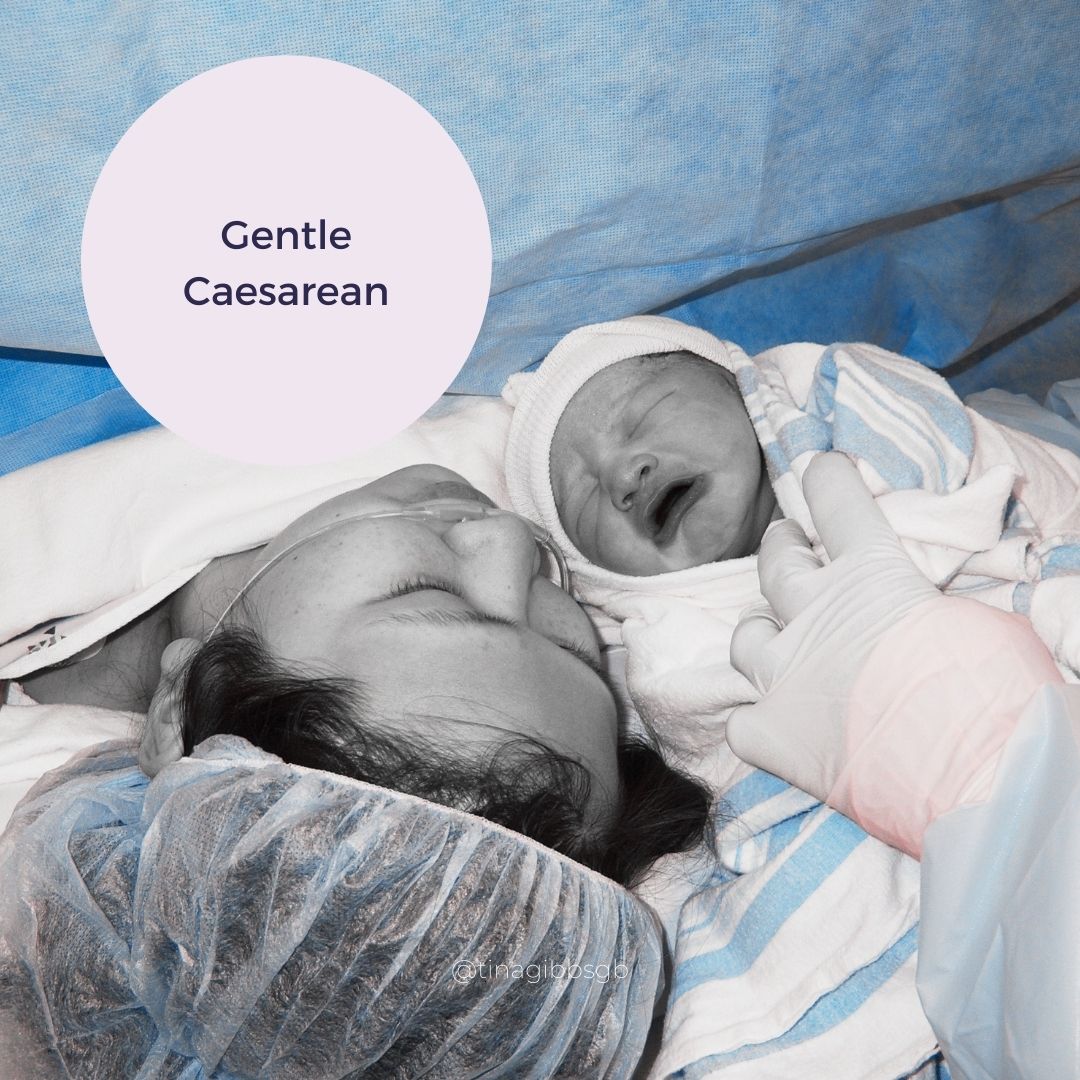
What is a gentle Caesarean Birth?

What is a gentle Caesarean Birth or Caesarean Section and why should expectant parents know about it?

Gentle Caesareans mimic some of the natural processes of giving birth:

  • A drug to encourage uterine contractions is given to the mother, so that your baby gets ‘pushed’ out by your uterus rather than pulled by the obstetrician.
  • A better view of the birth. You can ask for transparent drapes or have the drapes lowered early so that you can see your baby being born.
  • Immediate skin-to-skin contact (Most NHS trusts offer/encourage this as part of any birth, your baby’s health permitting).
  • Optimal (aka delayed) cord clamping. Wait until the umbilical cord stops pulsating.
  • Less restrictive equipment. Your IV line may be put in your nondominant hand, leaving your dominant hand free to hold your baby. The EKG leads can be placed on your back or lower chest instead of your upper chest, so they don’t get in the way of skin-to-skin. (Most NHS trusts offer this as part of any caesarean birth).
  • Dimmer lighting, especially at the time of your baby’s birth. (Most NHS trusts offer this as part of any caesarean birth).
  • Reduced noise and background music of your choice. (Most NHS trusts offer this as part of any caesarean birth).
Video of a gentle Caesarean at Nottingham City Hospital – Note: due to some graphic content shown in the video, the video is age-restricted and you’ll have to login to youtube and watch it there.

A gentle Caesarean Birth seems less like a major abdominal surgery for the mother and more like a vaginal birth. However, although the gentle caesarean is gentler to the baby the recovery post surgery for the mother remains the same. It still is major abdominal surgery.

Who is in the theatre during my gentle caesarean birth?

As in the video above, there are usually quite a few people in the room. They will all introduce themselves with their name and role. Have a look at the video below, it shows one example of a possible setup in the operating theatre.

Regardless of whether you are planning a caesarean birth from the get go, or something has come up during your pregnancy and a caesarean birth seems to be the safest option for you, it is worthwhile exploring your options. What choices do you have for your birth experiences? Which aspects of your birth can you control?

Book a 1:1 birth planning session with me! For just £60 you’ll get 2 hours on zoom with me exploring your options and planning your birth!

Posted on 2 Comments

Positive Birth Affirmations

Free positive birth affirmations to support you in your hypnobirthing journey.

Positive birth affirmations are also know as positive self-talk or statements for a positive birth.

Positive birth affirmations help to programme your subconscious to tune into your natural ability to give birth, your strength and resilience. Letting go of fears and to build your body-confidence is a big part of your hypnobirthing experience and helps you work towards a more positive birth experience. Remember, your job is to focus on your comfort and the birth you want and your midwives are there to support you and your baby.

You can write your own positive birth affirmations on cards or sticky notes and put them up around your home to look at, take in and practice daily. Make them colourful and engaging to look at or make keep them all the same. It’s up to you! Your body, your baby, your birth experience!

I have designed a few different styles of affirmations for you to download for free.

Feel free to print them to put up around your home. That way you are creating a wonderful, safe, inspiring environment for you to enjoy your pregnancy and prepare for the birth of your baby!

Top Tip:

Print or make two sets of Positive birth affirmations. One for keeping around your home and one set to place in your birth environment or on a portable vision board for birth!

When it is time for your baby’s birth, take the affirmation with you in the birthing space. Every time, you notice one of these affirmations, or your partner reads them to you, they will trigger to help you relax, feel resourceful, welcome your contraction waves.

Every time you spot an affirmation in your home, look at it and take a moment to slow down, breathe and connect with your body and your baby!

You can download these positive affirmations for FREE and print them here:

Posted on Leave a comment

Bonding with your baby in pregnancy

Bonding with your baby in pregnancy

Bonding with your baby can begin in pregnancy, while your baby is still growing in the womb. It is a perfect time to start the bonding process during pregnancy. Attachment is very important for your babies development when they are born.

What can babies experience in the womb?

Sound

From around 18 weeks of pregnancy your baby will begin to experience sounds. They can hear all the gurgling noises inside your body as well as your heartbeat. They still find your/a heartbeat comforting and familiar after they are born! From around 26 weeks of pregnancy, your baby may start reacting to sounds from outside. You can start playing music to them or your partner could read them a story! This is a great way to start bonding with your baby when you are not the pregnant parent! Your baby will recognise their parents’ voices (and any other people you live with or spend a lot of time with) when they are born. As well as remembering certain sounds from their mother’s language, babies may remember certain music played to them in the womb.

Sight

Your baby will open their eyes around 22 weeks of pregnancy and will be able to recognize light. However their sight will continue to develop after they are born.

Smell & Taste

Your baby can take in smells and tastes via the amniotic fluid. Your baby’s taste buds are mature from as early as 13 weeks of pregnancy! Their sense of smell will start working around 16 weeks of pregnancy.

Touch

Around 18 weeks, your baby likes to sleep in the womb while their you are awake, as your movement may rock them to sleep. They develop the sensation of pain around 22 weeks, and at 26 weeks they may move in response to a hand being rubbed on your belly.

Language development

From about 32 weeks of pregnancy, your baby may start to recognise certain vowel sounds from your language. Some research suggests that very early language development may begin before birth.

How to start bonding with your baby during pregnancy

Some ideas to help you to start the bonding process with your baby during pregnancy:

  • Talk and sing to your baby, knowing they can hear you. – Top tip: Use a cardboard tube, point it at the mother’s belly and talk through it to read a story or sing to your baby to slightly amplify your voice.
  • Relax, look after yourself and try not to stress. Evidence shows that if a mother feels calm and relaxed during her pregnancy, the health outcome for your baby is better. Your partner or a close friend may be helpful if you need someone to talk to.
  • Gently rub or massage your belly and press against your baby’s kicks to respond to them.
  • Play music to your baby. Some mothers like to place headphones on their belly. Choose calming music such as lullabies or music that mimics a heartbeat (around 60 beats per minute).

Bonding for fathers, dads, partners, non-pregnant mothers and parents

  • Massage the bump if the pregnant mother or person is happy for you to do so.
  • Feel the baby kicking as often as you can.
  • Attend antenatal appointments and antenatal classes together to prepare for the birth and life with your baby.
  • If you’re planning to be a birth partner, go to the prenatal classes such as hypnobirthing, as well. It is important that you both explore and understand your options so that you can make informed decisions during the birth.
  • Read a story to your baby in the bump, so they get used to your voice.

Bonding with baby for older siblings

By preparing your toddler or child for the upcoming birth, you can help them to bond with the baby. Have a look at my other post ‘Pregnant again’ for some tips for siblings!

Although you may not fall in love with your baby as soon as they are born, starting the bonding process during pregnancy can help your baby to bond with you. Your love for them and bond with them may appear later, once you got to know them a bit better.

References

Schaal B et al. Human foetuses learn odours from their pregnant mother’s diet. Chem Senses 2000;25:729-37.

Lecanuet JP, Schaal B. Fetal sensory competencies. Eur J Obstet Gynecol Reprod Biol 1996;68:1-2.

Posted on 1 Comment

Aromatherapy for Childbirth

Studies have found higher comfort and satisfaction when people use aromatherapy for childbirth during their birth experience. Whether you are planning to give birth at home, at your a hospital or midwife-led unit, Aromatherapy for Childbirth has become very popular recently. Many NHS trusts offer aromatherapy to mothers and birthing people during labour and their midwives are trained and keen to use it.

Aromatherapy for Childbirth

How does it work?

Different scents/essential oils have different uses, some may help decreasing nausea and vomiting others reduce anxieties.

In one large study, more than 50% of mothers rated aromatherapy as helpful for coping with labour and birth. In general, aromatherapy may promote relaxation, ease anxiety, and promote greater satisfaction with your labour and childbirth experience. Currently, there aren’t any research studies showing any harm occurring to mothers and babies who used aromatherapy during labour and birth. However, essential oils used for aromatherapy have the potential to cause allergic reactions and skin irritation.

How to use during labour?

You could use your chosen essential oil or combination of oils as follows:

  • use a diffuser to diffuse the scent into the room
  • add a few drops onto a (paper) fan
  • on your hot/cold flannel
  • on a cotton wool pad/ball
  • wear aromatherapy jewellery during labour

Benefits of Aromatherapy for Childbirth

  • Affordable
  • Simple to use
  • Non-invasive
  • May be an alternative to pharmaceutical pain-relief
  • Can be used alongside pharmaceutical pain-relief
  • May help to ease anxiety and promote calm
  • No evidence of harm for mother or baby
  • Medical professionals also benefit from the relaxing effects

To book your personal course to explore your aromatic options, please contact me!

References:

Burns EE, Blamey C, Ersser SJ, Barnetson L, Lloyd AJ. An investigation into the use of aromatherapy in intrapartum midwifery practice. J Altern Complement Med. 2000 Apr;6(2):141-7. doi: 10.1089/acm.2000.6.141. PMID: 10784271.

Tabatabaeichehr M, Mortazavi H. The Effectiveness of Aromatherapy in the Management of Labor Pain and Anxiety: A Systematic Review. Ethiop J Health Sci. 2020;30(3):449-458. doi:10.4314/ejhs.v30i3.16

Posted on 5 Comments

What to pack in my hospital bag for childbirth?

Hospital Bag for Childbirth Homebirth Bag

Top tips on how when and what to pack in your hospital bag for childbirth.

You can pack your birth bag whenever you like but ideally would like to have it ready at least 3 weeks before your due date.

If you have a birth partner, get them involved in packing the hospital bag. That way they know where things are for the birth!

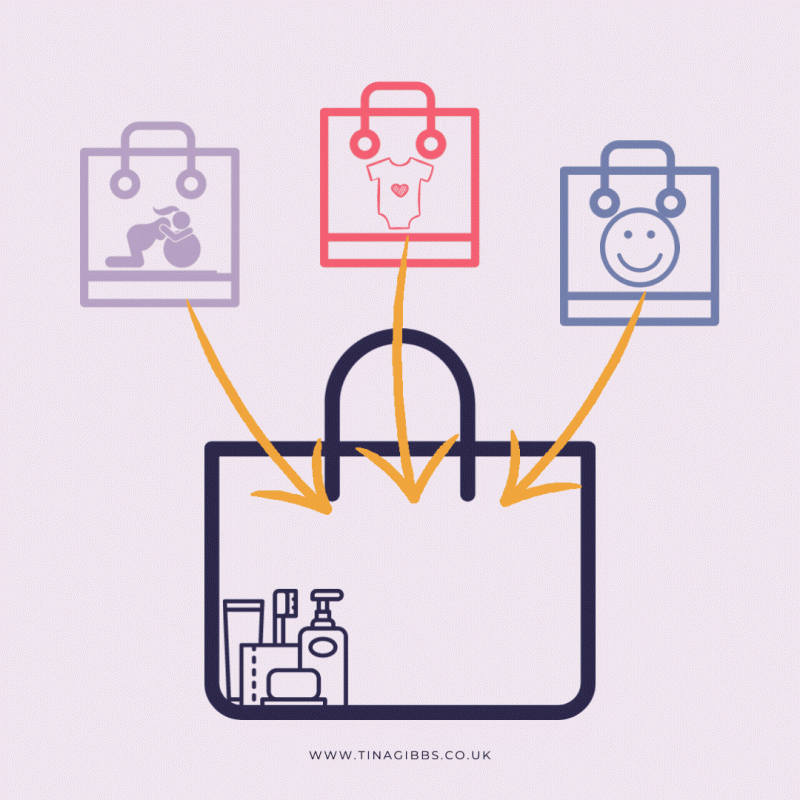
Use one large bag as your hospital bag which will contain your ‘overnight stuff’. Then pack three smaller bags to fit into you large hospital bag for childbirth!

Hospital Bag for Childbirth Hombirth Bag
Top Tip for your Hospital Bag: Pack Smaller bags into one larger bag or suitcase!

Bag for mum/birthing person

  • Your birth plan and maternity notes
  • Comfy, lose-fit dressing gown
  • Nighties  (ideally ones that opens at the front for breastfeeding access)
  • Comfy loose clothes – big baggy jogging bottoms, zip-up hoodie, tops that undo down the front for skin-to-skin/feeding
  • Slippers that you can slide your feet into rather than pulling on – if you have a Caesarean Birth bending over is tricky.
  • Socks – often women get cold feet during labour
  • Slip-on shoes
  • Flip-flops to wear in the shower
  • Hand Sanitiser
  • Wash bag including shower gel with a hook, so you don’t have to bend over in the shower, hand cream as constant hand gel use makes hands very sore,
  • lip balm as air is dry
  • Packs of waisted Bridget Jones massive cotton knickers in case you have a Caesarean Birth – dark colours are best and a couple of sizes up from your usual
  • Arnica and/or witch hazel for piles and bruising relief
  • Maternity pads packs
  • Nursing bras
  • Large pack Breast pads in case of boob leakage or washable ones
  • Pillow and/or pillowcase from home
  • Towel – hospital ones are scratchy
  • Eye mask (it’s never dark!)
  • Face mask (if you’d like your washable ones)
  • Earplugs (it’s never quiet!)
  • Hairbands
  • Headphones
  • Phone with labour playlist downloaded (you’re usually allowed to take your phone into theatre and can play music via Bluetooth)
  • Small tripod to prop up your phone/camera
  • Phone charger
  • Phone Power Bank
  • Snacks. If having a Caesarean Birth maybe apricots/prunes to ease constipation – you may not have a bowel movement for several days, and it can be a strain
  • Peppermint Tea Bags. In the case of a Caesarean Birth, it helps to get rid of wind caused by the operation.
  • Sports drink
  • Books/magazines/puzzles – in case you have to stay in hospital beforehand, or after.
  • Tissues for all the crying
  • Photo of your partner for times when they cannot be with you or maybe something that they have given you i.e. love notes
  • Photo of older children
  • Photo of you pet(s)

Bag for baby

  • Muslins 
  • Nappies – newborn size 1 fits most babies – newborns go through approx 12 nappies a day
  • Cotton wool pads/balls
  • Baby clothes – at least vests,  sleepsuits/babygrows,  jumpers/cardigans, hat  including a going home outfit
  • Baby blankets  (cotton or cellular or wool)

Bag for partner

  • Change of clothes
  • Snacks
  • Phone & Chargers or power bank
  • Change for vending machines (shops may not be open for as long) and car park
  • Phone list (if you’d like to tell people right away)
  • Car seat to take your baby home. Practice putting in/out car beforehand!
  • Maybe keep a book/magazine in the car in case you have to wait in the car until after mother’s initial assessment (This is a ‘new’ thing which started during the COVID-19 pandemic. Not all hospital trusts will still operate that way. Ask your midwife/trust to check).

I hope this list is useful for some of you and please if you have anything to add or adapt contact me and I’ll add it to the list!

Posted on 1 Comment

Birth Partner Hacks

Birth Partner Hacks

Birth Partner Hacks, 5 simple hacks all birth partners should know about!

Are you a birth partner? You are not sure where to start when it comes to supporting the birthing mother/person? Maybe you feel like you don’t know where to start? You would like to know more about how to support your partner during labour and birth?

Here are some Birth Partner Hacks to get you started!

💜 The Hip Squeeze – a favourite of many birthing mothers/people

Put constant pressure on the hips during surges and push your weight into the birthing mother/person.

💜 Figure of 8 ball sit – some gentle movement

During surges, the birthing mother/person sits on an exercise/birth ball and moves their hips in a figure of eight pattern while leaning forward over the back of a chair.

💜 The slow dance – more gentle movement

Have a slow dance together. The mother’s/birthing person’s hips moving side to side. This will help you to find a rhythm in labour.

💜 Shake the apple tree – relaxes pelvic floor area

Touch the mother’s/birthing person’s thigh with both hands. Shake their thigh one at a time. Repeat for the other thigh. This can help to relax and release the pelvic floor to support the birthing process.

💜 Effleurage – light/gentle touch to engage the parasympathetic nervous system

This word means “gentle friction/touch.” Use both hands to gently sweep over the mother’s/birthing person’s body. This helps to engage the parasympathetic nervous system.

Would you like to learn more about childbirth and how to support the birthing woman or person during labour? Then why not hire a doula or book one of my workshops? I offer group and 1:1 workshops in Nottinghamshire, Lincolnshire and Leicestershire. All my services are also available as an online/virtual format!