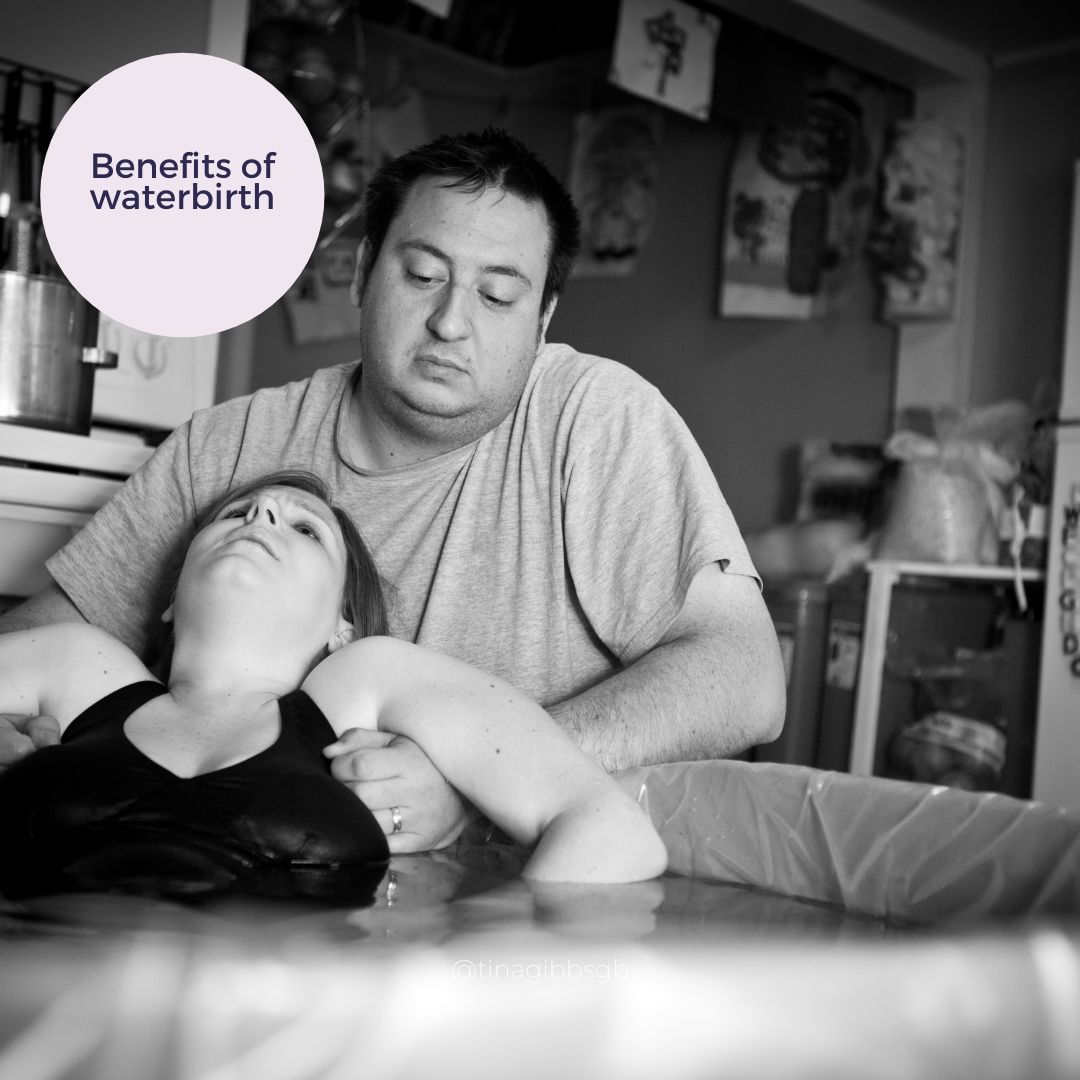
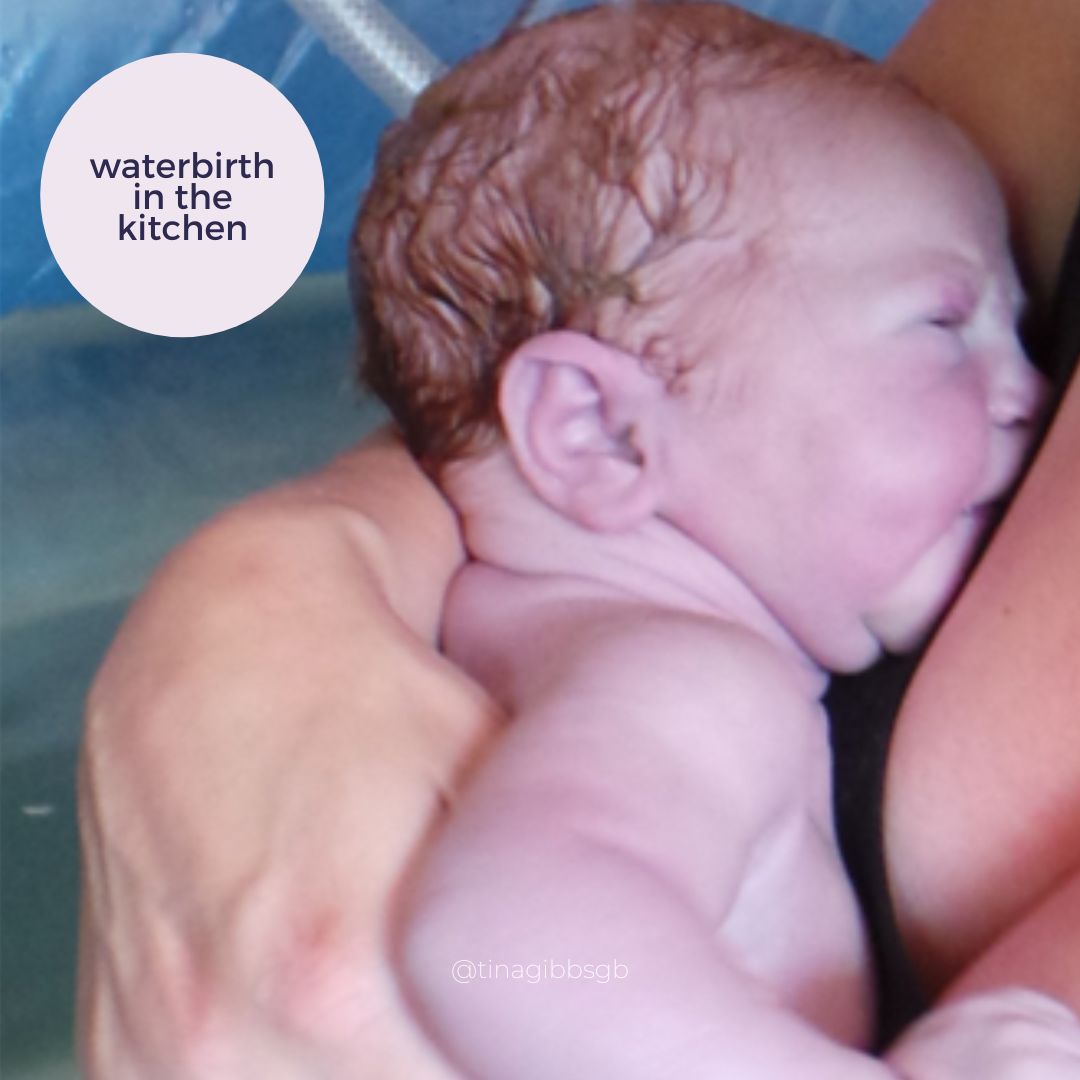
During a waterbirth, you labour in a pool of warm water and may also give birth in the pool. Using water in labour has become popular because of its soothing effects and the benefits many people experience.
Benefits of using water in labour
Pain relief: The warmth and buoyancy of the water can ease contractions and help you relax. Research shows that labouring in water reduces the need for an epidural.
Relaxation: Warm water can help you feel calmer and more in control, which supports the hormones of labour.
Freedom to move: The water supports your weight, making it easier to move and change position as your body guides you.
Fewer interventions: Studies have found that women who use water in labour are less likely to have an episiotomy and report high satisfaction with their birth.
A gentle arrival: Many parents feel that being born into warm water offers their baby a gentle transition into the world.
The practicalities of a waterbirth
Preparation: For a home waterbirth, set up your pool somewhere with plenty of space. Your midwife will want to reach you from at least three sides. Keep essentials such as towels within easy reach. In hospital or a birth centre, ask whether a pool is likely to be available.
When to get in: Many midwives suggest getting into the pool once labour is well established and contractions are regular and strong. Some people find that getting in very early slows things down, so if your contractions ease off, you can always get out, move around and get back in later.
Giving birth in water: Your baby won’t try to breathe until they meet the air. If you give birth in the pool, your baby needs to be born completely underwater and then brought gently to the surface. Your midwife will advise you not to lift your bottom out of the water once the head is born.
After the birth: Your baby is lifted gently out of the water and placed on your chest. The cord is usually left unclamped for a while, often until it stops pulsating.
Birthing the placenta: Most midwives will recommend birthing your placenta “on dry land”, because it is easier to judge blood loss out of the water. If you would like to birth your placenta in the pool, talk to your midwife in advance.
Here are some waterbirth affirmations you might find useful:
- “My body is designed for this, and I trust it.”
- “With every wave, I feel more relaxed and confident in my ability to birth my baby.”
- “As the water holds me, I surrender to the rhythm of labour and welcome my baby with joy.”
- “Each breath fills me with strength and peace.”
- “I am surrounded by love and support, and I am safe.”
- “The warmth of the water eases my body and lets me focus on meeting my baby.”
- “With each contraction, I release tension and fear and bring my baby closer.”
- “I float, I breathe, I let go.”
- “The gentle water reminds me to stay present and connected to my body and my baby.”
- “I am strong, I am capable, and I can do this.”
Planning a waterbirth
Start planning early. Talk to your midwife about whether a waterbirth is suitable for you, add it to your birth preferences, and find out about pool availability where you plan to give birth. If you are planning a home birth, look into hiring or buying a birth pool well in advance.
With preparation, support and attention to safety, a waterbirth can be a positive, empowering experience for you and your family.
Note: Always check with your midwife or doctor whether a waterbirth is suitable for you, based on your own health and circumstances.
Online Birth Preparation Course only £35!
Please also check out my online course! No videos, just text and images to learn in your own time. Includes hypnobirthing mp3s, scripts, workbook, handouts, infographics and much more! Lots and lots of information at your fingertips! Includes:
- hypnobirthing mp3s
- hypnobirthing scripts
- written information
- infographics and other imagery
- printable handouts
- printable workbook/journal

Sources and further reading
- Birthplace in England Collaborative Group (2011) Perinatal and maternal outcomes by planned place of birth for healthy women with low risk pregnancies: the Birthplace in England national prospective cohort study. BMJ 343:d7400.
- Burns E, Feeley C, Hall PJ, et al. (2022) Systematic review and meta-analysis to examine intrapartum interventions, and maternal and neonatal outcomes following immersion in water during labour and waterbirth. BMJ Open 12:e056517. doi: 10.1136/bmjopen-2021-056517
- Cluett ER, Burns E, Cuthbert A. (2018) Immersion in water during labour and birth. Cochrane Database of Systematic Reviews, Issue 5. Art. No.: CD000111. doi: 10.1002/14651858.CD000111.pub4
- Gilbert RE, Tookey PA. (1999) Perinatal mortality and morbidity among babies delivered in water: surveillance study and postal survey. BMJ 319(7208):483–7. doi: 10.1136/bmj.319.7208.483
- NICE (2023) Intrapartum care. NICE guideline NG235.
- Ulfsdottir H, Saltvedt S, Georgsson S. (2019) Women’s experiences of waterbirth compared with conventional uncomplicated births. Midwifery 79:102547. doi: 10.1016/j.midw.2019.102547