
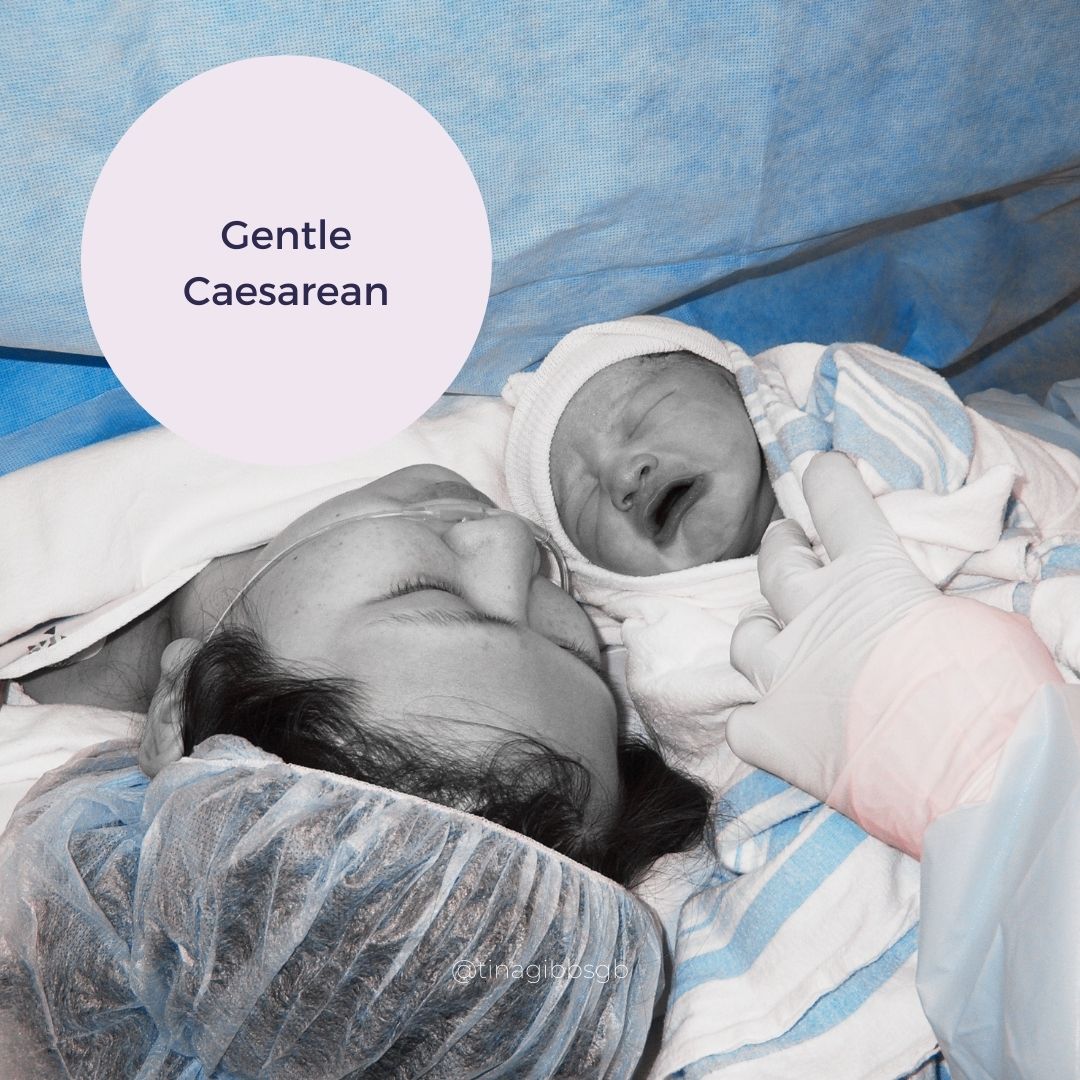
What is a gentle caesarean birth, and why should expectant parents know about it?
A gentle caesarean mimics some of the natural processes of a vaginal birth:
- A drug to encourage uterine contractions can be given, so that your baby is gently ‘pushed’ out by your uterus rather than pulled out by the obstetrician.
- A better view of the birth: you can ask for clear drapes, or for the drapes to be lowered, so you can see your baby being born.
- Immediate skin-to-skin contact (most NHS trusts offer and encourage this for every birth, if your baby is well).
- Optimal (delayed) cord clamping – waiting until the umbilical cord stops pulsating.
- Less restrictive equipment: your IV line can go in your non-dominant hand, leaving your dominant hand free to hold your baby, and the ECG leads can be placed on your back or lower chest so they don’t get in the way of skin-to-skin (most NHS trusts offer this for any caesarean birth).
- Dimmer lighting, especially at the moment of birth (offered by most NHS trusts).
- Less noise, and background music of your choice (offered by most NHS trusts).
A gentle caesarean can feel less like major abdominal surgery and more like a vaginal birth. However, while it is gentler for the baby, recovery for the mother is the same – it is still major abdominal surgery.
Who is in the theatre during a gentle caesarean birth?
As you can see in the video above, there are usually quite a few people in the room, and they will all introduce themselves with their name and role. The video below shows one example of how an operating theatre might be set up.
Whether you’re planning a caesarean birth from the start, or something has come up during pregnancy that makes a caesarean the safest option, it’s worth exploring your options. What choices do you have? Which parts of your birth can you control? For more ideas, read 7 ways to personalise your caesarean birth.