Birth Partner Hacks, 5 simple hacks all birth partners should know about!
Are you a birth partner? You are not sure where to start when it comes to supporting the birthing mother/person? Maybe you feel like you don’t know where to start? You would like to know more about how to support your partner during labour and birth?
Here are some Birth Partner Hacks to get you started!
💜 The Hip Squeeze – a favourite of many birthing mothers/people
Put constant pressure on the hips during surges and push your weight into the birthing mother/person.
💜 Figure of 8 ball sit – some gentle movement
During surges, the birthing mother/person sits on an exercise/birth ball and moves their hips in a figure of eight pattern while leaning forward over the back of a chair.
💜 The slow dance – more gentle movement
Have a slow dance together. The mother’s/birthing person’s hips moving side to side. This will help you to find a rhythm in labour.
💜 Shake the apple tree – relaxes pelvic floor area
Touch the mother’s/birthing person’s thigh with both hands. Shake their thigh one at a time. Repeat for the other thigh. This can help to relax and release the pelvic floor to support the birthing process.
💜 Effleurage – light/gentle touch to engage the parasympathetic nervous system
This word means “gentle friction/touch.” Use both hands to gently sweep over the mother’s/birthing person’s body. This helps to engage the parasympathetic nervous system.
Would you like to learn more about childbirth and how to support the birthing woman or person during labour? Then why not hire a doula or book one of my workshops? I offer group and 1:1 workshops in Nottinghamshire, Lincolnshire and Leicestershire. All my services are also available as an online/virtual format!
Baby Weaning or starting solid foods with your baby. How do you know when, how and where to start? Where can we find some tried and tested recipes? Are we exploring baby-led-weaning (BLW) or are we starting our baby on purees first? So many questions new parents have with regards of weaning their baby.
The current recommendation (at the time of writing) is to start weaning your baby around 6 months of age.
Baby Weaning – Signs of readiness
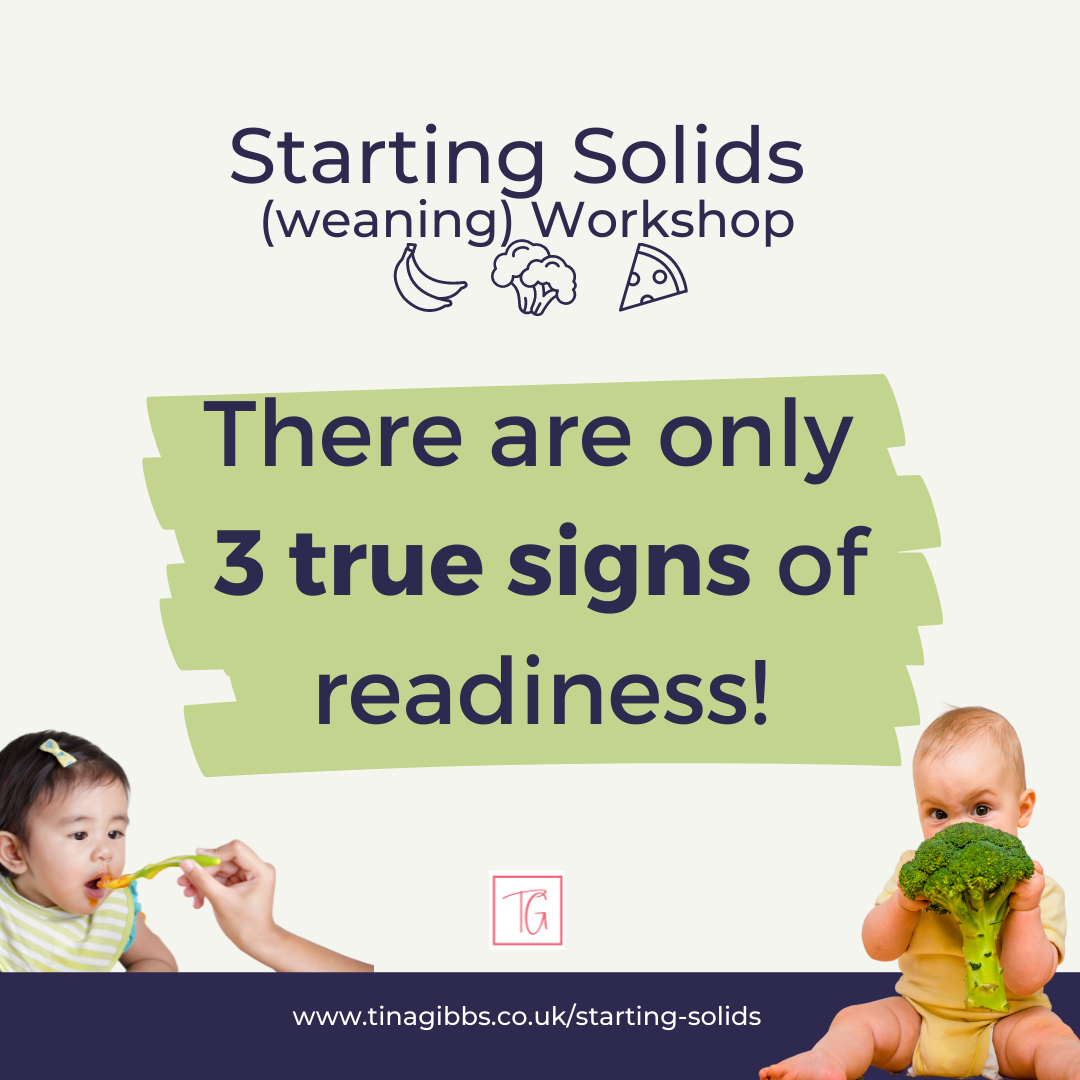
There are (only) three true signs of readiness
Your baby…
can sit up unaided and hold their head steady.
puts things to their mouth accurately
has lost their tongue thrust reflex and can swallow
When introducing solid foods to your baby and during their first year of life follow these golden rules:
Offer simple and unprocessed foods – Make the main part of the meal of simple and unprocessed foods.
Offer natural foods – Your child needs to see & touch their food so that they can
connect food tastes with how things look and feel – this enables them to learn how to choose foods for themselves.
Let your baby get involved in the eating experience – Make eating a pleasurable, calm and relaxed experience. Eat together with your baby. Starting solid foods is not just nutrition it is learning and play, too!
Avoid ultra-processed foods – If there are too many ingredients on the label (5+) avoid giving it to your little one!
Start introducing solids at about 6 months of age alongside breastmilk or infant formula. Your baby’s milk will still be the main source of energy and nutrients for your baby.
Whether to start off with purees, finger foods or a combination pretty much depends on your baby, your personal preferences and your life style.
Some babies will happily start off with finger and mashed foods, and may move on swiftly to a range of tastes and textures. However, other babies may progress more slowly and start off eating smooth foods off a spoon. When spoon-feeding, offer foods they can hold themselves alongside, to encourage your baby to move on to mashed and finger foods.
Smooth foods have no big lumps, pips, seeds or skin.
Mashed foods are raw or cooked foods mashed to a slightly lumpy consistency.
Finger foods are raw or cooked foods shaped/cut into batons. It is best to cut them bigger than a baby’s hand, so that your baby can hold them more easily. Use your (adult) finger as a sizing guide.
Always pay attention to your baby when they are eating. Never leave them alone.
Cut foods such as grapes, blueberries in half or quarters
Avoid nuts, popcorn and any hard-ish chunks of food
Stay with you baby when they are eating
Start off with soft and cooked foods such as vegetables and fruit
Wash your raw foods thoroughly
Learn more about weaning your baby
If you’d like to learn more about weaning your baby, book a starting solids (weaning) workshop with me! I offer the workshop in different formats:
1:1 (up to two adults with their baby/babies) or group (up to 8 adults with their babies). You can book these in-person to be held in Scarrington, Nottinghamshire at my home or I can travel to your home with a 10-mile radius of Scarrington/Bingham. Alternatively, I also offer a online live video course option.
In addition to the traditional starting solids workshop, I also offer a live online cook-along version. This is available online and as a 1:1 format only.
How does Hypnobirthing work and what is the difference between hypnobirthing and mindful hypnobirthing?
Hypnobirthing is a method to help women and birthing people to keep calm during pregnancy and childbirth.
There is not much research around hypnobirthing available. However, from my experience of giving birth to my four children and supporting families since 2010, I would encourage any family to explore hypnobirthing.
So how does hypnobirthing work? Do you have to be a Hippie?
Hypnobirthing [Hypnosis] works with the power of suggestion. Your practitioner works with you using affirmations, visualisations and suggestion to help you [the birthing mother/person] to relax your body and mind, guide your thoughts as well as control your breathing. Your practitioner does not need to be present during the birth, but you’ll have to practice your techniques thoroughly to fully benefit from them and for hypnobirthing to work for you!
You can learn the techniques during an in-person workshop, or online in a group or a private 1:1 setting. Some parents chose to simply do a self-paced online course or read a book.
Benefits of Hypnobirthing
Alternative for anyone who is looking for a non-medical pain relief method
Can be used alongside medical and other pain management methods
Non-invasive
Accessible to anyone who practices
No adverse health outcomes / side-effects known
Inexpensive
The skills learnt are transferrable
Disadvantages of Hypnobirthing
Learning the techniques takes time and effort and requires practice
The language used in a hospital setting may disrupt the hypnotic state
Not provided by the NHS
Not everyone can afford a workshop or practitioner
Families [mostly first-time parents] have reported that their relaxed state was misinterpreted by medical professionals [midwives] at arrival at the hospital and seen as not ‘far along enough to stay’.
May not meet your expectations
Hypnosis + Mindfulness = Magic
WHAT IS HYPNOBIRTHING?
Hypnobirthing is a range of hypnosis techniques to help keep you calm and relaxed during the birth.
Why is being calm and relaxed during birth so important?
Well, it’s pretty basic. Our survival instinct makes it important!
Naturally and instinctively, all mammals – including humans – have a fight or flight response when in danger. So when we are scared or anxious our bodies produce stress hormones to help us deal with the situation. Some situations will require us to run and act quickly and the stress hormones help us do so. These protective stress hormones (including adrenaline) block any non-essential systems such as our digestive system and raise our blood pressure and heart rate. Our blood is diverted away from our brain, uterus etc. into our legs and arms.
Adrenaline, while it is a life-guard hormone also slows down labour by inhibiting the hormone oxytocin…
Oxytocin is the hormone of love, labour and lactation. It gives us uterine contraction but also clouds our perception of the intensity. Your natural oxytocin makes you feel better, happier and let’s your body-own pain killers (endorphins) thrive, too.
Nobody wants to give birth in an uncomfortable or unsafe environment
The way our body responds to the environment around us is rooted in the basic survival instinct that we used thousands of years ago. Of course we all know know that your midwives and other healthcare professionals won’t hurt your baby, but we are still ‘triggered’ by the ‘strangers’ in the room and/or the unfamiliar environment. These triggers make us feel out of control and maybe unable to birth our babies without fear and pain taking over. Hypnobirthing techniques aim to deal with your anxieties around childbirth, and to help you create a ‘safe place’ inside your head that you can retreat to at anytime. Other techniques include the toning down of unwanted sensations and thoughts.
What is Mindful Hypnobirthing?
Mindful Hypnobirthing was first introduced by Sophie Fletcher in her book Mindful Hypnobirthing. Sophie Fletcher was the first to combine Hypnosis with Mindfulness for Childbirth.
Hypnosis
Hypnosis is the being in a state of consciousness in which one seemingly loses the power of voluntary action. Furthermore they are highly responsive to suggestion or direction. The recipient is always in control of how deep the hypnosis goes and will only accept suggestions/changes which they are willing to make.
Mindfulness
Mindfulness is a state of mind where you are aware and live ‘in the moment’. You are paying attention to the here and now. Your awareness is in the present moment while you are calmly acknowledging and accepting your feelings, thoughts, and sensations.
Mindful Hypnobirthing combines both self-hypnosis as well as mindfulness techniques to enable you and your partner to have an empowered, calm and positive birth experience. I am offering 1:1 mindful hypnobirthing sessions online and in the comfort of your own home.
Mindful Hypnobirthing in Bingham and online with Tina Gibbs
Congratulations! Being pregnant again is especially challenging when the next older child is still very young. Having a toddler and being pregnant can be very hard work! You are of course tired because you’re pregnant but also, you cannot nap in the day as easily. The best thing for you and your family in this situation is to accept help. If you are lucky enough to have family or friends offering to look after the older one(s), take it! If your older one(s) is/are in school or nursery, rest when you have some time to yourself.
When and how are you going to tell your older child or children? Well, everyone is different. Some parents tell their children as soon as they know, others like to wait longer. There is no right or wrong. Sometimes it depends on the age of the older ones. If you have a toddler to explain the situation to, it might be a good idea to get a baby doll for them. They can then explore how to treat a baby and get used to the idea of having a baby around. There are some things you can do to prepare yourself and your toddler or child for the new arrival:
If you are thinking of moving older siblings to new rooms, it may be easier for them if you do it before the new baby arrives. They may be less jealous if your new baby was not the most obvious reason. Maybe saying you are moving to a big-boy/girl-room now…
A new baby could give older siblings (especially if they are very young) a present to start off on a good note 🙂
Think about who would be able to look after older siblings, while you are pregnant and need a rest, when you give birth and for the early days
Only because you feel like you don’t give your second child as much attention as you did your first one, that does not mean that you are less attached to one or the other.
It is okay to sometimes use the TV or other electronic devices to keep the older child or children occupied while you are resting and once your new baby is born 🙂
Eat healthily and get plenty of fresh air and sunlight that will help with the tiredness, while you have to limit your caffeine intake.
Look after yourself and remember to take folic acid from the time you start trying to conceive and until at least 12 weeks of pregnancy.
Practice your breathing and relaxation techniques for labour and birth daily.
Try to gently exercise / go for a walk regularly; this will keep your energy levels up!
Maybe you’d like to watch some birth videos with the older sibling(s). I suggest that you watch them by yourself first and then choose one or two to watch together. I have created a library of birth videos. There is even a section of other mammals giving birth!
You can also book a private 1:1 antenatal session with me for you to prepare yourself and your partner for the birth. In addition to that, I have my lovely Mamamor dolls, which I can use to demonstrate vaginal as well as caesarean birth to children or adults (see demo videos below).
If you are pregnant again and your previous birth was traumatic, it may be beneficial to speak to a doula or perinatal educator who is trauma informed. A non-jugemental approach to your new pregnancy and birth experience to help you to achieve a positive birth experience this time round. My wonderful colleague Sheryl (@simplynatal) calls it your Healing Birth.
How to be more comfortable during the birth of your baby or babies? Here are 26 things to try… Your A-Z of self-help during childbirth. Have a look through the images, try out some of the things below at home and see how they make you feel. Pick and chose, write your own. Your body, your baby, your birth!
Here are some of my suggestions
Aromatherapy: A strong anchor, that increases relaxation and comfort, reduces anxiety and supports the birth process.
Breathing Techniques: Focus on your out-breath, deep breathing. Deep breathing = more oxygen for your baby. Soft, relaxed lips = soft relaxed pelvic floor.
Candles: and/or dimmed soft lighting in the room can increase the sense of privacy, comfort and safety.
Doula: Emotional and practical support. Information giving and signposting. Supporting informed-choice.
Endorphins: Your body’s feel-good hormone and one of your body’s own coping mechanisms for discomfort or pain.
Fan: It is often very hot in a birthing room. A fan can provide you with some welcome air and coolness. Why not add a drop of your favourite aromatherapy oil to it?
Gas & Air: 50% Oxygen and 50% Nitrous oxide (laughing gas). Quick acting, self-administered and popular during childbirth – at least in the UK
Hypnobirthing: Improves satisfaction with the birth experience. Whether you are planning a home or hospital birth, vaginal or caesarean birth, either way, hypnobirthing helps you stay in control. Focus on what you can control.
Imagination: Imagine your safe place, imagine your baby moving down the birth canal or being born by caesarean birth. Imagine you melt an ice cube with your breath….
Joke around: Jokes and a sense of humour are highly recommended during childbirth. After all, you cannot be tense if you’re laughing!
Knees in heels out: Opens and increases the space in your pelvis, making it easier for your baby to be born. On your knees, move your knees together and your heels out. In a squat, keep knees parallel to your hips and feet/toes pointing forward.
Loo: Empty your bladder every 45 – 60 minutes to optimize available space for your baby to be born.
Massage: Massage can help you relax. The double hip squeeze offering counter-pressure may help you be more comfortable during the birth.
Nourishment: Have some food and drink available. Keep hydrated and eat while you feel like it to keep your energy up.
Oxygen: The deeper and calmer you breathe, the more oxygen will be circulating to your baby but also to your uterus. The uterus is a muscle and works more effectively when well-oxygenated.
Pause: Sometimes you need to pause for a moment. To reset your energy and re-focus yourself.
Questions: Question what you don’t understand. Question why your healthcare provider suggests xx and ask for more information and/or alternatives.
Relax: The more relaxed you are, the easier, quicker, more comfortable and more enjoyable your birth will be.
Shower: The gentle trickle or stronger stream of water over your belly can be soothing during childbirth.
Tens Machine: Provides an element of control, and some distraction and helps to stimulate your body’s endorphins.
UFO: Upright, Forward and Open (pelvis) positions are beneficial for the birth process.
Vocalize: Make some noise. Deep belly or abdominal noises use your diaphragm. This can be beneficial for the birthing process, especially during the ‘pushing’ stage. You may sound a little bit like a cow… moooooo….
Waterbirth: Submerging your belly in water such as a birth pool is very soothing and a well-known form of pain management during labour and birth.
Kisses: Kisses, hugs, touch, being close to a loved one… These things help your body release oxytocin. Oxytocin is the hormone of love, labour and lactation. Beneficial for birth, breastfeeding and bonding!
You: Your body, your baby, your choices, your birth! Make informed choices for you, your family, your birth and your journey into parenthood. This is about YOU!
Zzzzz Sleep: Doze off in between contractions. Even easier when you have an epidural…
See my @tinagibbsgb on instagram for more info on each of the suggestions.
If you would like to write your own, here is a free template (see the four designs below)!
This and many more top tips are included in your self-paced online childbirth preparation course!
Please also check out my online course! No videos, just text and images to learn in your own time. Includes hypnobirthing mp3s, scripts, workbook, handouts, infographics and much more! Lots and lots of information at your fingertips! Includes:
Most antenatal education formats virtual or in-person, include breathing techniques for childbirth. There are a range of different techniques used by different organizations or private facilitators. Breathing techniques are well known for being helpful in stressful situations and to help people relax.
As birth workers we know it’s important, we know it works (when practised) and most parents-to-be have heard about it, too. However, when I facilitate antenatal education classes, I often get eye-rolling from some parents-to-be when introducing the topic, especially when I ask parents-to-be to join in and give it a go. Therefore, I have come up with a fun activity, that parents-to-be can practise within their couple during the class and at home.
Fortune-Tellers/cootie catchers to practice for labour and birth!
You can print all of my activities on standard A4 paper. Every time I have used any of these fortune-tellers with pregnant parents and their birth partners, they were a great success! Parents enjoy playing with the fortune-tellers and reviving some childhood memories at the same time.
A labour or childbirth beadline is such a lovely way to keep track of special moments! It’s a collection of often colourful beads strung together on a strong fishing line or similar thread. You can get creative by using different-sized beads to represent contractions and breaks; some folks even choose different colours or use both! I personally enjoy working with wooden beads, but really, any material can work beautifully. I love using shiny new beads along with pre-loved treasures from broken jewellery or charming finds from charity shops. #labourbeadline #labourbeadlines
Labour beadline for childbirth education
How do I use a labour beadline?
Labour beadlines are a fantastic way to create a visual and tactile learning aid of the stages of childbirth/labour! During an antenatal class or a doula 1:1 you might invite your participants to label the different stages and even chat about the variations they notice. Adding pictures of positions and self-help tools along the timeline can spark discussions about the best techniques to try at each stage. For those teaching students who are visually impaired, using these beadlines serves as a wonderful tactile teaching aid in your classes. Just imagine how effective it can be to use different-sized beads to represent contractions versus breaks!
What do the beads mean?
Each larger bead, or those of different colours, stands for a contraction. The smaller beads at the beginning stand for mild contractions and will appear in an irregular order initially. As we progress, the gaps or breaks between these beads will shorten, and the contractions will become stronger, shown by larger beads. Knots or specially shaped rigged beads symbolize the transition phase. A larger special bead, like a heart-shaped one, beautifully represents the birth of the baby, while a smaller special bead at the end stands for the placenta.
When can I use a labour beadline?
A labour bead line is a wonderful resource for use in large groups, smaller gatherings, or one-on-one sessions. When working with larger groups, it can be advantageous to set up two or three labour bead lines, allowing parents-to-be to explore, interact with, and engage in hands-on learning. I’m pleased to share that most of my labour bead lines are designed with accessibility in mind, making them particularly suitable for visually impaired parents-to-be, as all the contraction beads are larger than the pause/break beads!
Where can I get a labour beadline?
You can absolutely create your own labour/childbirth beadline! It takes just 1-2 hours to design one, and if you prefer, you can also check out the ready-made options or even order a customized one from my website. We have a variety of lovely labour beadlines available for both singleton and multiple pregnancies. If making your own sounds like fun, I also offer…
When you have a new baby, deciding on sleep arrangements can be challenging. Where will the baby sleep? What type of bed fits in our room? How long can they use that bed? Will a Moses basket be suitable? Can twins sleep in a bedside crib? These are important questions. A cot bed is often the best value since babies can use it until they are toddlers, lasting about 4 years. However, cot beds are large and may not fit alongside your bed.
A Moses basket is small and easy to carry, so it doesn’t take up much space in the living room or bedroom. However, most babies outgrow it before six months old. Parents then need to find another sleep space in their bedroom, as it’s recommended for babies to sleep in the same room as at least one parent for six months.
A crib is a little bigger than a Moses basket and sturdier and should last you for the 6 months.
A bedside crib is a little bigger again, well, wider at least and is a great Moses basket alternative for co-bedding twins.
A cot is big enough and so is a cot bed. Just depends on whether either of them fit into the same room as you and your bed
Size comparison moses basket to cot bed
For most up-to-date sleep recommendations and advice, please visit the Lullaby Trust and BASIS Online.
For over 12 years, I supported thousands of expectant and new parents through antenatal education, creating my own teaching resources along the way. Today, I create digital and physical resources for midwives, doulas, student midwives, antenatal teachers, birth educators, healthcare professionals and teachers who want engaging, ready-to-use materials that save preparation time and encourage discussion, learning and confidence.
Pregnancy, Birth & Perinatal Education Resources
Explore a growing collection of printable and digital teaching resources covering pregnancy, labour and birth, newborn care, infant feeding, early parenting and perinatal education. You’ll find:
Antenatal class activities and discussion resources
Pregnancy and birth worksheets, posters and handouts
Labour and birth games, activities and revision resources
Birth anatomy and physiology resources
Infant feeding and newborn care activities
Baby care and early parenting teaching materials
Practical hands-on resources for adult learners and secondary students
Whether you are teaching expectant parents, training future birth workers or supporting students learning about pregnancy and parenting, these resources are designed to make teaching easier and learning more engaging.
Pregnancy Announcements, Gender Reveals & Baby Shower Games
Looking for a fun way to announce a pregnancy or celebrate a new baby?
Discover printable and digital pregnancy announcement escape rooms, gender reveal escape rooms, twin gender reveal games, baby shower games and pregnancy announcement puzzles — perfect for:
Family gatherings
Baby showers
Gender reveal parties
Classroom announcements
Friends and loved ones
From themed escape room adventures to pregnancy announcement word searches and interactive reveal games, these activities add a memorable twist to sharing exciting news.
Commercial Use Clipart, Graphics & Fonts for Resource Creators
As well as educational resources, I create commercial-use clipart, graphics and fonts for teachers, small businesses, designers and educational resource creators.
My collection includes:
Pregnancy and birth clipart
Birth position illustrations
Anatomy and healthcare graphics
Escape room clipart
Cipher and code graphics
Puzzle and mystery game resources
General lifestyle and educational clipart
Doodle fonts
Cipher fonts and code fonts
Creative display fonts
All clipart and fonts include a commercial use licence, allowing you to use them when creating your own resources, classroom materials, digital products and designs for sale (please check the individual licence terms for full details).
Custom Resources & Personalised Designs
Need something created specifically for your business, class or organisation?
I can create personalised posters, activities and resources featuring your business colours, branding or logo.
Don’t forget to explore my blog for pregnancy, birth education, resource creation and teaching ideas.
Use the search bar below to find exactly what you need, or browse the shop to discover hundreds of resources created to support birth educators, teachers, parents and creative businesses.
Let’s make learning about pregnancy, birth, babies and parenting a little more creative, practical and enjoyable.