Posted on Leave a comment

Facilitating Antenatal Classes online

What do I need and where do I start when facilitating antenatal classes online? How can I keep my clients actively engaged in during the classes and how can I make my online antenatal classes more interactive?

What do I need to facilitate antenatal classes online?

When facilitating your antenatal classes online, it’s important that you have reliable equipment:

  • A reliable, stable and speedy internet connection. Test your internet connection with friends and family on a video call first, maybe while other people in your household stream some video content or play online games at the same time.
  • A PC or laptop. Ideally a modern one which can cope with the video and audio streaming content, multiple windows being open etc without overheating – especially during hot summer days!
  • A video conference platform such as zoom, Microsoft teams or similar. There are many different platforms available. My chosen platform is zoom as it (at the time of writing this) is the most flexible and suitable platform for interactive group education. If you are facilitating 1:1 only or use more of a lecture-style approach, any platform will do. When facilitating group antenatal classes online, I like to be able to split my larger group into smaller groups (breakout rooms in zoom) to give my clients some private ‘away from the teacher’ time but also allow for and encourage bonding as a group.
  • Some visual content such as powerpoint slides, google slides or canva presentations. For your visual learners, you ma wish to have some powerpoint slides (or similar) that you can share from time to time.
  • Some good lighting in the room so that your clients can see you.
  • A good camera and microphone so that your clients can see and hear you properly.
dress the baby (move the appropriate clothes onto the baby).

Where do I start?

Practise – Before you start facilitating online with/for paying clients, you may wish to practise with family members, friends or colleagues first. Alternatively or in addition to that, you could record yourself and watch it back.

Set expectations – set expectations with your clients. Let them know what to expect in advance. i.e. ‘please keep your cameras and microphones on, this is an interactive class’. or ‘mute yourselves’ for a lecture etc.

How do I keep/make my online antenatal classes interactive and fun?

Mix it up! Rather than having a full-on presentation going on, use your slides as visual aids. Use the breakout rooms (zoom) to create smaller groups. Use free* additional online tools such as mentimeter, kahoot, jamboard for wordclouds, quizzes and more.

wordsearch to annotate online on zoom

I have been using virtual

  • quizzes
  • card sorts
  • scavenger hunt
  • annotations
  • wordsearches
  • escape room
  • word clouds
  • polls
  • breakout rooms

and more in my virtual classes and workshops.

If you would like to learn more about some of the tools you can use and how to use them, book an empower hour with me. You can practise your approaches with me, get feedback on your activities and content or we can create your teaching plan and activities together. Any content we create during any of the sessions is yours to keep and use.

*free version available at the time of writing

Posted on Leave a comment

Make some noise during childbirth

Make some noise during childbirth

Make some noise during childbirth or not? What do you think is more helpful or beneficial for the birthing process?

The Mirror, recently printed an article about a mother who had shared on social media that her doctor told her to be quiet when giving birth. She felt that that was rude, which prompted me to write this post…

Make some noise during childbirth

Now, make some noise during childbirth? Yes, make some noise during childbirth!

Most women and birthing people will make some noise when they are birthing their baby or babies. You can use the noise to your advantage! Especially, lower, deeper abdominal noise and sounds can be helpful! If in doubt, any noise is better than holding your breath! Here are some examples of noised I’ve heard when attending births:

Growling/roaring – Occurs most likely and often during pushing, when a woman must summon up all of her strength to push out baby.

Low grunting – deep sounding noise from inside your abdomen, can help the birth process. It’s most often heard during the second stage (pushing) of labour. When making those deep, low sounds, you are using your diaphragm which helps the ‘pushing stage’.

Mantra/Affirmations/repeating words – another helpful way to stay calm, strong and focused during birth is to repeat a helpful mantra, affirmations or some words. The use of affirmations or mantra’s for birth is very common. You can sing them, say them out loud, say them in your head and/or read them. Here are some free affirmations for you to chose from/print or make your own. I have a recorded affirmation mp3 for which includes the script, so that your doula or partner can read them to you. They recording is available with and without background music.

Screaming – Unlike what you see in movies, screaming is actually uncommon during childbirth. However, if you observe the birthing woman or person screaming, it’s most likely that they are panicking and need some assistance/support to ground themselves, calm down and relax. A shoulder/touch anchor can be very helpful in this situation. To learn more about anchors for childbirth, join a hypnobirthing class!

Were you surprised about the noises you made while giving birth or you heard when someone was giving birth? Tell us in the comments!

Posted on Leave a comment

Keeping your baby cool in hot weather

Keeping your baby cool in hot weather

With the summer approaching, I would like to share some top tips on keeping your baby cool in hot weather. Keeping your baby cool in the hot weather is not the only thing to look out for, it is also important to keep them safe at the same time.

Sleeping/Bedtime/Naps in hot weather

  • Give them a cool bath before bedtime.
  • To keep your baby’s bedroom cool, keep windows, curtains or blinds closed during the day.
  • You may wish to use a fan to circulate the air in the room.  If you have a fan, a bottle of frozen water or bowl of ice in front of it cools the air as it moves.
  • Your baby will sleep most comfortably when the room is between 16C and 20C. You may wish to monitor the temperature with a room thermometer. Sometimes it is not possible to get the room to a comfortable temperature. When that is the case, think about letting your baby sleep in just a nappy.
  • Keep nightwear and bedclothes to a minimum. Maybe let them sleep in just a nappy on very hot days. For safer sleep recommendations for babies, please see the Lullaby Trust website.  

Travelling/Out and about/Outdoor play in hot weather

  • Keep your buggy, pram, car seat etc uncovered to allow the air to flow. Use a parasol or similar to provide shade instead. The temperature inside a covered buggy (or similar) rises very quickly and can become very dangerous, very quickly!
  • When travelling long distances in the car, allow for extra breaks and take your baby out of their car seat!
  • Babies under 6 months should be kept in the shade, or should wear a sun hat to keep them cool. Factor 50 or higher sun cream is recommended for babies over the age of 6 months.
  • For toddlers and older children, playing in a paddling pool is a good way of keeping cool. Find a place in the shade or create some shade for the pool during very hot weather and supervise children at all times. 

Hydration & Feeding

  • 0-6 months:
    • Fully breastfed babies do not need any water. They may feed more frequently on hot days to up their fluid intake.
    • If you’re bottle feeding, you can give your baby a little cooled boiled water in addition to their usual milk feeds.
  • from 6 months:
    • Offer your baby sips of water from a cup or beaker with their meals, once you have started to introduce solid foods. Their breastmilk or infant formula is still their main drink during the first year. When it is really hot, you may need to offer some additional water outside of mealtimes.
  • from 12 months:
    • Your baby’s main drinks should be water, breastmilk or whole (full fat) cows’ milk or plant-based milk. On really hot days, you can try giving them frozen lollies made from plain water or from very diluted fruit juice to help keep them hydrated. Any lollies containing fruit juice or other sources of sugar, can cause tooth decay and should be kept to a minimum and given at mealtimes.

Have a look at the Lullaby Trust’s video below, if you prefer visual information!

Further reading and references:

Posted on Leave a comment

Tips for keeping cool when pregnant

Tips for keeping cool when pregnant

Being pregnant when it’s hot can be uncomfortable. Here are some tips for keeping cool when pregnant in the hot summer months!

Tips for keeping cool when pregnant in hot weather.

Stay cool and safe with these cooling tips and tricks:

☀️ Stay hydrated – drink plenty of water. Drinking plenty of water helps to prevent dehydration. Drink more than on colder days as you’ll sweat more/loose more water in hot weather. Keep a bottle of water with you all day. Also, have a glass of water nearby in the night.

☀️ Wear loose and light clothing. Wear light-coloured, loose and breathable clothing. This allows the air to circulate around your skin and helps you to keep cool. When you are outside, seek shade, wear a sunhat, sunglasses and sunscreen. Maybe take a spray bottle with cold/iced water with you.

☀️ If you have a birth pool or paddling pool, fill it with cold water and sit in it. Submerging your body in the cool water will help you cool down.

☀️ Cool summer snacks such as cold or frozen watermelon, cucumber,… Freeze/chill some fruit and vegetables to eat.

☀️ Seek shade or stay indoors. If you can, stay indoors during the hottest part of the day. Seek some share when and where you can if you’re outside.

☀️ Exercise in the early morning hours or evening or in water. Adjust your exercise type and/or timing to suit the hot weather. It is cooler early in the morning and later in the evenings. Or seek exercises which you can do in water.

☀️ Put your feed up and rest. Chill out, hibernate, take a break. Look after yourself and your baby.

☀️ Put your feed in a washing up bowl filled with cold water – If you don’t have a bath, paddling pool or birthing pool, fill up a washing up bowl or bucket with cold water to put your feet in it. This also saves water…

☀️ Have a (paper) fan, to cool yourself down. Top tip: if using a paper fan, add two drops of peppermint essential oil onto your fan.

☀️ Eat ice lollies – You could make some ice-lollies from (sugar free) fruit juice, flavoured water, …

What are your top tips to stay cool in the heat?

These tips and tricks also help keeping you cool when you are not pregnant!

Know the signs of heat exhaustion and heat stroke!

Posted on Leave a comment

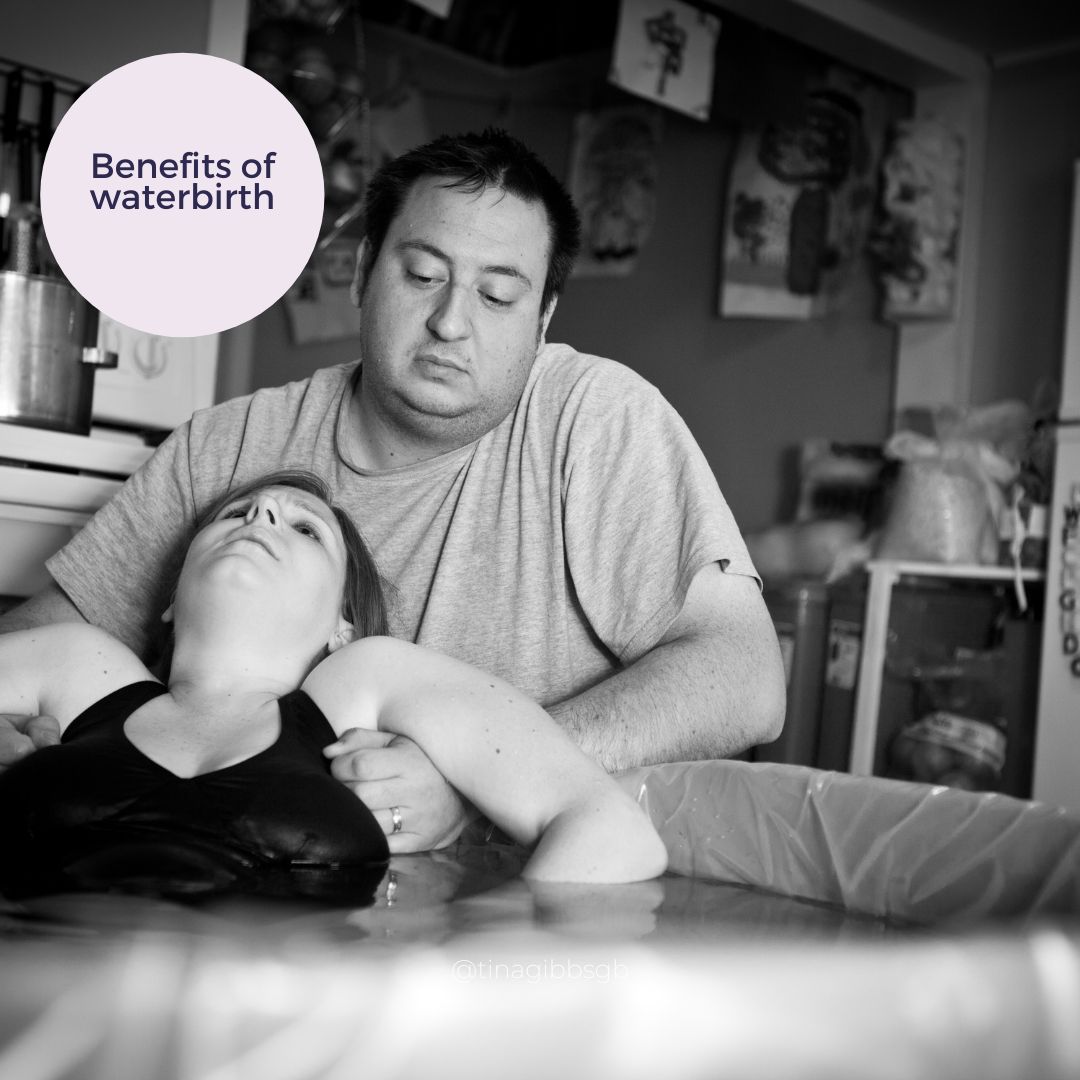
Benefits of Waterbirth

benefits of waterbirth

Due to it’s benefits, waterbirth has become increasingly popular with expectant families in the recent years. Let’s explore the benefits and possible disadvantages as well as practicalities a little further.

The Benefits of waterbirth:

  • Contractions will more comfortable
  • No known side effects on baby or mum
  • The warm water helps you to relax
  • Being relaxed helps your body to produce more endorphins (natural pain killers)
  • Being relaxed helps your body to produce more oxytocin (makes your contractions more efficient)
  • Less need for medical pain relief
  • Less need for drugs that accelerate labour
  • Shorter labour
  • Added privacy
  • Water supports your weight and makes you feel more comfortable and it will be easier for you to move and change positions.
  • You are more likely to achieve an unassisted vaginal birth
  • The birth is more gentle for your baby
  • Breastfeeding can be encouraged immediately
  • Reduced tearing as the water relaxes you and softens the perineum (the area between your vagina and anus).
  • A more enjoyable experience of labour and birth

Other comfort measures which can be used alongside/inside the pool:

Possible disadvantages:

  • Not suitable for everyone—under certain circumstances using water for labour / birth may not be recommended
  • Not available everywhere—your local birth unit or hospital may have limited or no pools
  • To hire or buy a birth pool for a homebirth can be expensive
  • Your home / hot water system may not be suitable for a pool

Other comfort measures which CANNOT be used inside the pool:

  • Tens machine – however, you can use your tens machine until you enter the pool!
  • Epidural
  • Opioids

Buying or hiring a pool for your homebirth?

There are many different suppliers and manufacturers. In my over 10 years of experiences in the birth world, I found that the pools from ‘Birth Pool in a box’ get the best reviews. Seek out your local homebirth group (if there is one). They may have a free or reduced-cost pool hire scheme. If you are looking to buy a birth pool or have hired or borrowed one and need further equipment, get 10% off everything at the Birth Pool in a Box shop! (Please note, this is an affiliate -sponsored- link!)

Online Birth Preparation Course only £35!

Please also check out my online course! No videos, just text and images to learn in your own time. Includes hypnobirthing mp3s, scripts, workbook, handouts, infographics and much more! Lots and lots of information at your fingertips! Includes:

  • hypnobirthing mp3s
  • hypnobirthing scripts
  • written information
  • infographics and other imagery
  • printable handouts
  • printable workbook/journal

References and further reading:

Posted on Leave a comment

Waterbirth at home

waterbirth at home

You are pregnant and are planning a waterbirth at home? You are not quite sure how to sell the idea to your partner? Read this! Here is a ‘guide on how to persuade your partner to have a waterbirth at home 😉

My husband wrote about the birth of our second baby for one of the NCT (national childbirth trust) newsletters back in 2011. He wanted to write the story from the mother’s point of view, so he did.

Persuading the Hubby – Part 2 ‘Waterbirth in the kitchen’.

If you were lucky enough to delve between the covers of the last [blog post], you may remember the challenge I set myself persuading a sceptical Mr Hubby of the values of re-usable nappies.  Persuading the hubby can sometimes be like riding a bike uphill in a stiff wind, but just like the equally stiff wind encountered so often at changing time, it can all be overcome with a deep breath and a firm mind set to the task!  By comparison to the reusable nappies issue however, my next challenge was a veritable Tour de France in the uphill cycling stakes! 

The idea quite literally surfaced as we were swimming in the local pool.  It was towards the end of my second pregnancy and I was floating around in the water experiencing the sheer bliss that only a pregnant mother can feel as the weight of 8 months hard pregnancy was lifted off my feet.  Mr Hubby was throwing our youngest in the air and they were splashing around wildly filling the air with giggles.  My youngest was two years old now and he’d clearly come such a long way since his traumatic hospital-induced birth 24 months earlier.  It suddenly struck me how relaxed I felt, in the water with my family around me and I made the decision right there and then, that I was going to transfer that feeling of tranquillity to my next birth experience!  “I’m going to have a waterbirth in the kitchen!” I exclaimed!  My sudden outburst caught poor Mr Hubby completely unawares and he just stood there mid-throw in stunned bewilderment as our little bundle of joy spiralled through the air and hit the water with a resounding splosh!  Without the “1-2-3 breathe” that they’d been practicing at baby-swimming, the little mite came up coughing and spluttering, and despite him being quite ok, a pool life guard had already blown his whistle and a number of youthful pool attendants were diving athletically into the pool!  By the time we’d towelled off, and thanked the life guards for their diligence, and meekly smiled at the other swimmers who were looking at us as if we were completely incompetent parents, Mr Hubby finally pulled himself together and managed to reel off an immeasurably long list of reasons why he thought the whole ‘waterbirth in the kitchen’ concept was a terrible idea!  “Surely giving birth at home would create a right mess all over the place?”, “What if I was in labour at home and something went wrong?”, “Where on earth would we get a pool?”,  “Was I seriously thinking of the kitchen?”, “What if I got in to the pool and a wave of water went all over the place?”, “Was I going to cope without pain relief?”, “Was it going to be massively expensive?”, and finally “Could we do it on the cheap using little ones paddling pool and filling it with our leaky garden hose?!”.

Well, I’m all for trying to win my man round with a bit of frugalism, but after a stint of research on Google and the NHS Choices website it soon became apparent that the paddling pool and garden hose idea wasn’t going to fly.  Home birthing pools needed to be sterile, deep enough to immerse your body and strong enough to hold your weight as you hang over the side gasping for breath after an endless contraction.  Luckily though, I did find some options to save forking out gazillions of pounds on a birth pool.  First there was the hiring option – with pools available from around £80 for 5 weeks, but in the end I got a second hand one of ebay, complete with sterile hose for just £24.  All I needed then was a new pool liner for £25 and my set up was complete!  Now all this did come to around £50 in total, but as I pointed out to mr hubby (when the postman came to the door with an inflatable birthing pool under his arm), the hospital parking at the last birth came to over £30 anyway and this time round we would have need a baby sitter for our little tike as well, so I reckon we made a saving!

Mr Hubbys other concerns over the dangers of home birth were addressed by a couple of interesting encounters.  The first was with a very kindly midwife who visited us at home and reminded us that giving birth was a completely natural process and that we just had to trust my body.  In addition she promised to bring round plenty of gas-and-air and furthermore said that if we gave birth at home it would really help her meet her home-birth targets.  She seemed so nice that we could hardly say no, and the idea was sealed later that day with the second interesting encounter which was a chance conversation over the fence with the elderly lady who lives next door, who told Mr Hubby that in her day there was no such thing as a hospital and that kitchen births were quite the norm.  After an hour of listening through the fence to stories about birth in times gone-by, Mr Hubby was quite dazed and in no capacity to argue about the issue any further.

Despite my immaculate preparation, the one thing I did forget, and I would strongly advise against forgetting, was a decent pump.  My labour started a few days before my due date, and as Mr Hubby will tell you, home birthing pools are very, very, large.  Very large.  With his small bike pump, he needed a good hour of frantic pumping to get the thing inflated, and halfway through when he was at his lowest ebb and his right arm really was very nearly dropping off, two very stern midwives arrived just in time to whip him back into action.  Eventually he crossed the finish line and I stepped in to the warm soothing waters, and all my cares drifted away.  Mr hubby was clearly exhausted and looked rather like he’d been in labour himself, but before he’d had time to even catch his breath one of the stern midwives spun on her heels and told him in no short order that his next task was to keep the temperature of the pool within a degree of 36 Celsius and given that it was already down to 34, he’d better get cracking! At this point Mr Hubby was required to race back and forwards across the kitchen carrying saucepan-fulls of water from the pool and topping it up with hot water from the tap.  Back and forwards he went at ten to the dozen for a good three hours, spurred on by the hawkish glare of the midwives, which provided me with excellent entertainment during contractions.  In fact, it occurred to me that the whole situation was rather like a modern-day equivalent of “Why don’t you go and get some warm towels ready” and it kept him nicely occupied for the duration of the labour.

Before I really knew it my second child was born. My contractions were eased by the warm water, my tender regions were softened and I avoided the dreaded stitches. It was such a soothing entry to the world I will never forget the experience.  And neither will Mr Hubby, for his pumping arm has never been the same to this day!

If you are toying with the idea of a waterbirth at home or in the hospital but are not sure where to start, please get in touch and we can arrange a 1:1 birth planning session or waterbirth/homebirth workshop! I also offer other 1:1 and group antenatal workshops!

Posted on Leave a comment

Re-usable nappies aka washable nappies

reusable nappies

Re-usable or washable nappies, are they worth it? How do you use them? How can I persuade my husband or partner to give them a go? How can I persuade myself?

Read this funny take on a wife persuading her hubby about re-usable or washable nappies! My husband actually wrote the article years ago. It was for an NCT (National Childbirth Trust ) newsletter. We was pretending to be me [the wife] and chose a pseudonym to publish it under….

Anyway, I still think it is a really great way to convince your partner, or yourself, to give re-usable or washable nappies a try. Doing your bit for the environment while saving lots of money!

reusable nappies
reusable/cloth nappies hanging on a washing line

Persuading the Hubby, part 1: “Re-usable nappies”.

 “I think we should go for use re-usable nappies, what do you think?” I asked my hubby as I rested my hand on my bump.  It was one of those seemingly innocuous questions in the last couple of months of my pregnancy which brought a strange look of fear and horror across his face, closely followed by a barrage of reasons why he thought we really should do something else.  It was the same response that came after I said “I think we should have a doula at the birth, what do you think?” and the time we were having a cup of tea and I proposed “I think we should hire a birthing pool and have a water birth in the kitchen!”.  (All of which, incidentally were great ideas and turned out very well indeed after I eventually won him round). But back to the re-usable nappies…  Mr Hubby’s initial reaction was that it was going to cost a mountain of money, we would forever be needing to change the baby, the nappies would wear out, the house would smell, the washing machine would be contaminated and according to his mothers aunts best friend (who was apparently once a health visitor), the baby would get permanent nappy rash.  I admit it did sound bad the way he said it… …but I couldn’t bear the thought of all those disposable nappies going to land fill so I set about putting his mind at rest.  Of course, in the end, it wasn’t all plain sailing, so here are my tips and tricks for making re-usable nappies work:

The cost argument: Yes, with new re-usable nappies costing £15 (2011) a piece it could have cost quite a bit up-front, but in the end I got £30 back from the Real Nappy Incentive Scheme by filling out a form online. I also won several bundles of nappies from freecycle, preloved, netmums and ebay, which of course Mr Hubby was sent out to pick up and gave me the added bonus of some nice quiet time in the evenings. I admit, second hand re-usable nappies does sound a bit rank, but most of them were good as new!  With a bit of cunning, it’s worked out much more economical than disposable nappies and as an additional cost-saver, rather using wet-wipes I use mini “top-n-tail” muslin squares from MotherCare dipped in water to clean the botty which then go in the wash with the nappies!

The frequency of nappy changing argument:  In the end I used a mix of disposables and re-usables.  The re-usables would stay dry for around 3-4 hours, which just wasn’t practical at night, but during the day as any mother will tell you the baby always seems to wait until just after you’ve changed them to release a sub-atomic explosion in the lower regions.  So regardless of what nappies you’re using you end up changing them just about the same number of times.  Disposables were also useful in the first couple of weeks, when all I wanted was some sleep, and even just thinking about turning on the washing machine an additional time was not an option.

The house will smell argument: In the first week of using re-usables I followed the mother in laws advice (always a bad idea of course, but since she came from the generation of the Terry’s square I thought I’d give her the benefit of the doubt) which was to put the used nappies in a bin containing some sterilising fluid until it came time to wash them.  This sounded ok in principle, but turned out to be grim in practise, especially when two days later I tried to transfer the dripping nappies from the sterilising fluid bin to the washing machine. Yuk! In the end I found that a few drops of tea-tree oil in a sealed nappy bin with a tight fitting lid did and keeping the nappy bin dry did the trick.  Better still was to hang a washable cloth bag inside the nappy bin, so I could just transfer them from the bin to the washing machine, bag and all without needing to touch a single nappy.

The baby will have permanent nappy rash argument: Maybe in the old days that was the case, but it seems that the modern day re-usable inserts really do take the moisture away from the baby’s skin.  I did find it useful to use different types of nappies as the children grew up though, as some more bulky types of nappies seem to hold more water for longer.  I started with BumGenius nappies, then added an additional insert as the children grew older, and then moved on to TotsBots, but of course there are many options so it’s worth trying a few varieties cheaply off friends or freecycle if possible.  Despite hours in front of youtube I never got the hang of folding a Terry’s square, although once I did produce something resembling a napkin at a fancy restaurant. If the baby does get nappy rash and needs sudocrem for a few days, then most manufacturers recommend you put the baby in disposable nappies but just so that the cream doesn’t damage the absorbancy of the re-usable inserts.

Finally, the nappies would wear out argument: Well, they haven’t yet! Two years on and my second son is using the same nappies that were previously worn by his brother and which were probably previously sported by the son of the nice freecycle family.  Indeed, if you keep an eye out, those same nappies will no doubt be on freecycle from me again in a couple of years… …unless of course I can persuade Hubby to go for a “number 3”… but I suspect that is going to be another one of those fear / horror reaction moments!

See The art of persuasion, part 2: “Water birth in the kitchen” in the next blog post.

Posted on 2 Comments

Flying when pregnant

Ahead of the travelling season, let’s explore things to know about flying when pregnant. Maybe you have booked a holiday before you knew that you were pregnant? Now, do you need to cancel? Or is it okay to fly while pregnant?

The good news:

Flying isn’t harmful to you or your baby, […]

NHS.

but it is always a good idea to discuss any concerns with your midwife and/or team of healthcare professionals.

It is worth taking into consideration:

  • how far along you are in your pregnancy at the time of travel
  • whether you have any health concerns
  • where you are travelling to
    • is it long-distance?
    • are vaccinations recommended for your destination?
  • which airline you are flying with

Flying when pregnant infographic and top tips!

Flying when pregnant
  • For long-distance flights (longer than 4 hours), drink plenty of water and move about regularly, or do in-seat exercises. This helps to minimise the small risk of blood clots (1-2 women in 1000). You can buy a pair of graduated compression or flight stockings from the pharmacy, which will help reduce leg swelling.
  • Some airlines won’t let you fly towards the end of your pregnancy. Remember to check with the airline for their policy on this.
  • Make sure you have your maternity notes, travel insurance and health insurance documents with you and know about maternity care/hospitals at your destination.
  • You can listen to your hypnobirthing tracks while you are flying to help with comfort, confidence and nausea.
  • Ask the cabin crew for a seatbelt extension if needed, and wear your seatbelt under your bump.
  • Avoid gassy foods before the journey to increase your comfort during the flight!
  • Carry medication in your hand-luggage!

Online Birth Preparation Course only £35!

Please also check out my online course! No videos, just text and images to learn in your own time. Includes hypnobirthing mp3s, scripts, workbook, handouts, infographics and much more! Lots and lots of information at your fingertips! Includes:

  • hypnobirthing mp3s
  • hypnobirthing scripts
  • written information
  • infographics and other imagery
  • printable handouts
  • printable workbook/journal

Download your free packing list:

References and further reading: