Posted on 1 Comment

How to Teach Breathing Techniques That Actually Stick

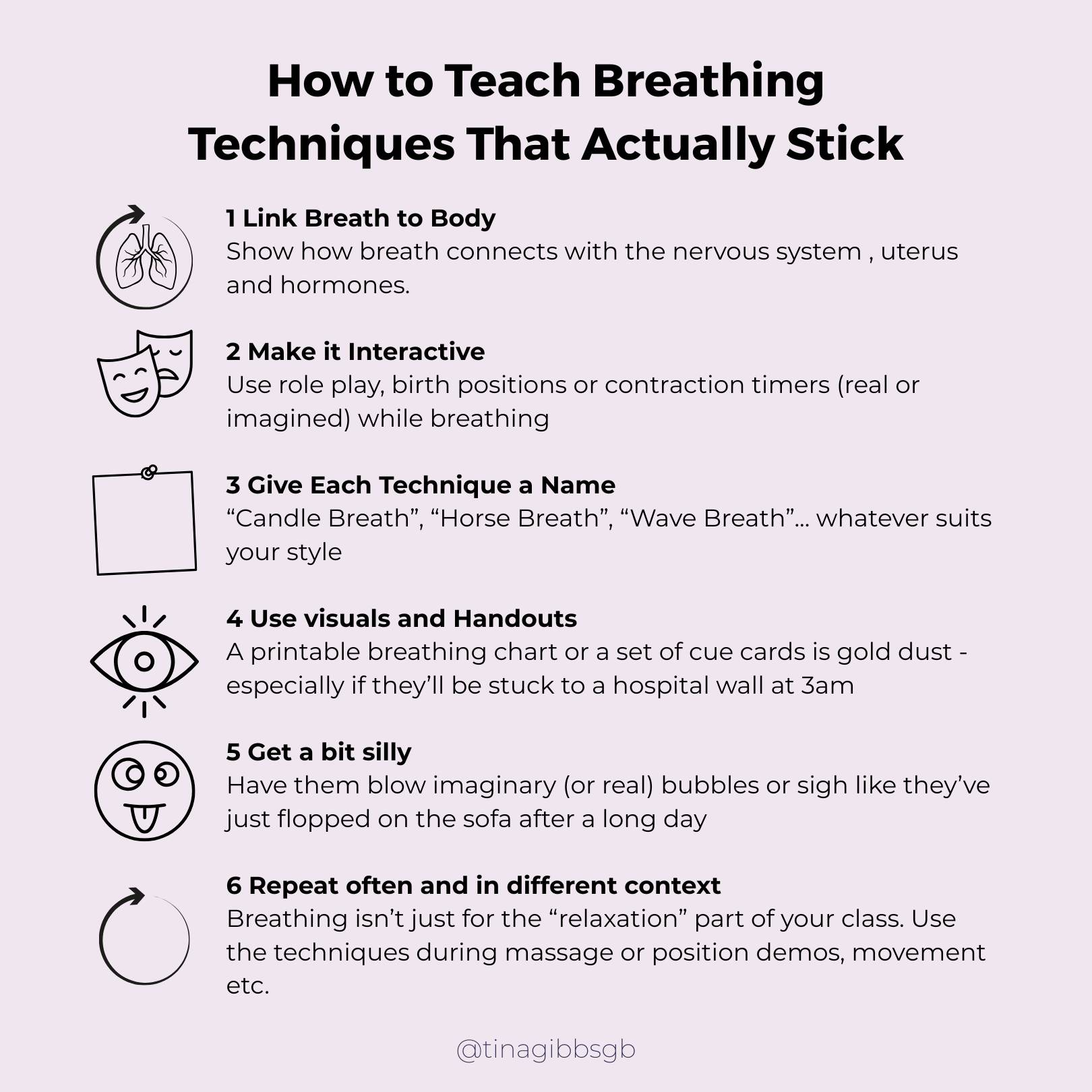
quick visual guide to how to teach breathing techniques that actually stick

How to teach breathing techniques that actually stick is a practical guide for antenatal teachers, birth workers, and perinatal educators

Let’s face it—telling someone in labour to “just breathe” is a bit like shouting “stay calm!” during a fire drill. Great idea in theory, but not super helpful unless they’ve practised it beforehand.

Teaching breathing techniques is one of the most powerful tools in your antenatal toolkit—but it has to be taught in a way that’s simple, practical, and memorable.

Here’s how to make sure the breathing techniques you teach don’t just float away like a stray balloon once class ends:


🌀 1. Link Breath to Body

Start with the why. When parents understand that breathing isn’t just about “calming down”—it’s actually affecting their nervous system, their uterus, and their hormone flow—it all starts to click.

You could explain it like this:

“Slow breathing tells your body it’s safe. When your body feels safe, oxytocin flows and labour can progress more smoothly.”

Science meets simplicity = win.


🎭 2. Make It Interactive

Don’t just demonstrate—involve them. Get people to practise each technique while in different positions, using a contraction timer, or during a short movement activity.

Examples:

  • Pretend to ride a contraction “wave” while slow breathing
  • Match breath to a partner massage rhythm
  • Try one-minute breathing while squatting, leaning or on all fours

Movement + breath = muscle memory. They’ll be more likely to remember it when it counts.


🗂 3. Give Each Technique a Name

Humans are much better at remembering “Candle Breath” than “that slow exhale thing we did that one time.”

Try naming them based on imagery or feeling:

  • Flower Breath (gentle inhale through the nose)
  • Candle Breath (long soft exhale, like blowing out a candle without flickering the flame)
  • Wave Breath (riding the peak and drop of a contraction)

It’s fun, it’s sticky, and it helps when birth partners need to offer cues and encouragement later on.


💡 4. Use Visuals and Handouts

Breathing technique cards or printable charts are your best friends. Pop them in your class packs or hang them in your teaching space.

Visual prompts:

  • Help reinforce the technique
  • Can be stuck on a hospital wall or birth centre window later
  • Support birth partners too—they often need reminders in the moment!


🤸‍♀️ 5. Get a Bit Silly (Seriously)

Laughter is a fantastic tension reliever—and relaxed muscles make for more effective breathing. So don’t be afraid to add a playful moment or two.

Try:

  • Pretending to blow bubbles
  • “Sighing like you’ve just flopped on the sofa after a long day”
  • Holding up imaginary hot chocolate and slowly blowing to cool it down

Silly now = soothing later.


🔄 6. Repeat Often and In Different Contexts

Breathing isn’t just for the “relaxation” part of your class. It should be woven through everything:

  • During movement
  • While discussing pain relief
  • As part of decision-making scenarios
  • During massage demos

Repetition builds confidence. They’ll walk away feeling like breathing is their superpower (because it is).


💬 Bonus: Handy Phrases to Use in Class

Here are a few phrases you can sprinkle throughout your teaching to reinforce the message:

  • “Your breath is your anchor.”
  • “Soft breath, soft body.”
  • “You can’t control the waves, but you can learn to surf them.”
  • “Every breath you take helps your baby too.”

Little mantras like these stick—and may pop into someone’s head right when they need them most.


Final Thoughts

Breathing techniques are simple on the surface—but they’re incredibly powerful tools for labour. As educators, it’s our job to move beyond the basics and give expectant parents strategies they’ll actually remember and use.

So go ahead—breathe some fresh energy into your next class. You’ve got this 💪


Want a printable breathing technique card set, activity or visual aid for your classes?
Have a look at my recommended products below! Also check out my Teachers Pay Teachers (TpT) Store here!

Posted on Leave a comment

Teaching about Birth Preferences and Birth Plans: A Guide for Perinatal Educators

Teaching about Birth Preferences and Birth Plans

Teaching about Birth Preferences and Birth Plans. As perinatal educators, antenatal teachers, doulas, and birth workers in the UK, one of the most important roles we play is helping expectant parents navigate the often overwhelming world of birth preferences and birth plans. These tools empower parents-to-be to make informed decisions, advocate for themselves, and communicate their wishes clearly with healthcare providers. However, it’s crucial to teach this topic in a way that is flexible, inclusive, and respectful of the unpredictable nature of birth.

In this post, we’ll explore some effective strategies and activity ideas for teaching about birth preferences and birth plans, whether you’re working with groups or individuals, and whether your sessions are in-person or online.


Understanding Birth Preferences vs. Birth Plans

What Are Birth Preferences?

Birth preferences are a flexible approach that allows parents to outline their wishes for labour and birth while recognising that circumstances may change. This mindset encourages a sense of adaptability and can reduce feelings of disappointment if things don’t go exactly as planned.

What Are Birth Plans?

Birth plans are more detailed and structured, typically outlining specific choices regarding pain relief, birthing positions, who will be present, and what to do in case of complications. While still subject to change, birth plans can be a useful tool for clear communication with healthcare providers.


Group Activities

In-Person

1. Birth Preferences Brainstorming Session
Activity: Divide participants into small groups and provide them with a variety of scenario cards. Each card should present different birth situations, such as an unplanned caesarean or an early arrival. Ask the groups to brainstorm potential birth preferences for each scenario.
Objective: This activity helps parents understand the range of possibilities and encourages flexible thinking.
Materials: Scenario cards, flip charts, markers.

2. Birth Plan Role-Play
Activity: Organise a role-playing exercise where participants take on the roles of parents, midwives, and doctors. Using sample birth plans, each group acts out how they would discuss and implement the plan in different scenarios.
Objective: This role-play helps build confidence in communicating birth plans and adapting to changing circumstances.
Materials: Sample birth plans, role cards, props (e.g., stethoscopes, blankets).

Online

1. Interactive Birth Preferences Quiz
Activity: Create a quiz that participants can take during the session. The quiz should cover different aspects of birth preferences, asking parents-to-be to choose their preferred options in various scenarios. Discuss the answers as a group to highlight the diversity of preferences and the importance of flexibility.
Objective: This activity helps to engage participants and allows them to reflect on their own preferences.
Tools: Online quiz platforms like Kahoot or Google Forms.

2. Virtual Birth Plan Workshop
Activity: Share a birth plan template with participants and guide them through filling it out during the session. Encourage discussion and questions in real-time, either through chat or by unmuting participants to share thoughts.
Objective: This workshop ensures participants leave with a concrete, well-thought-out birth plan while feeling supported and heard.
Tools: Video conferencing software with screen-sharing capabilities, editable templates.


1:1 Activities

In-Person

1. Personalised Birth Preferences Discussion
Activity: Sit down with the parent(s)-to-be and have an in-depth conversation about their birth preferences. Use open-ended questions to explore their values, concerns, and hopes for the birth experience.
Objective: This personalised discussion allows for a deep understanding of the parents’ unique situation and helps tailor the birth plan accordingly.
Materials: Birth preferences worksheets, note-taking materials.

2. Creating a Visual Birth Plan
Activity: Work with the parent(s) to create a visual birth plan using images and icons to represent their preferences. This can be particularly helpful for those who find it easier to communicate visually rather than through text.
Objective: A visual birth plan is a quick-reference tool that can be easily shared with healthcare providers.
Materials: Magazines, scissors, glue, poster boards, markers, or digital tools like Canva.

Online

1. 1:1 Virtual Birth Preferences Consultation
Activity: Conduct a private video call to discuss the parent(s)’ birth preferences in detail. Use screen-sharing to show examples of birth plans and answer any questions they may have.
Objective: This ensures the parent(s) feel supported and informed, even in a remote setting.
Tools: Video conferencing software, digital birth plan templates.

2. Guided Birth Plan Creation via Shared Document
Activity: Use a shared online document to guide the parent(s) through the process of creating their birth plan. Make suggestions and edits in real-time, allowing them to see the birth plan come together as you discuss it.
Objective: This collaborative approach ensures that the birth plan is comprehensive and tailored to the parent(s)’ needs.
Tools: Google Docs or other shared document platforms.


Final Thoughts

Teaching about birth preferences and birth plans is about more than just providing information—it’s about empowering parents to feel confident and prepared for their birth journey. Whether you’re working with groups or individuals, in person or online, the key is to create a supportive environment where parents feel free to explore their options, ask questions, and express their hopes and fears.

By integrating these activities into your sessions, you can help parents-to-be create birth preferences and plans that are both realistic and empowering, setting the stage for a positive birth experience no matter what unfolds.

Remember, birth plans and preferences should always be flexible, and the ultimate goal is a healthy mother and baby, no matter the path taken to get there.


Let’s continue to support, educate, and empower expectant parents across the UK, helping them navigate their birth journey with confidence and clarity.

Posted on Leave a comment

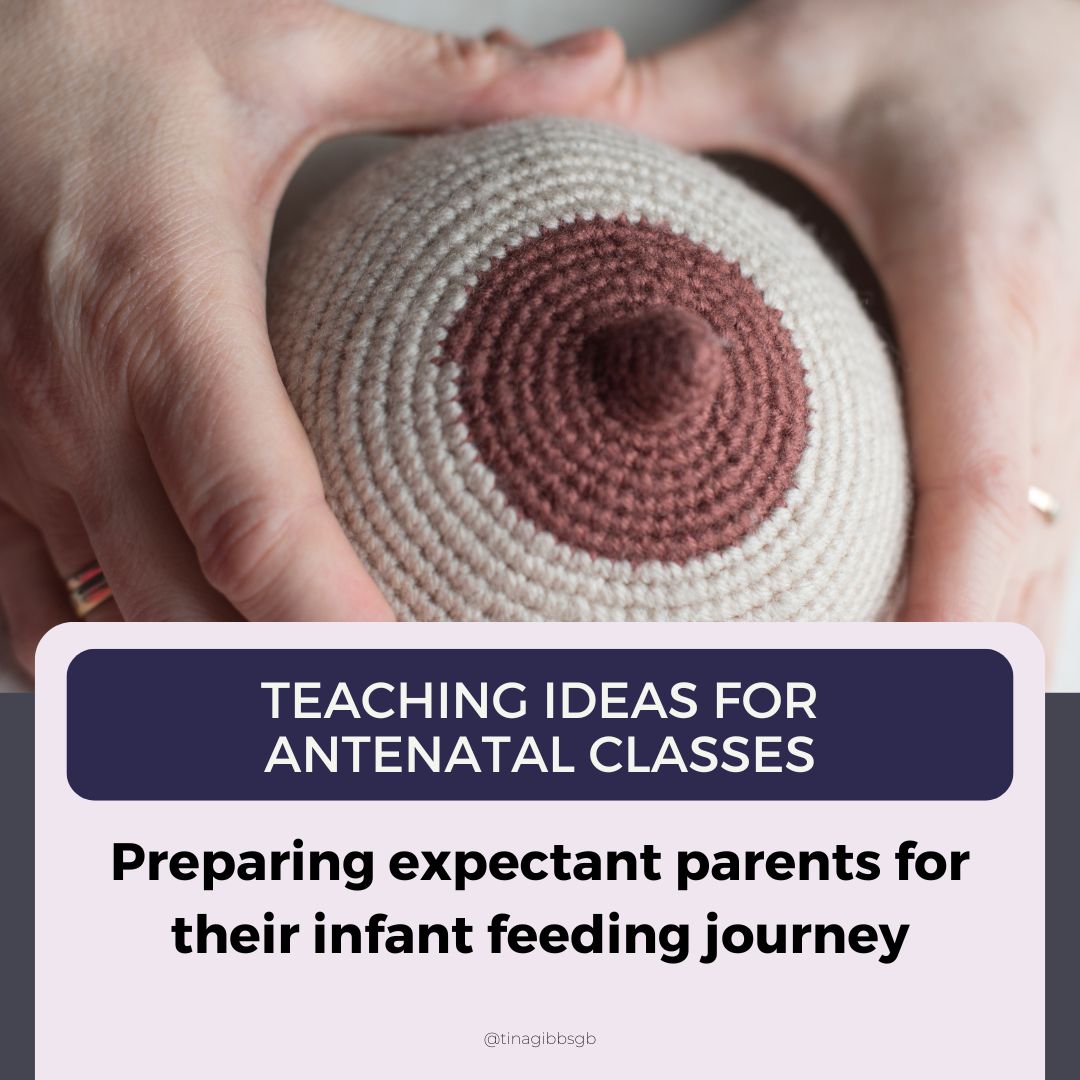
Preparing Expectant Parents for Their Infant Feeding Journey: A Guide for Birth Workers, Doulas, and Infant Feeding Supporters

preparing for infant feeding journey

As birth workers, doulas, and infant feeding supporters, you play a crucial role in preparing expectant parents for the journey of feeding their infants. Empowering parents with the knowledge and confidence they need can make a significant difference in their experience and the health of their baby. This guide will provide you with evidence-based information, practical teaching activities, and essential signs to look for to ensure feeding is going well or when additional support may be needed.

Teaching Activities for Expectant Parents

  1. Interactive Workshops: Organise hands-on sessions where parents can learn about different feeding positions, latch techniques, and the use of breastfeeding aids. Use lifelike dolls and breastfeeding pillows to simulate real-life scenarios.
  2. Visual Aids and Handouts: Provide clear, visual guides showing the anatomy of breastfeeding, how milk production works, and common feeding cues. Resources from the NHS, First Steps Nutrition Trust and UNICEF can be very helpful.
  3. Role-Playing Scenarios: Conduct role-playing exercises where parents can practice responding to different feeding situations, such as a baby who is fussy at the breast or a mother experiencing engorgement. This can help build their confidence in handling real-life challenges.
  4. Q&A Sessions: Create a safe space for parents to ask questions and discuss their concerns. Address common myths and misconceptions about infant feeding to ensure they have accurate information.
  5. Infant feeding resources for birth workers: Browse all my infant feeding activities, posters and tools here: https://tinagibbs.co.uk/product-category/infant-feeding/

Signs That Feeding is Going Well

For Breastfeeding:

  • Effective Latch: The baby’s mouth should cover a large portion of the areola, not just the nipple. You should hear rhythmic sucking and swallowing sounds.
  • Weight Gain: The baby should start gaining weight after the initial post-birth weight loss, typically regaining birth weight by about two weeks.
  • Regular Wet and Dirty Nappies: Expect at least six wet nappies and three or more dirty nappies per day after the first few days. Also see my “Your Baby’s Stool” Guide.
  • Contentment After Feeds: The baby should seem satisfied and content after feeding sessions.

For Bottle Feeding:

  • Steady Feeding: The baby should suck steadily and swallow regularly without gulping or choking. Use responsive and paced bottle feeding following baby’s cues.
  • Contentment: Similar to breastfeeding, the baby should appear content and satisfied after feeding.
  • Weight Gain and Output: The baby should gain weight consistently and produce an appropriate number of wet and dirty nappies.

Signs That Feeding May Not Be Going Well

For Breastfeeding:

  • Poor Latch: Signs of a poor latch include nipple pain, clicking sounds, or the baby slipping off the breast frequently.
  • Insufficient Weight Gain: If the baby is not regaining birth weight by two weeks or is not gaining weight steadily.
  • Fewer Wet and Dirty Nappies: Fewer than six wet nappies or less frequent dirty nappies can indicate inadequate milk intake.
  • Persistent Fussiness: If the baby is constantly fussy and seems unsatisfied after feeds.

For Bottle Feeding:

  • Frequent Gulping or Choking: This could indicate that the flow of milk is too fast or the baby is having trouble feeding.
  • Poor Weight Gain: If the baby is not gaining weight as expected.
  • Irritability or Discomfort: If the baby seems uncomfortable or has excessive gas, this might be a sign of feeding issues.

Sources and Places of Support

  1. UNICEF UK Baby Friendly Initiative: Provides comprehensive resources and support for breastfeeding and infant feeding practices. Their guidelines are based on extensive research and evidence. Visit UNICEF Baby Friendly
  2. NHS Choices: The NHS website offers detailed information on breastfeeding, bottle feeding, and common feeding challenges. It is a reliable resource for parents and professionals alike. Visit NHS Choices
  3. First Steps Nutrition Trust: This organisation offers valuable resources on infant nutrition, including guides on feeding and weaning. Their evidence-based information is crucial for supporting parents in making informed feeding choices. Visit First Steps Nutrition Trust
  4. The Breastfeeding Network (BfN) resources for practitioners, as well as independent breastfeeding support in the UK. https://www.breastfeedingnetwork.org.uk/
  5. Local Breastfeeding Support Groups: Encourage parents to join local breastfeeding support groups where they can share experiences and receive peer support. Many areas have groups run by trained volunteers who offer valuable advice and encouragement.
  6. Lactation Consultants and Health Visitors: Direct parents to professional support from lactation consultants or health visitors if they encounter persistent feeding difficulties. These professionals can provide personalised assistance and intervention if needed.

By equipping expectant parents with the knowledge and skills they need, you help lay the foundation for a positive infant feeding journey. Remember, your support and guidance can make a significant impact on both the parents and their babies.

Posted on Leave a comment

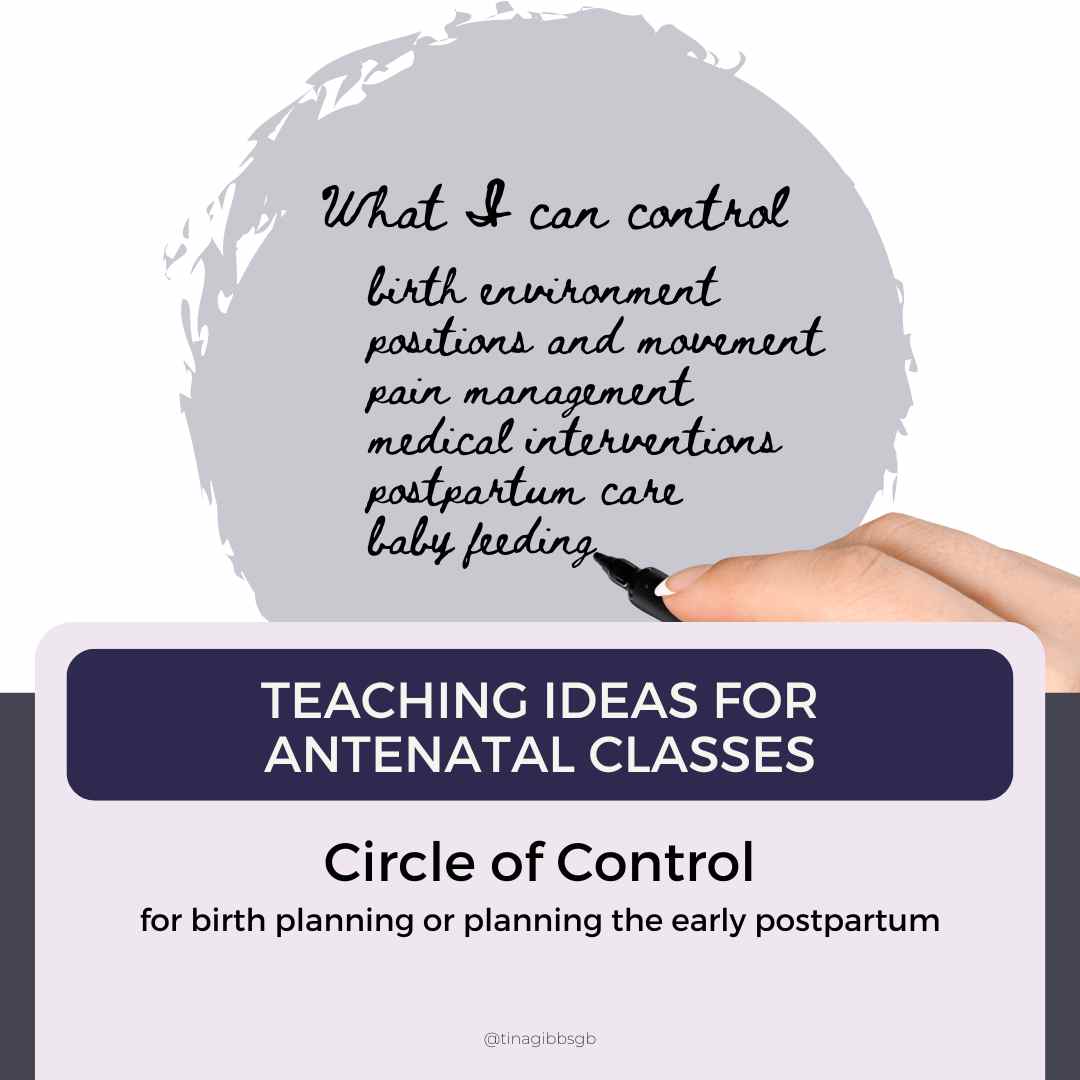
Navigating your childbirth journey: Using the Circle of Control to Write Your Birth Plan

Welcoming a new life into the world is a monumental and empowering experience, and creating a birth plan or writing down your birth preferences can be a valuable tool in ensuring that your birthing experience aligns with your preferences and desires. As expectant parents, it’s natural to feel a mix of excitement and anxiety about the impending arrival of your little one. One powerful concept that can guide you through this process is the “Circle of Control.”

Understanding the Circle of Control

The Circle of Control is a psychological concept that encourages you to focus your energy and attention on things within your control, rather than dwelling on factors beyond your control. This principle can be especially helpful when it comes to writing your birth plan, as there are aspects of the birthing experience that you can influence, and others that are beyond your control.

Identifying Elements within Your Control
  1. Birth Environment: Begin by considering the atmosphere in which you would feel most comfortable giving birth. Think about factors such as lighting, music, and the presence of loved ones. Discuss your preferences with your birth partner, doula, birthing team and explore options that align with your vision.
  2. Labour Positions and Movement: Research different labour positions and movement techniques that can benefit and support the birthing process. Discuss these options with your healthcare provider and express your desire to have flexibility in choosing positions that feel right for you during labour.
  3. Pain Management: Outline your preferences for pain management, whether it’s through natural methods like breathing exercises, massage, or water immersion, or medical interventions such as epidurals. Ensure that your choices are communicated clearly with your healthcare team.
  4. Medical Interventions: Understand the available medical interventions and express your preferences regarding interventions like induction, episiotomy, and fetal monitoring. Discuss the potential benefits and risks with your healthcare provider to make informed decisions.
  5. Postpartum Care: Consider your wishes for immediate postpartum care, including skin-to-skin contact, breastfeeding preferences, and any specific instructions for the care of your newborn.
Elements Outside Your Control
  1. Unpredictable Circumstances: Acknowledge that childbirth is inherently unpredictable. While you can plan for many aspects, unforeseen circumstances may arise. Be open to adjustments and trust your healthcare team to prioritize the well-being of both you and your baby. Use your BRAIN acronym to help you with informed decision-making.
  2. Medical Emergencies: Understand that in certain situations, medical emergencies may necessitate interventions that deviate from your initial plan. Be prepared mentally for unexpected scenarios and trust your healthcare providers to make the best decisions for your safety. Use your BRAIN acronym to help you with informed decision-making.

Crafting a birth plan using the Circle of Control is a powerful way to empower yourself during the birthing process. By focusing on elements within your influence and acknowledging those beyond it, you can approach childbirth with a sense of preparedness and confidence. Communication with your birth partner, doula and healthcare team is key, and the collaborative effort between you, your birth partner, doula, and your medical professionals can help create a positive and fulfilling birthing experience that aligns with your values and preferences. Embrace the journey, trust the process, and celebrate the miracle of life.

Download your Circle of Control worksheet and start your birth planning now!

Sources and further reading

  • LOTHIAN, Judith. Birth plans: the good, the bad, and the future. Journal of Obstetric, Gynecologic & Neonatal Nursing, 2006, 35. Jg., Nr. 2, S. 295-303.
  • MEI, Jenny Y., et al. Birth plans: what matters for birth experience satisfaction. Birth, 2016, 43. Jg., Nr. 2, S. 144-150.
  • MUTONGI, Chipo; MAZHAWIDZA, Rushworth. DEALING WITH THE MINDSET WHEN FACED WITH CHANGE AND DIFFERENT SITUATIONS.
  • Dr Lucy Russell: https://www.theyarethefuture.co.uk/circle-of-control-printable/
Posted on Leave a comment

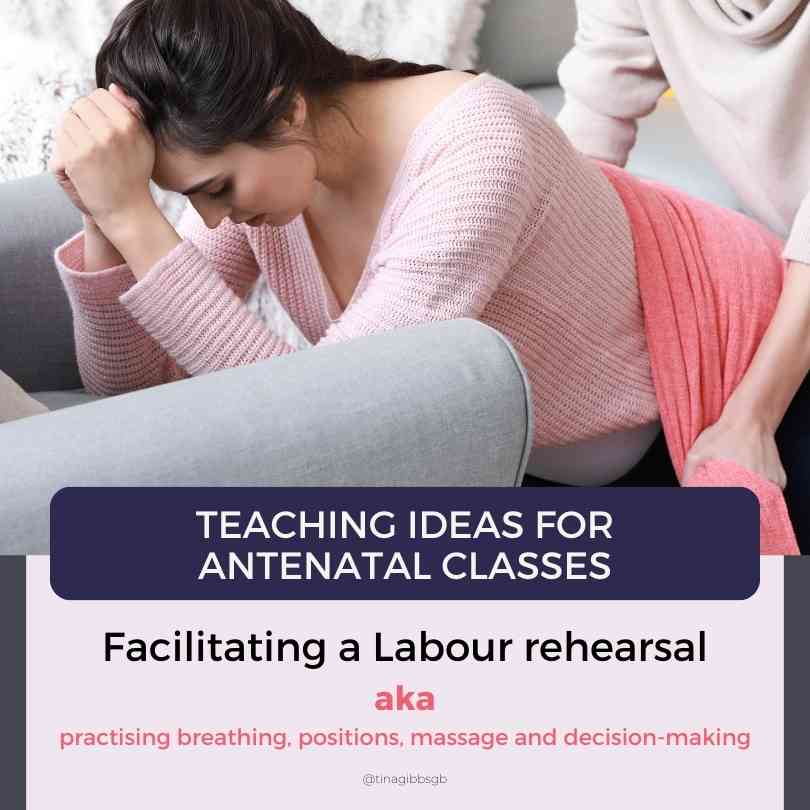
Facilitating a Labour rehearsal

Facilitating a Labour rehearsal

Facilitating a Labour rehearsal – A labour rehearsal in an antenatal class setting is a key component of antenatal education and something every birth worker should be prepared to facilitate.

Labour rehearsals in an antenatal setting offer a hands-on approach to familiarize soon-to-be parents with the stages of labour and various coping techniques. Facilitating effective labour rehearsals requires careful planning, empathy, and a commitment to empowering parents-to-be. We will explore the essential elements of facilitating a successful labour rehearsal in antenatal classes here.

  1. Establishing a Comfortable Environment:

Creating a safe and welcoming atmosphere is the foundation of a successful labour rehearsal. Start by arranging the room in a way that encourages open communication and participation. Ensure there is enough space for movement and encourage participants to ask questions and share their concerns.

  1. Providing Comprehensive Information:

Begin the rehearsal by providing comprehensive information about the stages of labour and childbirth. Talk about common medical interventions, and the role of healthcare professionals and the birth partner. Use visual aids, such as posters, labour timeline banners or beadlines, to help parents-to-be better understand the physiological aspects of childbirth. Knowledge is empowering, and a well-informed parent or couple is better prepared to navigate the challenges of childbirth.

  1. Demonstrating Labour Positions and Techniques:

Actively involve participants by demonstrating different labour and childbirth positions and relaxation techniques. Encourage them to practice these positions with their partners and/or doula, emphasizing the importance of communication and support during labour. Incorporate breathing techniques, massage techniques, and visualization to help participants build confidence in their ability to cope with the intensity of labour. I have created a few fortune tellers, to facilitate your labour rehearsal in a fun and engaging way: Massage fortune teller, Breathing fortune teller, positions for childbirth fortune teller or a blank template for your or your clients’ ideas.

  1. Emphasizing Partner Involvement:

Labour rehearsals should actively involve partners, as their support is invaluable during childbirth. Encourage partners to participate in hands-on activities, such as massage, counter-pressure techniques, and providing emotional support. This not only strengthens the bond between the couple but also ensures a more positive birthing experience. Partners really like having some flashcards to use during their labour rehearsals at home or in class. You can download my massage flashcards, let your oxytocin flow flashcards, breathing techniques flashcards or positions for childbirth flashcards from my shop.

  1. Simulating Scenarios and Decision-Making:

Create scenarios that simulate the unpredictability of labour and childbirth. This may include sudden changes in birth plans, unexpected complications, or different birthing environments. Guide participants through decision-making processes and encourage them to discuss their preferences with healthcare providers. This exercise helps build resilience and adaptability for the actual birthing experience.

  1. Addressing Emotional Preparedness:

Childbirth is a profound and emotional experience. Allocate time during your antenatal classes to discuss the emotional aspects of labour, including fears, expectations, and coping with unexpected outcomes. Foster a supportive environment where participants feel comfortable sharing their feelings and expressing any anxieties they may have.

Facilitating labour rehearsals in antenatal classes requires a holistic approach that combines information, practical skills, and emotional support. By creating a comfortable environment, providing comprehensive information, demonstrating techniques, emphasizing partner involvement, simulating scenarios, and addressing emotional preparedness, educators can empower expectant parents to approach childbirth with confidence and resilience. Ultimately, a well-conducted labour rehearsal contributes to a positive birthing experience and lays the foundation for a smooth transition into parenthood.

Posted on Leave a comment

Aims and Learning Outcomes for antenatal education

Aims and Learning Outcomes for antenatal education

Why do I need Aims and Learning Outcomes for antenatal education? The inclusion of Aims and Learning Outcomes in your teaching activities and course planning serves several important purposes. Let’s explore why they are necessary:

  1. Providing clarity and focus: Aims and Learning Outcomes for your antenatal education sessions help you define the purpose and direction of your teaching activities. Aims express the general concept or intention of your course, workshop or activity, while Learning Outcomes articulate the specific knowledge, skills, or attitudes that learners should acquire. By having clear aims and outcomes, you can ensure that your teaching is focused and aligned with your overall goals.
  2. Guiding instructional design: Aims and Learning Outcomes act as a roadmap for designing effective learning experiences and activities. They help you determine what content to cover, what activities to engage students in, and what assessments to use to measure their progress. When instructional design is guided by clear aims and outcomes, it becomes easier to create meaningful and engaging learning experiences for your clients.
  3. Communicating expectations: Aims and Learning Outcomes communicate to your clients what they can expect to achieve by the end of your course or activity. When learners know what is expected of them, it helps them stay motivated and focused on their learning journey. Clear and well-defined outcomes also make it easier for students to evaluate their own progress and identify areas for improvement.
  4. Assessment and evaluation: Aims and Learning Outcomes play a crucial role in the assessment and evaluation of client learning. By aligning assessments with the stated outcomes, you can ensure that you are effectively measuring what students have achieved. This allows you to provide constructive feedback and make informed decisions about their progress. Aims and outcomes also help you evaluate the effectiveness of your teaching methods and make necessary adjustments.
  5. Enhancing student engagement: When students understand the aims and outcomes of a course or activity, they are more likely to be engaged and motivated. Clear outcomes provide a sense of purpose and direction, helping students see the relevance of what they are learning and how it connects to their goals. This can contribute to a more positive and meaningful learning experience for your students.

Overall, Aims and Learning Outcomes are essential components of effective teaching and course planning. They provide clarity, focus, and accountability, guiding both you as the instructor and your students towards successful learning outcomes. Ensure that your aims and outcomes are well-defined, measurable, and realistic to maximize the impact on student learning.

Some Examples of Course/Workshop Aims:

  • To help parents understand their childbirth options and aid their informed decision making
  • To enhance the bond between parent(s) and their unborn baby
  • To decrease stress and improve mental well-being for parents
  • To strengthen the relationship between couples
  • To create a support network for parents

Some Examples of learning outcomes:

By the end of this session/activity, participants will be able to:

  • Describe the normal process of labour and show comfortable positions for relieving contractions
  • Use breathing techniques to manage labour and everyday stress
  • Recognize the abilities of their baby at each stage of their pregnancy
  • Collaborate with their partner (where applicable) to plan how to divide household and baby care responsibilities during the first few weeks of their baby’s life
  • Memorize the names of all the other parents in the group

Some further reading:

Posted on 2 Comments

The BRAIN Acronym for Childbirth

The BRAIN Acronym can help you make informed decisions for your childbirth experience and beyond. It is a powerful tool to prepare and plan for any event including your pregnancy, birth and parenting.

What does the acronym stand for?

The word “BRAIN” in this context is an acronym that stands for several key factors:

Benefit: Consider the potential advantages and gains that can be obtained from a particular decision. Assess the positive outcomes and how they align with your goals and objectives.

Risks: Take into account the potential risks and drawbacks associated with the decision. Identify and evaluate any potential negative consequences and assess their impact.

Alternatives: Explore and analyze alternative options. Consider different approaches or solutions that might achieve similar or even better results.

Intuition: What is your gut telling you? How do you feel about each of the options?

Nothing/Necessity: Determine the necessity and urgency of making the decision. Evaluate whether it is crucial to act promptly or if it allows for further consideration and evaluation. What happens if we/I do nothing? Have we/I got time to sleep on it?

By using the brain acronym as a decision-making tool you can ensure that your decisions are well-considered, comprehensive, and aligned with your goals and objectives as well as your individual preferences.

Download my Informed Consent Handout here.

How can I use the BRAIN Acronym for Childbirth?

Here is one example of how you may use the BRAIN tool for you birth planning/decision-making:

Example – Induction of labour

Benefits

  • A method of bringing on the labour when your baby needs to be born soon(er) due to risk to them or you. NOTE: induction of labour often takes more than one day!
  • The baby can be born at a time when specialist attention and facilities are available. For example, paediatrician for ‘at-risk’ babies.
  • Social reasons: being able to “control” the time/date of birth a little more and being able to plan childcare etc around it a little better. NOTE: induction of labour often takes more than one day!

Risks

  • Unless your body is ready to birth, the progress will be slow. It can take several days to start working and you may need a Caesarean Birth if the induction process doesn’t proof efficient
  • Partners are not always “allowed” to stay for the whole duration of the induction process. Often they can only be there during the official or slightly extended visiting hours. So you may be “on your own” for a while.
  • It can be very uncomfortable for quite some time and you may need more pain relief compared to a spontaneous onset of labour.
  • Higher likelihood of an instrumental birth using a vacuum or forceps. As a result of increased use of epidural.
  • Increased risk of above-average blood loss.
  • Overstimulation of the uterus, increasing the risk of causing stress to you and baby
  • Overriding of your body’s natural production of oxytocin (the hormone of love, labour and lactation). This results in decreased release of your natural oxytocin in response to your baby suckling at the breast. Furthermore, this can lead to difficulty establishing lactation in the first few days postpartum.

Alternatives

  • Natural induction methods such as – nipple stimulation, spicy food, eating dates, hypnosis or acupuncture.
  • Caesarean birth
  • Increased monitoring of the baby and wait on spontaneous labour

Intuition

How does the thought of having an induction make you feel? Are you comfortable with this option?

Nothing

What happens if I do nothing and just wait? Depending on the reason(s) why an induction is offered to you the risks can vary. Ask your healthcare provider about your specific risks to you and your baby. Find out how much time you have got to think about it. Is this an emergency? Can we get a second opinion and/or sleep on it? Ask the question “What happens if we wait?”.

When creating your birth plan or making other decisions, remember to ask the questions. And importantly use your BRAIN decision making tool to make informed decisions and choices which are right for you and your childbirth experience!

Recommended products

Sources and Further Reading
Posted on Leave a comment

Floppy Face Floppy Fanny

“Floppy Face Floppy Fanny” a magic technique to make childbirth easier, more enjoyable and reduces tearing. How?

During childbirth, the process of delivering a baby can be both physically and emotionally intense for the expecting mother. It is natural to feel some level of fear, tension, or discomfort during this journey. However, there is an intriguing technique that some believe can help make the birthing experience easier, more enjoyable, and even reduce the likelihood of tearing. This technique is known as “Floppy Face Floppy Fanny.” The phrase was first said by American midwife Ina May Gaskin.

The concept behind Floppy Face Floppy Fanny is based on the interconnectedness of our facial muscles with those in our pelvic floor, vagina, and vulva. According to this technique, when the face is relaxed, especially the muscles around the mouth and jaw, it has a profound impact on the relaxation of the pelvic area as well. By consciously relaxing the face, the woman aims to create a ripple effect, allowing the muscles in her birthing canal to also relax, making it easier for the baby to pass through.

The idea of linking facial relaxation with childbirth may sound unconventional, but proponents of this technique suggest that it can have a significant impact on the overall birthing experience. By practicing deep breathing exercises, visualization, and consciously relaxing the facial muscles, women may find increased comfort, reduced pain, and a smoother delivery process.

It’s important to note that its effectiveness may vary from person to person. Every woman’s/birthing person’s experience with childbirth is unique, and there are many factors involved in the ease and outcome of the process. It is always recommended to consult with a healthcare professional or midwife for personalized guidance and support during pregnancy and childbirth.

So why am I saying Floppy Face, Floppy Fanny rather than relax your mouth and jaw? To make it more memorable for expectant parents. I’ve also been using the “loose lips, loose hips”.

Here are some flashcards for breathing techniques to help you to keep your jaw, lips and mouth relaxed. One of the most memorable but simple technique is “horse lips”.

Online Birth Preparation Course only £35!

Please also check out my online course! No videos, just text and images to learn in your own time. Includes hypnobirthing mp3s, scripts, workbook, handouts, infographics and much more! Lots and lots of information at your fingertips! Includes:

  • hypnobirthing mp3s
  • hypnobirthing scripts
  • written information
  • infographics and other imagery
  • printable handouts
  • printable workbook/journal

Sources and Further Reading

  • Emmer, Helene et al. “Obstructive sleep apnea syndrome is associated with overactive bladder and urgency incontinence in men.” Sleep vol. 32,2 (2009): 271-5. doi:10.1093/sleep/32.2.271
  • Fischer MJ, Riedlinger K, Gutenbrunner C, Bernateck M. Influence of the temporomandibular joint on range of motion of the hip joint in patients with complex regional pain syndrome. J Manipulative Physiol Ther. 2009 Jun;32(5):364-71. doi: 10.1016/j.jmpt.2009.04.003. PMID: 19539119
  • Dr Lauren Keller: https://drlaurenkeller.com/blog/2022/5/23/5xlrzq50dx7n127nsavetabxr7jseg
  • Mamastefit: https://mamastefit.com/breathing-our-pelvic-floor-and-labor/
  • Talasz H, Kremser C, Talasz HJ, Kofler M, Rudisch A. Breathing, (S)Training and the Pelvic Floor-A Basic Concept. Healthcare (Basel). 2022 Jun 2;10(6):1035. doi: 10.3390/healthcare10061035. PMID: 35742086; PMCID: PMC9222935.
  • Van der Velde, J., & Everaerd, W. (2001). The relationship between involuntary pelvic floor muscle activity, muscle awareness and experienced threat in women with and without vaginismus. Behaviour Research and Therapy, 39(4), 395–408. doi:10.1016/s0005-7967(00)00007-3
  • Van der Velde, J., Laan, E., & Everaerd, W. (2000). Vaginismus, a component of a general defensive reaction. An investigation of pelvic floor muscle activity during exposure to emotion inducing film excerpts in women with and without vaginismus. Submitted
  • WombWisdom: https://www.wombseedwisdom.com/
Posted on 1 Comment

Teaching Techniques for Perinatal Educators

Teaching Techniques for Perinatal Educators are essential in providing comprehensive and effective guidance to expectant parents. These techniques help birth keepers in their mission to educate and empower expectant parents with the knowledge and skills necessary to navigate the childbirth process and their maternity system confidently.

Here are some Teaching Techniques for Perinatal Educators

Lecture – The simplest teaching method is to stand in front of the class and share all the necessary information. This method offers several advantages. First and foremost, it allows for the efficient delivery of a large amount of information in a relatively short time span. Furthermore, lectures provide an opportunity for students to gain knowledge without having to conduct extensive research on their own. Additionally, lectures facilitate the dissemination of complex ideas and concepts in a structured manner. However, despite its benefits, the lecture method has its drawbacks. One significant disadvantage is that students typically retain only about 20% of the information presented during a lecture. This limited retention can be attributed to various factors such as the passive nature of the learning experience and the inability to actively engage with the material.

Use visual aids – Posters, banners, illustrations, and videos can effectively enhance understanding and retention of information. By incorporating visual aids, childbirth educators can create a more engaging and interactive learning environment, making complex concepts easier to grasp.

Create an engaging and active learning experience – Another valuable technique is active learning. Encouraging expectant parents to actively participate in discussions, group activities, and role-plays can greatly enhance their learning experience. This approach allows parents to practice the skills they will need during childbirth and fosters a sense of empowerment and confidence.

Storytelling – Learning through the use of storytelling can also be a powerful teaching technique. Sharing real-life birth stories and experiences can provide expectant parents with practical insights and emotional support. Storytelling helps build empathy and creates a connection between the childbirth educator and the parents, fostering a sense of trust and openness.

Brainstorming – is a valuable activity that encourages expecting parents to come together and share their thoughts and ideas regarding various aspects of pregnancy, childbirth, and parenting. This provides a platform for open discussions and allow participants to exchange their experiences, concerns, and knowledge surrounding this transformative period in their lives. Through the process of brainstorming, attendees can explore different strategies, techniques, and coping mechanisms to navigate the challenges and joys of pregnancy and early parenthood. Moreover, this collaborative approach fosters a sense of community and support, enabling individuals to feel more prepared and empowered as they embark on their journey to becoming parents.

Q&A – Allow some time for questions and answers. When people come up with questions, it helps them to think more. They will understand the information they hear in response to questions better than the information given in a lecture.

Incorporate technology into your teaching – Utilizing online resources, interactive apps, and virtual platforms can provide additional opportunities for learning and accessibility. Technology allows childbirth educators to reach a wider audience and provide resources and support beyond the classroom. Ultimately, by combining these teaching techniques, perinatal educators can create a dynamic and inclusive learning environment that promotes knowledge acquisition, skill development, and emotional support for expectant parents.

Card Sort – is a practical activity where you prepare cards with various prompts such as signs of the onset of labour, myths and truths about newborns, or a hormone picture and statement hunt. During a card sort activity, participants categorize these prompts into different groups based on their similarities. This method allows for a visual and interactive way to understand and organize information related to childbirth and parenting. By engaging in this activity, individuals can gain a deeper understanding of these topics and explore the connections between different concepts, options and ideas.

Demonstrations – To effectively convey breathing techniques, positions, and movement for birth (and other related topics), it is important to utilize demonstrations. By visually demonstrating these techniques, you can provide a clear understanding and promote effective learning for both visual and kinesthetic learners. Encourage expectant parents to actively participate in trying these techniques during the sessions. This will will not only enhance their understanding but also help them retain the information better.

Goodie Bag – Another great teaching technique for perinatal educators! You pass around a bag or container of props (e.g. things which may be helpful/useful during the early postpartum period). They pick an object out of the container, say what it is, and why they think it could be helpful.

Quizzes – A quiz is a type of activity that can be done in a small group, as homework, or as a worksheet given in class. It is useful for reviewing information that has already been taught, especially information that is easy to understand, such as “Name three things that help you relax”. It is also helpful for providing information that is good to know, but not necessary to remember the answers to, like the advantages of having a doula.

Small group discussions – When it comes to facilitating better communication in a classroom setting, one effective strategy is to divide the class into smaller groups. By doing so, we create an environment where individuals can engage in more intimate conversations and exchange ideas freely. Sometimes it may be beneficial to keep couples together and other times there are instances where it’s more beneficial to separate couples. Overall, implementing small group discussions fosters active participation and enhances the overall learning experience.

Games – There are many different styles of games you can utilise in your antenatal education setting. I have a labour board game and a labour revision game which I use regularly on my antenatal classes. Games are fun, interactive, people solve problems and retain the memory however they can take up a lot of time for how much information gets covered.

HomeworkWorksheets to take home, lists of skills to practice, book recommendations and other further reading are a great way to encourage expectant parents to think about their journey between classes/sessions. However, many of your clients will not actually do their homework

Sources and further reading

  • Brookfield, S.D., 2013. Powerful techniques for teaching adults. John Wiley & Sons.
  • Future Learn: https://www.futurelearn.com/info/blog/how-to-teach-adult-learners
  • Kerka, S., 2002. Teaching adults: Is it different?. ERIC Clearinghouse on Adult, Career, and Vocational Education, Center on Education and Training for Employment, College of Education, the Ohio State University.
  • Nesbit, T., Leach, L. and Foley, G., 2020. Teaching adults. In Dimensions of adult learning (pp. 74-95). Routledge.
  • Rogers, A. and Horrocks, N., 2010. Teaching adults. McGraw-Hill Education (UK).
Posted on

Pricing yourself and your business

Pricing yourself and your business - birth worker, doula, antenatal teacher

Subscribe to continue reading

Subscribe to get access to the rest of this post and other subscriber-only content.