
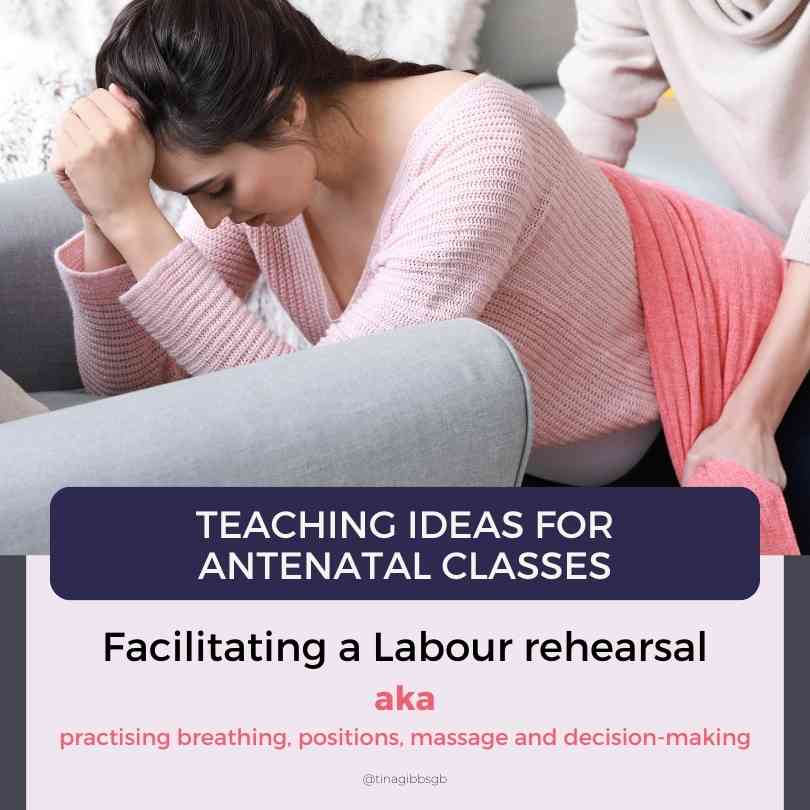
A labour rehearsal is a key part of antenatal education, and something every birth worker should feel ready to facilitate.
Labour rehearsals give expectant parents a hands-on way to get to know the stages of labour and different coping techniques. Running an effective rehearsal takes careful planning, empathy and a commitment to empowering parents-to-be. Here are the essential elements of a successful labour rehearsal.
1. Create a comfortable environment
A safe, welcoming atmosphere is the foundation of a good labour rehearsal. Arrange the room to encourage open conversation and participation. Make sure there is enough space to move around, and invite participants to ask questions and share their concerns.
2. Give clear information
Begin by explaining the stages of labour and birth. Talk about common medical interventions and the roles of the healthcare professionals and the birth partner. Visual aids such as posters, a labour timeline banner or a labour beadline help parents-to-be understand what is happening in the body. Knowledge is empowering, and well-informed parents are better prepared for the challenges of birth.
3. Demonstrate positions and techniques
Get everyone involved by demonstrating different positions for labour and birth, along with relaxation techniques. Encourage participants to practise with their partner or doula, and highlight the importance of communication and support. Include breathing, massage and visualisation so participants build confidence in their ability to cope with the intensity of labour.
4. Involve the birth partner
Labour rehearsals should actively involve partners, as their support is invaluable during birth. Encourage them to join in with hands-on activities such as massage, counter-pressure and emotional support. This strengthens the couple’s bond and helps create a more positive birth experience. Partners love having flashcards to use during rehearsals in class or at home, such as my childbirth massage flashcards and positions for childbirth flashcards.
5. Simulate scenarios and decision-making
Create scenarios that reflect how unpredictable labour can be: a sudden change of plan, an unexpected complication or a different birth setting. Guide participants through the decisions involved and encourage them to discuss their preferences with their midwife or doctor. This builds resilience and flexibility for the real thing. The My Birth Story dice game is a fun way to explore how labour might unfold, and the BRAIN acronym is a handy decision-making tool to practise.
6. Address emotional preparation
Birth is a profound, emotional experience. Set aside time to talk about the emotional side of labour, including fears, expectations and coping with unexpected outcomes. Create a supportive space where participants feel comfortable sharing their feelings and worries.
A good labour rehearsal combines information, practical skills and emotional support. By creating a comfortable environment, giving clear information, demonstrating techniques, involving partners, practising scenarios and addressing emotional preparation, you can help expectant parents approach birth with confidence and resilience, and lay the foundations for a smooth transition into parenthood.
[…] great approach is a labour rehearsal. Set up the room with relaxing music and dimmed lighting, then encourage parents to practise […]