Posted on — 1 Comment

Teaching Techniques for Perinatal Educators

Teaching Techniques for Perinatal Educators are essential in providing comprehensive and effective guidance to expectant parents. These techniques help birth keepers in their mission to educate and empower expectant parents with the knowledge and skills necessary to navigate the childbirth process and their maternity system confidently.

Here are some Teaching Techniques for Perinatal Educators

Lecture – The simplest teaching method is to stand in front of the class and share all the necessary information. This method offers several advantages. First and foremost, it allows for the efficient delivery of a large amount of information in a relatively short time span. Furthermore, lectures provide an opportunity for students to gain knowledge without having to conduct extensive research on their own. Additionally, lectures facilitate the dissemination of complex ideas and concepts in a structured manner. However, despite its benefits, the lecture method has its drawbacks. One significant disadvantage is that students typically retain only about 20% of the information presented during a lecture. This limited retention can be attributed to various factors such as the passive nature of the learning experience and the inability to actively engage with the material.

Use visual aids – Posters, banners, illustrations, and videos can effectively enhance understanding and retention of information. By incorporating visual aids, childbirth educators can create a more engaging and interactive learning environment, making complex concepts easier to grasp.

Create an engaging and active learning experience – Another valuable technique is active learning. Encouraging expectant parents to actively participate in discussions, group activities, and role-plays can greatly enhance their learning experience. This approach allows parents to practice the skills they will need during childbirth and fosters a sense of empowerment and confidence.

Storytelling – Learning through the use of storytelling can also be a powerful teaching technique. Sharing real-life birth stories and experiences can provide expectant parents with practical insights and emotional support. Storytelling helps build empathy and creates a connection between the childbirth educator and the parents, fostering a sense of trust and openness.

Brainstorming – is a valuable activity that encourages expecting parents to come together and share their thoughts and ideas regarding various aspects of pregnancy, childbirth, and parenting. This provides a platform for open discussions and allow participants to exchange their experiences, concerns, and knowledge surrounding this transformative period in their lives. Through the process of brainstorming, attendees can explore different strategies, techniques, and coping mechanisms to navigate the challenges and joys of pregnancy and early parenthood. Moreover, this collaborative approach fosters a sense of community and support, enabling individuals to feel more prepared and empowered as they embark on their journey to becoming parents.

Q&A – Allow some time for questions and answers. When people come up with questions, it helps them to think more. They will understand the information they hear in response to questions better than the information given in a lecture.

Incorporate technology into your teaching – Utilizing online resources, interactive apps, and virtual platforms can provide additional opportunities for learning and accessibility. Technology allows childbirth educators to reach a wider audience and provide resources and support beyond the classroom. Ultimately, by combining these teaching techniques, perinatal educators can create a dynamic and inclusive learning environment that promotes knowledge acquisition, skill development, and emotional support for expectant parents.

Card Sort – is a practical activity where you prepare cards with various prompts such as signs of the onset of labour, myths and truths about newborns, or a hormone picture and statement hunt. During a card sort activity, participants categorize these prompts into different groups based on their similarities. This method allows for a visual and interactive way to understand and organize information related to childbirth and parenting. By engaging in this activity, individuals can gain a deeper understanding of these topics and explore the connections between different concepts, options and ideas.

Demonstrations – To effectively convey breathing techniques, positions, and movement for birth (and other related topics), it is important to utilize demonstrations. By visually demonstrating these techniques, you can provide a clear understanding and promote effective learning for both visual and kinesthetic learners. Encourage expectant parents to actively participate in trying these techniques during the sessions. This will will not only enhance their understanding but also help them retain the information better.

Goodie Bag – Another great teaching technique for perinatal educators! You pass around a bag or container of props (e.g. things which may be helpful/useful during the early postpartum period). They pick an object out of the container, say what it is, and why they think it could be helpful.

Quizzes – A quiz is a type of activity that can be done in a small group, as homework, or as a worksheet given in class. It is useful for reviewing information that has already been taught, especially information that is easy to understand, such as “Name three things that help you relax”. It is also helpful for providing information that is good to know, but not necessary to remember the answers to, like the advantages of having a doula.

Small group discussions – When it comes to facilitating better communication in a classroom setting, one effective strategy is to divide the class into smaller groups. By doing so, we create an environment where individuals can engage in more intimate conversations and exchange ideas freely. Sometimes it may be beneficial to keep couples together and other times there are instances where it’s more beneficial to separate couples. Overall, implementing small group discussions fosters active participation and enhances the overall learning experience.

Games – There are many different styles of games you can utilise in your antenatal education setting. I have a labour board game and a labour revision game which I use regularly on my antenatal classes. Games are fun, interactive, people solve problems and retain the memory however they can take up a lot of time for how much information gets covered.

Homework – Worksheets to take home, lists of skills to practice, book recommendations and other further reading are a great way to encourage expectant parents to think about their journey between classes/sessions. However, many of your clients will not actually do their homework…

Sources and further reading

  • Brookfield, S.D., 2013. Powerful techniques for teaching adults. John Wiley & Sons.
  • Future Learn: https://www.futurelearn.com/info/blog/how-to-teach-adult-learners
  • Kerka, S., 2002. Teaching adults: Is it different?. ERIC Clearinghouse on Adult, Career, and Vocational Education, Center on Education and Training for Employment, College of Education, the Ohio State University.
  • Nesbit, T., Leach, L. and Foley, G., 2020. Teaching adults. In Dimensions of adult learning (pp. 74-95). Routledge.
  • Rogers, A. and Horrocks, N., 2010. Teaching adults. McGraw-Hill Education (UK).
Posted on — 1 Comment

Teaching about hormones during childbirth

Teaching about hormones during childbirth is a crucial aspect of antenatal education. Why is it important for expectant parents to learn about hormones and their role during childbirth?

Learning about hormones and their role in childbirth empowers expectant parents to make the right choices for themselves and their birth experience! With knowledge about the physiological changes that occur during childbirth, expectant parents often find it easier to make their choices and prepare their birth plans.

Understanding the role of hormones can help expectant parents to demystify the birthing process and foster a sense of confidence and control. Hormones play a significant role in childbirth.

For instance, oxytocin, often referred to as the “love hormone,” helps initiate and regulate contractions waves. It promotes bonding between the mother and baby and enhances the overall birthing experience.

Another hormone, endorphins, acts as a natural painkiller during labour and birth. These feel-good hormones not only help manage discomfort but also promote a sense of euphoria and well-being for the birthing parent.

Furthermore, adrenaline, commonly associated with the body’s stress response, also plays a part in childbirth. It can enhance energy levels and facilitate the progress of labor. Understanding how adrenaline functions during childbirth enables parents to appreciate its purpose and reduces any unnecessary fear or anxiety.

Exploring the intricate dance and balance of the birthing hormones during childbirth provides a comprehensive understanding of the body’s amazing abilities. It allows expectant parents to approach the birthing process with knowledge, mindfulness, and an appreciation for the wonders of nature.

Remember, teaching about hormones during childbirth is not just about imparting knowledge but also about instilling confidence and promoting a positive mindset. With this knowledge, parents can approach labour and birth feeling empowered while they trust, and belief in the remarkable strength of the human body.

Ideas for teaching about hormones during childbirth

While teaching about the childbirth hormones, it is important to provide comprehensive and engaging information to enhance expectant parents’ understanding. Here are some suggestions on how to create engaging activities and a memorable learning experience!t

1. Introduction: Begin by explaining the significance of hormones during childbirth and their role in the physiological process. Elaborate on the different types of hormones like oxytocin, prostaglandins, and endorphins.

2. Stages of labour: Discuss each stage in detail, highlighting the specific hormonal changes that occur. Emphasize how these changes facilitate the progress of labor and support the well-being of both mother and baby. I love using my childbirth timelines (banners and beadlines) to explore how childbirth unfolds.

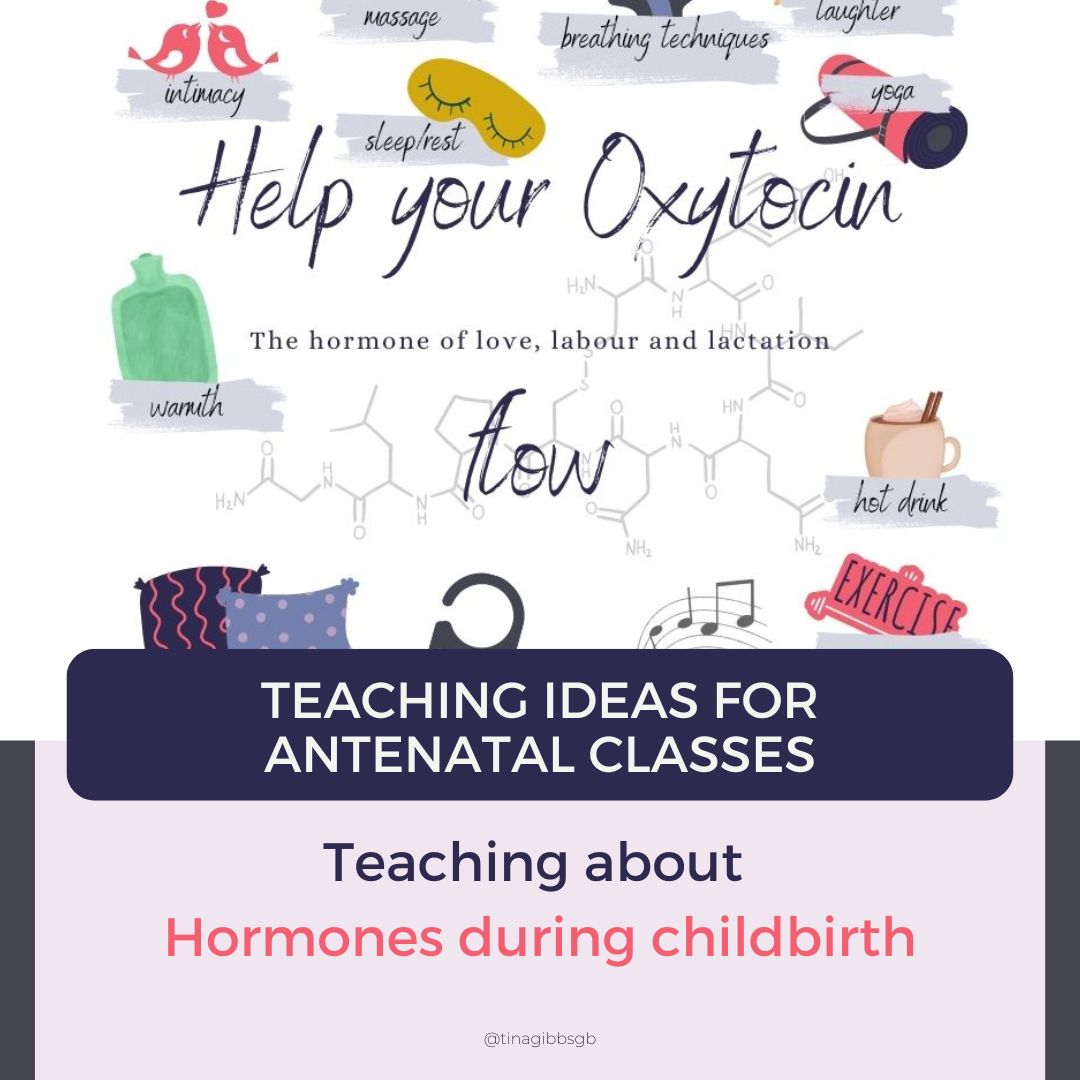
3. Oxytocin: Elaborate on the “love hormone” oxytocin and its pivotal role in initiating and strengthening contractions. Explain how it promotes the bonding between parents and their baby and helps with breastfeeding. My “Help your oxytocin flow” poster and the “Encourage labour to start” poster are two great visual aids for your antenatal classes and doula bags!

4. Prostaglandins: Describe the function of prostaglandins in softening and thinning the cervix, preparing it for labour. Discuss the importance of prostaglandins in the readiness of the body for childbirth. You may also wish to add in some information and strategies for induction of labour at that point!

5. Endorphins: Highlight the role of endorphins as natural painkillers during labor. Explain how these hormones are released in response to the intensity of contractions, providing pain relief and promoting a sense of euphoria.

6. Stress hormones: Address the presence of stress hormones like adrenaline and cortisol during childbirth. Discuss how these hormones can inhibit the progress of childbirth and explore strategies to reduce stress and promote a more positive birth experience. My new flashcards provide an excellent way of learning about different coping strategies!

7. Interactive activities: Suggest interactive activities to engage learners, such as role-playing scenarios, watching educational videos, or card sorts related to hormonal changes during childbirth. I have a range of printable and ready printed activities, posters and handout available here.

8. Visual aids: Enhance the learning experience by incorporating visual aids such as posters and banners, beadlines , or models to complement the learning experience. These aids can help learners better visualize and understand the hormonal changes and the birthing process as a whole. Remember, you can expand each section further by providing specific examples, case studies, or personal anecdotes to make the content more relatable and interesting for your learners.

Posted on

Pricing yourself and your business

Pricing yourself and your business - birth worker, doula, antenatal teacher

Subscribe to continue reading

Subscribe to get access to the rest of this post and other subscriber-only content.

Posted on — Leave a comment

Why I don’t offer mates’ rates…

I don’t offer “mates’ rates and here is why:

What are mates’ rates?

I first came across mates’ rates as a child and it would usually be a trade business offering a service at a lower price than usual to their mates. Now that’s great and if you do pay taxes and get the money without putting the income through your books, then the extra cash could save you tax money. So it was a two-way street back then.

But what happens to small business owners such as myself? My business does not earn enough money to be paying taxes, so offering my mates cheaper rates would be a one-way street. Yes, my mates would benefit but I’d be out of pocket.

How to break the news to your mates?

Have an honest conversation with your friend. Your friend probably hasn’t even thought about how mates’ rates affect you as a small business owner and your business.

Explain to and remind your friend that you are running a business and that this is NOT just a hobby. Let them know how hard it is to start and grow a successful business. There are many costs involved such as materials, rent, website costs etc. Remind them that small businesses need a lot of regular support and that sharing your business/service means the world to you and your business. Share your passion about what you do with them. Most people will understand.

What could you offer instead?

Instead of offering ‘mates’ rates’ try this:

  • £x cash/or discount if they write an honest and positive review about your services
  • £x cash for each referral that results into a booking
  • If they have a small business, too, share their info and they share yours.
  • Loyalty cards may work for some of your classes, too. Buy 5 get one half-price…

Next time someone asks for ‘mates’ rates’ have an honest conversation with them about what it means to discount your work and how friendly ‘mates’ rates’ really are and how they affect you and your small business.

Posted on — Leave a comment

Teaching expectant parents about routines

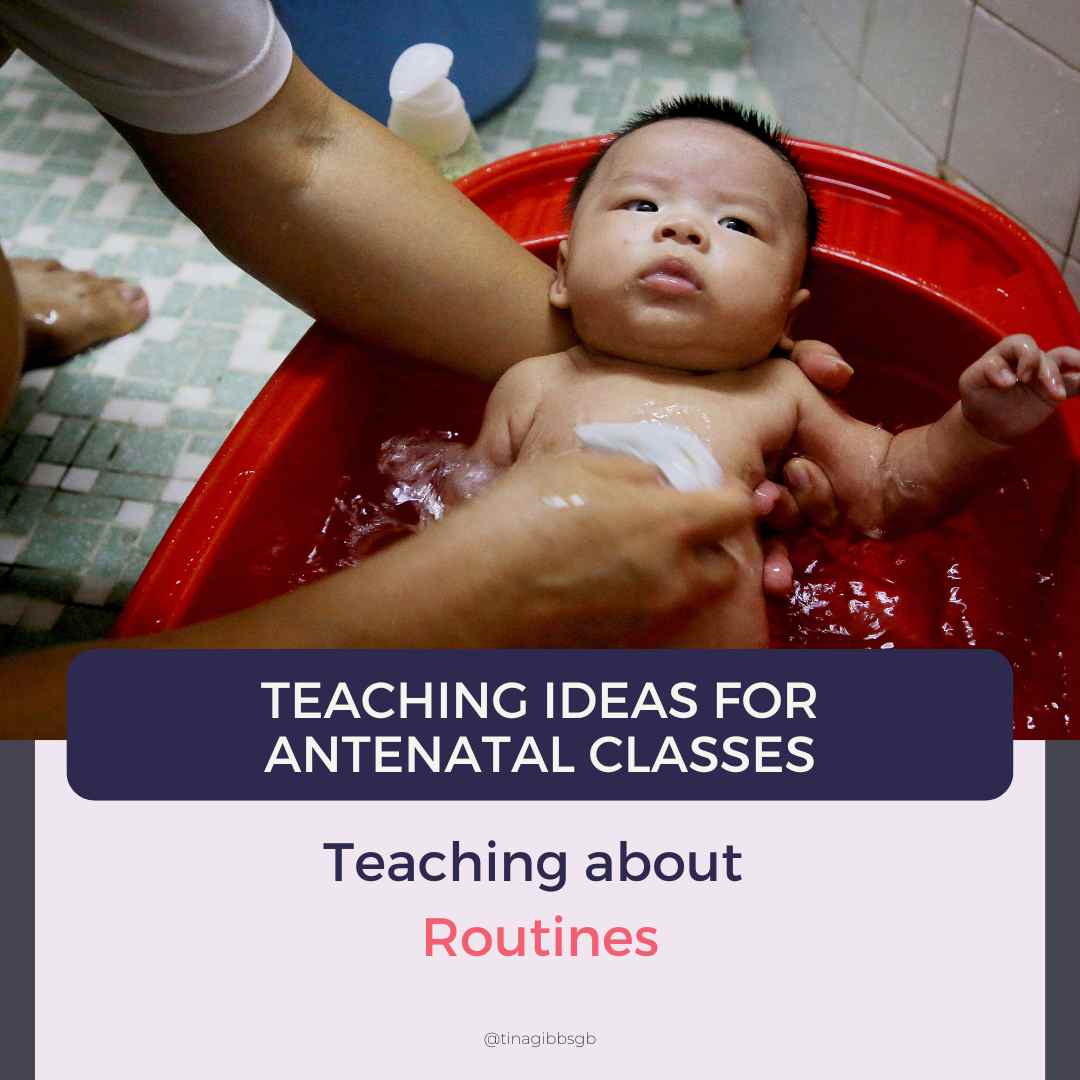
Teaching expectant parents about routines is another important part of antenatal and early parenting education and preparation. It may not be so much about actually teaching your expectant parents about routines but rather helping them explore normal newborn development. Helping them to get their expectations in order.

New parents are often asked by friends and family as well as strangers “Is he a good baby?”, “Does she sleep through the night?” or “Are your twins in a routine?”… All these questions and wrong expectations may have your clients worried that their baby should be behaving differently and may put additional pressure on the parents.

It is important to remember that sleep is a developmental process, just like learning to walk, eat or talk, and that sleep needs will change throughout our lifetimes.

So how can we teach expectant or new parents about newborn sleep development?

While, newborn babies may sleep for 18 ish hours a day, they often sleep for only 2-3 hours at a time. During the first year of their life, overall sleep duration falls to around 15 hours, while the majority of sleep becomes concentrated during night-time as the circadian rhythms develop.

I use this graphic which can be found on https://www.basisonline.org.uk/normal-sleep-development/ to help expectant parents explore normal infant sleep development.

Night-waking is normal during early infancy and healthy babies experience several awakenings per night at the end of sleep cycles.

I use this along with my 24 hours with a newborn activity to help expectant parents to explore normal infant sleep, see how it may be unpredictable at first and then move on to solutions and management for themselves, rather than managing baby’s behaviour. Each group gets some information material from BASIS, The Lullaby Trust & NHS to act as guidance/supporting materials.

As solutions, I encourage them to introduce a bedtime routine early where they do certain things every evening at “bedtime”. It’s about the process of putting their baby to sleep rather than the time of day and the duration of the sleep at that time. It is about teaching their baby to recognise the difference between day and night.

Parents could try to introduce some of these things for every night-time sleep:

  • brushing their teeth
  • dressing them in their pyjamas or sleepsuit
  • giving your baby a massage
  • giving them a bath
  • reading or telling a short story
  • singing them a lullaby
  • saying “night night” after placing their baby into their bed

Eventually, these things will help their baby to recognise that this is the time for the “long sleep”. I do emphasis that night waking is normal and very important during the early months. Babies wake most frequently at night during the first 12 weeks of their life when then the time between feeds will start to increase to more adult-friendly times…

Other resources and images I use during my classes:

and these images to demonstrate that order is not always the best way 😉

More images like this are available here: https://azhari.typepad.com/just_another_serendipity/2013/05/rearranging-the-world-chaos-vs-order.html

In summary, help expectant parents to have more realistic expectations and explore coping mechanisms for sleep deprivation!

Sources and further reading:

Posted on — Leave a comment

Teaching about Caesarean Birth

Teaching about Caesarean Birth in an antenatal setting. An important topic to cover with rising caesarean rates worldwide.

Preparing expectant parents for the possibility of a Caesarean birth, sharing information about how to avoid a caesarean birth, educating them about their choices and birth rights are all part of what modern antenatal settings should be covering.

Offering parents-to-be evidence-based and up to date information will help your clients to feel more empowered during their pregnancy and birth.

In your antenatal settings you will come across expectant parents where a Caesarean birth is not on their radar at all and parents who already know that a Caesarean birth is their preference and anyone in between…

How to facilitate teaching about Caesarean Birth

One option is that you give each participant in your class a role. Ask for a volunteer to be the person prepped for C-birth. Then hand out some c-birth prep cards with clips and strings on them to be “pinned” onto the volunteer.

C-birth prep card, printed on coloured card, laminated, strings and clips attached.

Discuss/explain each item where needed. It may be worthwhile pointing out that all of the prep items are the same for any operation and that only the foetal monitoring equipment is in addition for a Caesarean birth. Learning outcome here: Participants are aware that a lot of equipment is needed for theatre prep and reassured that this is normal.

Once the person is prepped, you can give everyone else a role play card of a person in the operating theatre. Ask the prepped person to sit or stand in the middle of the room. Then one by one have the medical staff roles step around the person. Again discussing and explaining everyone’s role. It is worthwhile to consider that this kind of role play with real people standing around a real person can feel very daunting and “too much” for some expectant parents.

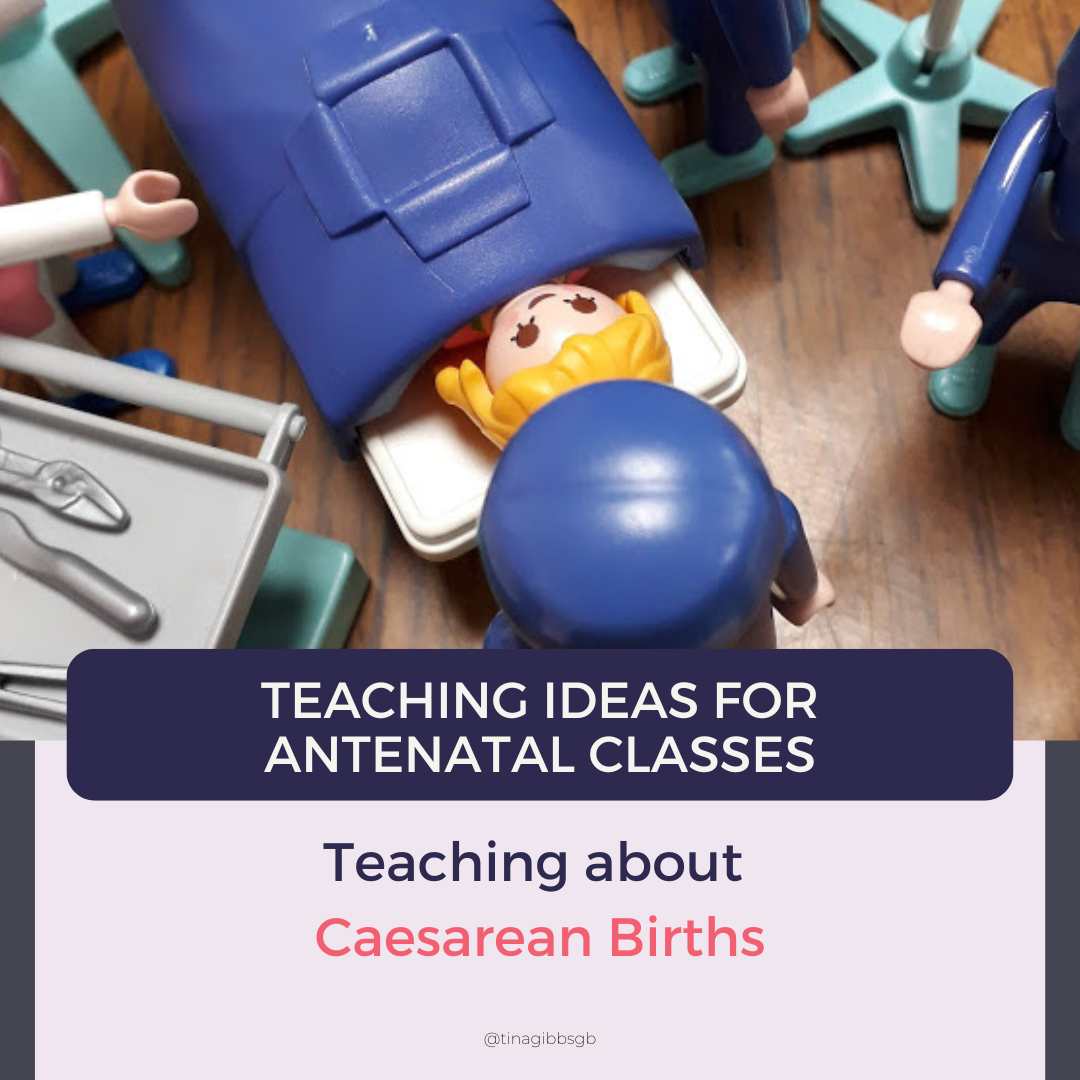
For the past 10 years or so, I have been using some Playmobil, lego, and wooden characters for the “people in the theatre” role-play part. I deliberately added some non-scrubbed/medical-looking characters to keep it fun. I pass around the cards at random and ask clients to pick a random character out of a bag…

The parent-feedback has been very positive! I’ve received many messages saying how parents were feeling very prepared, remembering all the little people from the antenatal sessions.

I support the activity with epidural and Caesarean birth information handouts from the OAA, I send out a link to a gentle caesarean birth video, and have a Caesarean birth photo story available for clients to look at if they wish.

We also talk about preparing a Caesarean birth plan and how to make their Caesarean birth options and things to consider.

Overall, expectant parents are keen to explore the options and reasons and how to make a caesarean birth less likely. They value the time spent on this topic whether or not they have a caesarean birth or not.

Let me know how you facilitate teaching about caesarean birth in your antenatal classes in the comments or get in touch!

Sources and further reading

Posted on — 1 Comment

Teaching about pregnancy anatomy

Teaching about pregnancy anatomy in an antenatal setting. One of the first topics I cover during my childbirth preparation classes is “pregnancy vocabulary”.

Pregnancy vocabulary

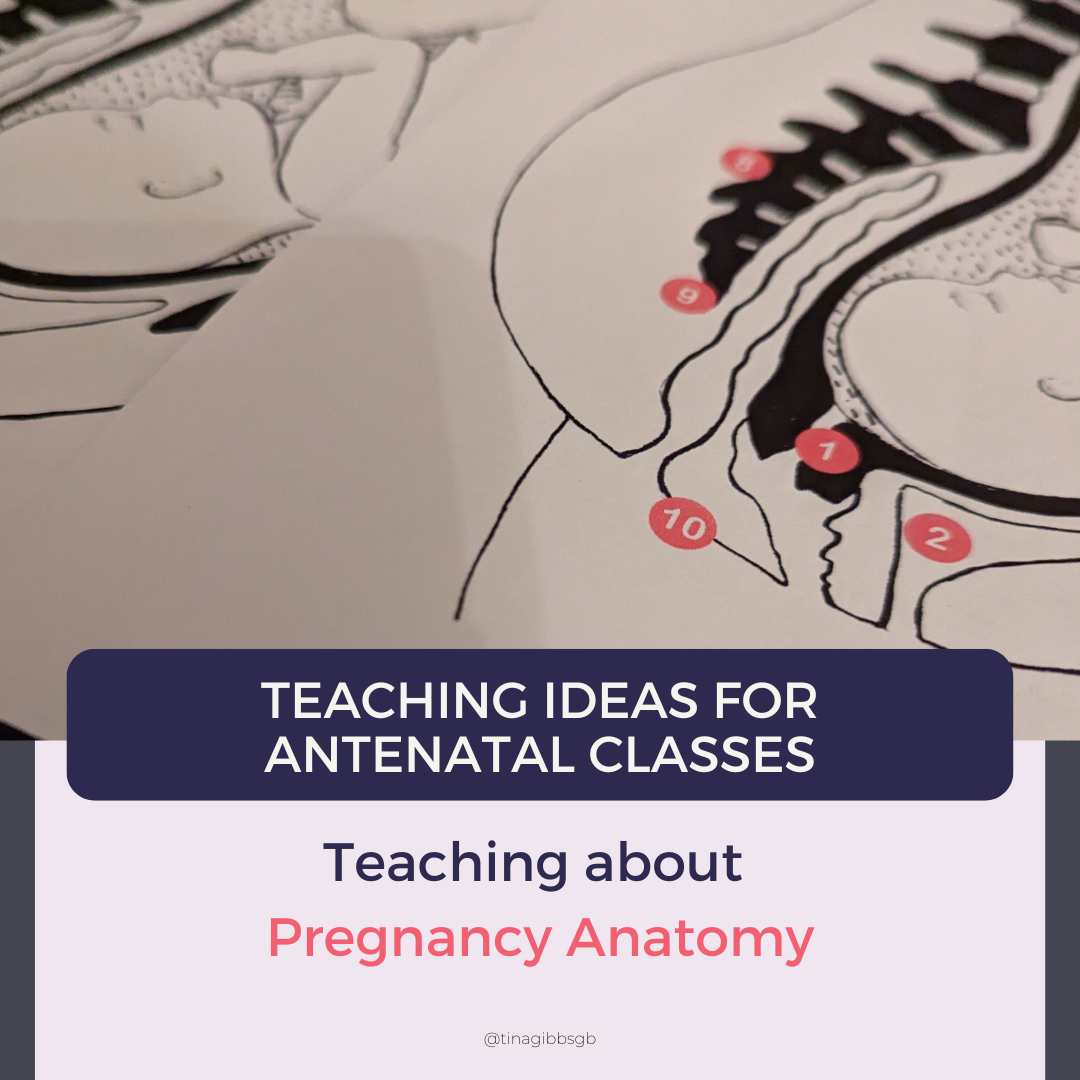
During an in-person group setting, I often split up the group into two “teams”. Each team will have an A2 poster of either the pre-pregnancy cross section or the pregnant cross-section body and body part labels such as “coccyx”, “uterus/womb”, “sacrum”, “vagina”, “cervix” etc… I explain that these words they are likely to hear during their journey into parenthood and that we will be referring to some of them during the rest of the course. I give them 5-10 minutes to add the labels to their poster (i use laminated cards with blu tack or similar on my PVC posters).

You can download the body part labels for free here:

Pregnancy anatomy changes

Once they are done, we bring the group back together, including their posters and we have a look and compare the pregnancy anatomy images. We have a discussion about common pregnancy discomforts, where they are coming from and how to avoid or minimize them.

During a 1:1 in-person setting, I use either both posters together or my new pregnancy anatomy comparison poster, where all three images are on one poster.

During an online setting I use my pregnancy vocabulary animated slide which is part of my Antenatal Course PowerPoint Slides.

Pregnancy Vocabulary and anatomy PowerPoint Slide

The image above is also part of my antenatal class journals, which I give out in class. I have recently created a downloadable worksheet on that topic, too. Recently, I found that parents-to-be like to take home paper handouts again. They especially rate my worksheets where they are encouraged to colour-in images and take notes. All these things help them focus and retain the information.

Pre-pregnancy vs pregnant body comparison worksheets

I have not had an opportunity to use my new pre-pregnancy vs pregnant body worksheets yet, but I am certainly looking forward to using these beauties! They are available in three skin tones as well as the colouring in version. With and without annotations or lines. So they’d work as handouts, too! I am really excited about these!

These printable pregnancy anatomy handouts are now also available from my TpT store and are included in my BARGAIN growing bundle!

Posted on — Leave a comment

Teaching about Safer Sleep

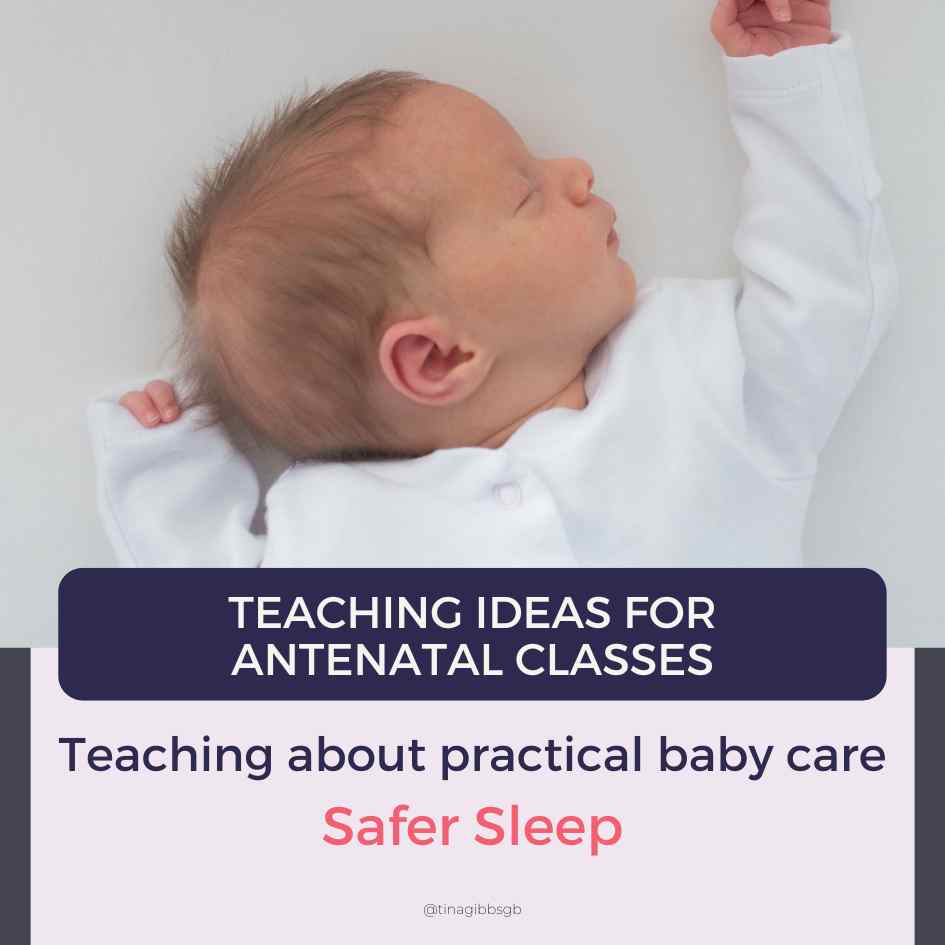
This weeks marks safer sleep week, so I am writing about teaching about safer sleep for your newborn babies.

I know that greater awareness of safer sleep leads to a decrease in the numbers of babies dying. 

Sadly around 3 babies a week still die from sudden infant death Syndrome (SIDS) in the UK (Lullaby Trust). If all parents were aware of safer sleep advice and practises we could save many lives. For most up-to-date research and recommendations, I point parents towards the Lullaby Trust or BASIS.

How to integrate teaching about safer sleep into your class?

Many parents are worried and/or unsure about clothing layers and safer sleep. I usually start off with my “dressing your baby” activity. Each parent/family unit has a baby doll or made their own towel baby. Then I have either a variety of baby clothing and accessories spread out on a table or floor in the middle of the room or, when social distancing was required, I had individual washbags for each family unit with

  • baby grow
  • long sleeve vest
  • short sleeve vests
  • scratch mittens
  • hat
  • socks/booties
  • cardigan
  • blanket

Then, each family unit receives a random weather/temperature scenario card. Each family is then to discuss the scenario, choose an appropriate outfit and dress their doll in it. Once finished, each family would present their choices and share what they chose how they decided on the outfit. This usually leads into a discussion about layers and overheating and how you can tell your baby is not too cold/hot. I hand out this clothing layers guide.

Then we discuss sleeping arrangements and what may be a practical choice for them by looking at my size comparison chart.

moses basket to cot bed size comparison

After that we look at the safer sleep recommendations by the lullaby trust and put our babies safely to bed (I usually use a piece of flipchart paper to represent the cot mattress). If I have the equipment in at the venue I show this video before they put their baby doll to bed:

If I don’t have the equipment I ask them if they could download and look at the BASIS App before the session and watch the video above.

Alternative safer sleep teaching ideas

Alternatively, I have used the “make a room” and “spot the risk” by the lullaby trust (free) before. However, I have stopped using these as I am focussing on reinforcing truths and positive practise. Therefore, I have removed images containing less safe, unsafe or dangerous content. This approach comes from my hypnobirthing practice as well as my early years work with “Empowering Parents, Empowering Communities” (EPEC). I have also updated all the “true” and “false” quizzes I use to only contain true information/statements, to reinforce these.

Teaching about safer sleep online

In an online setting I am using my “dressing your baby” powerpoint for online learning. I have each family in their private zoom room (breakout room) and using google slides, each of them has access to their own slide. i.e. breakout room #1 works on slide #1 etc. Each slide has a different scenario as a background and clients can move the clothes around.

For the other tasks as above, I ask them to bring along a selection of baby clothes if they have any or just describe to us how and where their baby would sleep most safely…

Sources and Further reading

Posted on — Leave a comment

Teaching about Physical skills for parents who choose to have an epidural

Teaching about Physical skills for parents who choose to have an epidural

Teaching about Physical skills for parents who choose to have an epidural and how to help them to improve their birth experience and overall comfort.

When parents have an epidural, they are limited in their movements. Although they won’t feel their contractions, they can still benefit from massage and breathing techniques. The skin-to-skin contact can help the flow of oxytocin which aids the birthing process. The breathing techniques ensure that parents breathe calmly to optimise their and their baby’s oxygen supply. Their relaxation reduces the risk of their baby to be distressed. Therefore, it is important to include parents who chose to have an epidural for their birth experience in your activities when teaching about physical skills for labour and birth.

When I have clients who choose to have or are likely to have an epidural for their birth, I focus on teaching about hand massage, face/head massage and breathing techniques with them.

Teaching about Physical skills for parents who choose to have an epidural – Ideas

These techniques combined with the use of a peanut ball work wonders for my doula clients! Here are some ideas for you to use in your classes:

Face/Head and Neck massage

Clients can massage their own face/head and neck or they can ask their partner to do it for them. You can follow the image below:

Self-massage techniques to include solo parents in antenatal classes

Hand Massage

Hand massages are very popular. The skin-to-skin contact between the birthing person and their partner aids the flow of oxytocin. Ask your clients to give themselves or their partner the following hand massage techniques:

  • gentle circular movements on the palm and top of the hands as well as the fingers
  • gently pull on fingers (DO NOT make them pop).

Breathing Techniques

Download my breathing techniques worksheets to use in your classes. They help parents and perinatal educators to practice breathing techniques.

Encourage your clients to practice the breathing techniques as well as your comfortable breathing pattern together with their (birth) partner. When their birth partner is aware of their comfortable breathing pattern/speed, they can help by counting them in/out or by keeping eye contact and breathing at your comfortable speed until they have reached their comfortable pattern again.

Peanut Ball

As you can use a peanut ball on the bed, it becomes an excellent tool for labour and birth with an epidural! Here are some peanut ball position ideas you can encourage your clients to try:

  • The mother sits in a semi-reclined position with one of her legs over the peanut ball and the other one next to it. The peanut ball needs to be as close as possible/comfortable to mum. If the ball starts sliding about, you can pop a pillow, cushion or rolled-up towel under it to hold it in position. This position promotes dilation of the cervix and descent (moving downwards) of the baby when the baby is in a good position.
  • Another way to use the peanut ball on a bed is in a side-lying position. While mum is lying on her side the peanut ball can be used to lift up and hold the upper leg in position. The ball can be positioned in a way that either mum’s thigh only is supported or that both, her leg and her ankle are resting on the ball. This position helps to open the pelvic outlet and may also help to rotate a posterior (back to back) baby into a better position for birth.
  • The mother can also sit on the peanut ball and give birth in that position.

Have a look at my Positions for labour and birth cards and the birth ball handout, they’ll be excellent to support your teaching!

Second/pushing stage with an epidural

For the second stage of labour with an epidural, remember to use a peanut ball to support a comfortable and supporting birthing position (see section on peanut balls above).

The birthing mother/parent may not exactly where/how to push while using the epidural. This breathing technique can help:

Breathing Technique for the second stage (pushing) of labour with an epidural

Breathing Technique for the second stage (pushing) of labour with an epidural: Ask your clients to make a fist and blow into it (as if they were to inflate a balloon). This breathing technique, makes use of their diaphragm which automatically helps the body to push “in the right place/way”.

Posted on — Leave a comment

How to use your birth ball

How can you use your birth ball for pregnancy, childbirth and during the early postpartum?

What is it?

A birthing ball is the same as an exercise or gym ball. The name “birth or birthing ball” refers to this specific purpose. A birth ball can help rotation while the you are sitting or when standing isn’t an option and a birthing stool isn’t available.

Why should I use one?

Using a birth ball to sit on strengthens your lower back, and improves your posture as your pelvis is better supported. This can help to prevent or ease lower back pain. Sitting upright helps your abdomen be a “hammock” for your baby and encourages them to settle into a more beneficial position for the birth (anterior position). For this to be most effective, start early, best before you get pregnant!

What is the best size for me?

The best size depends on your height. Ideally, your knees should be equal or slightly lower than your hips when you sit on it.

YOUR HEIGHTBALL SIZE (CENTIMETERS)
up to 163cm55cm (or inflate 65cm ball to 55-60cm instead)
164 to 173cm65cm
Above 173cm75cm

Ensure that you purchase a good quality ball which has a no burst (anti-burst) layer and has been pressure tested to support weights up to 300kg (47st).

What are the benefits of using a birthing ball?

  • Eases back pain and improves your ability to move around and stay upright.
  • Offers counter-pressure to your perineum
  • Gives excellent support when you’re squatting (holding on to it) or sitting on it, leaning over it….
  • Reduces pressure on your spine
  • Supports you to remain in an upright position. When upright, gravity increases the efficiency of your baby’s descent – supports a straightforward birth and may reduce the length of time you are in labour
  • Stimulates blood flow to the pelvic area, which increases blood flow to your uterus and placenta
  • May improve your baby’s position in utero
  • Helps open up the pelvic muscles
  • Can reduce the discomfort from contractions and therefore reduce tension, anxieties and fears

How and when can I use it?

Sit on it with your feet flat on the ground and apart.

During your pregnancy

Use your birth ball instead of a chair when sitting, when working, watching tv etc.

To bring on labour

Sit on your ball and do circular movements with your hips. This can help get your baby’s head into your pelvis and on the cervix. If your baby is back-to-back (posterior) check out Spinning babies for some exercises!

During labour and birth

During early labour, you can continue to sit on your birth ball. It offers great support and gives a good counter pressure to your slightly uncomfortable and possibly swollen vulva. Way more comfortable and supportive than a hospital bed or chair while supporting the birthing process!

You can also

  • Use it throughout all of your labour and birth to sit on
  • Lean over your ball during any part of labour while kneeling or standing. Place your ball on the bed or a chair/surface when leaning over it while standing.
  • Sit and rock on it in gentle circular or side-to-side or back-to-front
  • Standing, put the ball behind you against a wall. Lean into it and you can use it for a gentle massage
  • Standing, put the ball in front of you against a wall, and lean into it. You can use it support when rocking and leaning over slightly
  • Hold on to it for a supported squat
During the early postpartum and forever…

Continue to sit on your birth ball for comfort and support. Your baby, like any new baby, needs to be held. They have been in your womb for 10 months and are used to being squished and squashed, and rocked by your movements and heartbeat. Siting and gently rocking or bouncing on your ball while holding your baby can help you stay comfortable and your baby to calm.

Forever, always, anytime, your birthing ball will be a great place to sit to improve your posture, reduce, prevent or eliminate lower back pain. It’s fun, too!

Download your birth ball and peanut ball handout here.

Please also check out my online course! No videos, just text and images to learn in your own time. Includes hypnobirthing mp3s, scripts, workbook, handouts, infographics and much more! Lots and lots of information at your fingertips! Includes:

  • hypnobirthing mp3s
  • hypnobirthing scripts
  • written information
  • infographics and other imagery
  • printable handouts
  • printable workbook/journal

Sources and further reading: