Posted on Leave a comment

Showing Birth Videos in Antenatal Classes

birth videos in antenatal classes

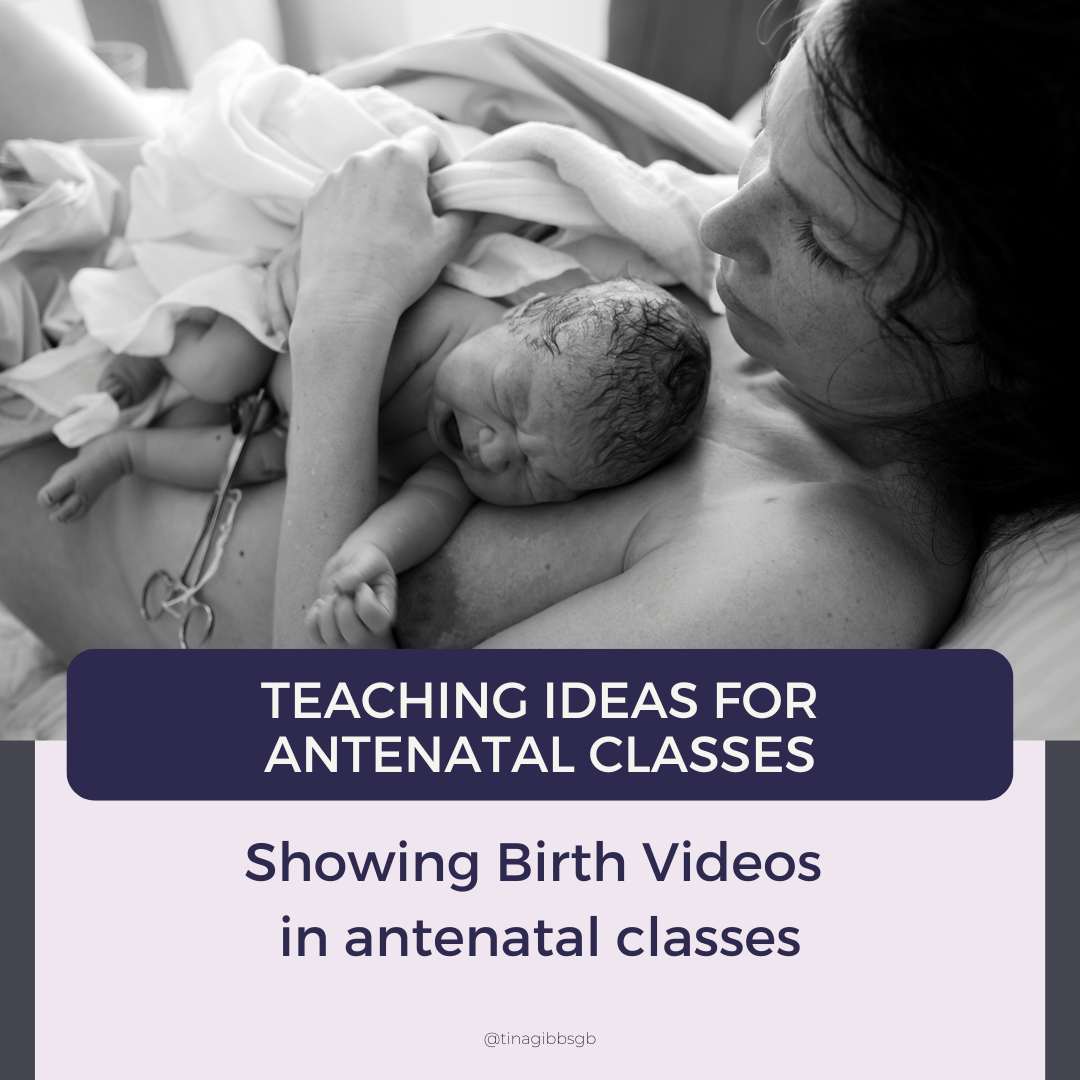
Are you showing birth videos in your antenatal classes?

Antenatal classes are important for preparing parents for childbirth. Some class leaders include the presentation of birth videos to educate and familiarize participants with the birth process. However, there are both pros and cons to showing these videos in your antenatal classes.

Pros:

  1. Education and Preparation:
    • Informed Decision-Making: Birth videos provide a realistic portrayal of labour and delivery, enabling expectant parents to make informed decisions about their birthing preferences.
    • Understanding the Process: Watching the birthing process can demystify it, helping parents-to-be understand what to expect and reducing their anxiety.
  2. Emotional Preparedness:
    • Reducing Fear and Anxiety: Witnessing the experiences of other expectant parents can help normalize the process and alleviate fears associated with childbirth.
    • Emotional Connection: Birth videos can foster an emotional connection between partners, as they witness the strength and resilience of the birthing person.
  3. Varied Experiences:
    • Diverse Perspectives: Birth videos showcase a range of birthing experiences, including different birthing positions, interventions, and outcomes, providing a comprehensive view of the possibilities.
  4. Interactive Learning:
    • Q&A Opportunities: Watching birth videos in a class setting allows for real-time questions and discussions, enhancing the learning experience.
    • Expert Guidance: You as a birth worker and their course leader can offer explanations, and address concerns as they arise during the video presentations.

Cons:

  1. Potential for Trauma:
    • Emotional Distress: For some individuals, especially those with a history of trauma or anxiety, watching birth videos may trigger distressing emotions.
    • Graphic Content: Graphic details in certain videos can be overwhelming and contribute to negative psychological effects.
  2. Unrealistic Expectations:
    • Comparisons and Unrealistic Standards: Watching idealized or dramatized birth experiences might lead to unrealistic expectations, causing disappointment if one’s own experience differs.
  3. Cultural Sensitivity:
    • Diverse Cultural Perspectives: Birth videos may not adequately represent the diversity of cultural birthing practices, potentially excluding or marginalizing certain groups.
  4. Privacy Concerns:
    • Comfort Levels: Some participants may feel uncomfortable or exposed watching intimate moments in a group setting, impacting their ability to engage in the learning experience.

Conclusion: Incorporating birth videos into antenatal classes can be a valuable educational tool, but it’s essential to consider the potential emotional and psychological impact on participants. Striking a balance between realistic depictions and sensitivity to individual needs is crucial for ensuring that expectant parents are well-prepared for childbirth without causing undue stress or anxiety. Ultimately, a thoughtful and inclusive approach to using birth videos in antenatal classes can contribute to a positive and informed birthing experience. During my antenatal classes I usually provide my clients with a link to my collection of birth videos. Then, they can decide if they wish to watch any or not.
Posted on Leave a comment

Teaching about Caesarean Birth

Teaching about Caesarean Birth in an antenatal setting. An important topic to cover with rising caesarean rates worldwide.

Preparing expectant parents for the possibility of a Caesarean birth, sharing information about how to avoid a caesarean birth, educating them about their choices and birth rights are all part of what modern antenatal settings should be covering.

Offering parents-to-be evidence-based and up to date information will help your clients to feel more empowered during their pregnancy and birth.

In your antenatal settings you will come across expectant parents where a Caesarean birth is not on their radar at all and parents who already know that a Caesarean birth is their preference and anyone in between…

How to facilitate teaching about Caesarean Birth

One option is that you give each participant in your class a role. Ask for a volunteer to be the person prepped for C-birth. Then hand out some c-birth prep cards with clips and strings on them to be “pinned” onto the volunteer.

C-birth prep card, printed on coloured card, laminated, strings and clips attached.

Discuss/explain each item where needed. It may be worthwhile pointing out that all of the prep items are the same for any operation and that only the foetal monitoring equipment is in addition for a Caesarean birth. Learning outcome here: Participants are aware that a lot of equipment is needed for theatre prep and reassured that this is normal.

Once the person is prepped, you can give everyone else a role play card of a person in the operating theatre. Ask the prepped person to sit or stand in the middle of the room. Then one by one have the medical staff roles step around the person. Again discussing and explaining everyone’s role. It is worthwhile to consider that this kind of role play with real people standing around a real person can feel very daunting and “too much” for some expectant parents.

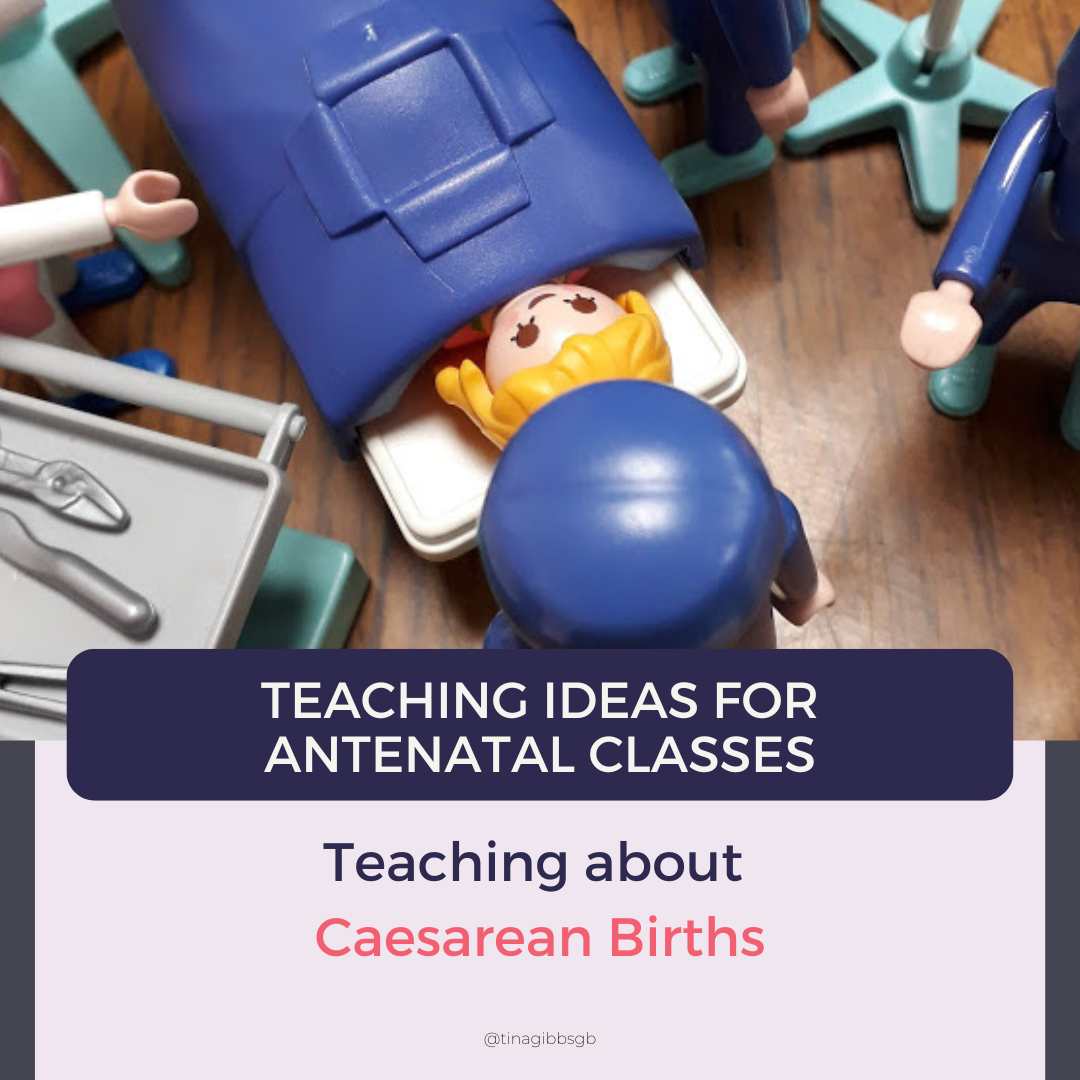
For the past 10 years or so, I have been using some Playmobil, lego, and wooden characters for the “people in the theatre” role-play part. I deliberately added some non-scrubbed/medical-looking characters to keep it fun. I pass around the cards at random and ask clients to pick a random character out of a bag…

The parent-feedback has been very positive! I’ve received many messages saying how parents were feeling very prepared, remembering all the little people from the antenatal sessions.

I support the activity with epidural and Caesarean birth information handouts from the OAA, I send out a link to a gentle caesarean birth video, and have a Caesarean birth photo story available for clients to look at if they wish.

We also talk about preparing a Caesarean birth plan and how to make their Caesarean birth options and things to consider.

Overall, expectant parents are keen to explore the options and reasons and how to make a caesarean birth less likely. They value the time spent on this topic whether or not they have a caesarean birth or not.

Let me know how you facilitate teaching about caesarean birth in your antenatal classes in the comments or get in touch!

Sources and further reading

Posted on Leave a comment

Setting up birth preparation classes

When you are a birth worker, such as a doula, antenatal teacher, perinatal educator etc you might be wondering about setting up birth preparation classes. When do you start advertising your classes or workshops? Where do you advertise them?

When setting up birth preparation classes, you’ll have to think about when are your potential clients going to be doing their research into antenatal classes? When will they be most likely to book? What did you do when you were expecting your baby?

Do you book a venue right away? Or can you can to an agreement with a local venue where you can confirm/cancel x weeks prior to the event without having to pay?

What dates and times will suit your pregnant clients best? Do they fit in with your preferences, other job, family, venue? Is an online pre-recorded course more suitable for you or your ideal client? Or maybe a hybrid option, with pre-recorded content and some live online or in-person time?

These are the questions, I ask myself when I am thinking about setting up my birth preparation classes. There is no ‘one fits all solution’ your answers are pretty much depending on where you live, whether or not you have a family or an additional job, what venues you have available and who your ideal clients are. This post is mostly about encouraging you to think about these questions and finding YOUR answers and setting up YOUR birth preparation classes and workshops. In a way that works for you and your (potential) clients.

To help a little with the question on when to set aside dates and when to start advertising your classes, I have created a spreadsheet. You can download your free copy here!