Posted on — 2 Comments

Teaching about pregnancy anatomy

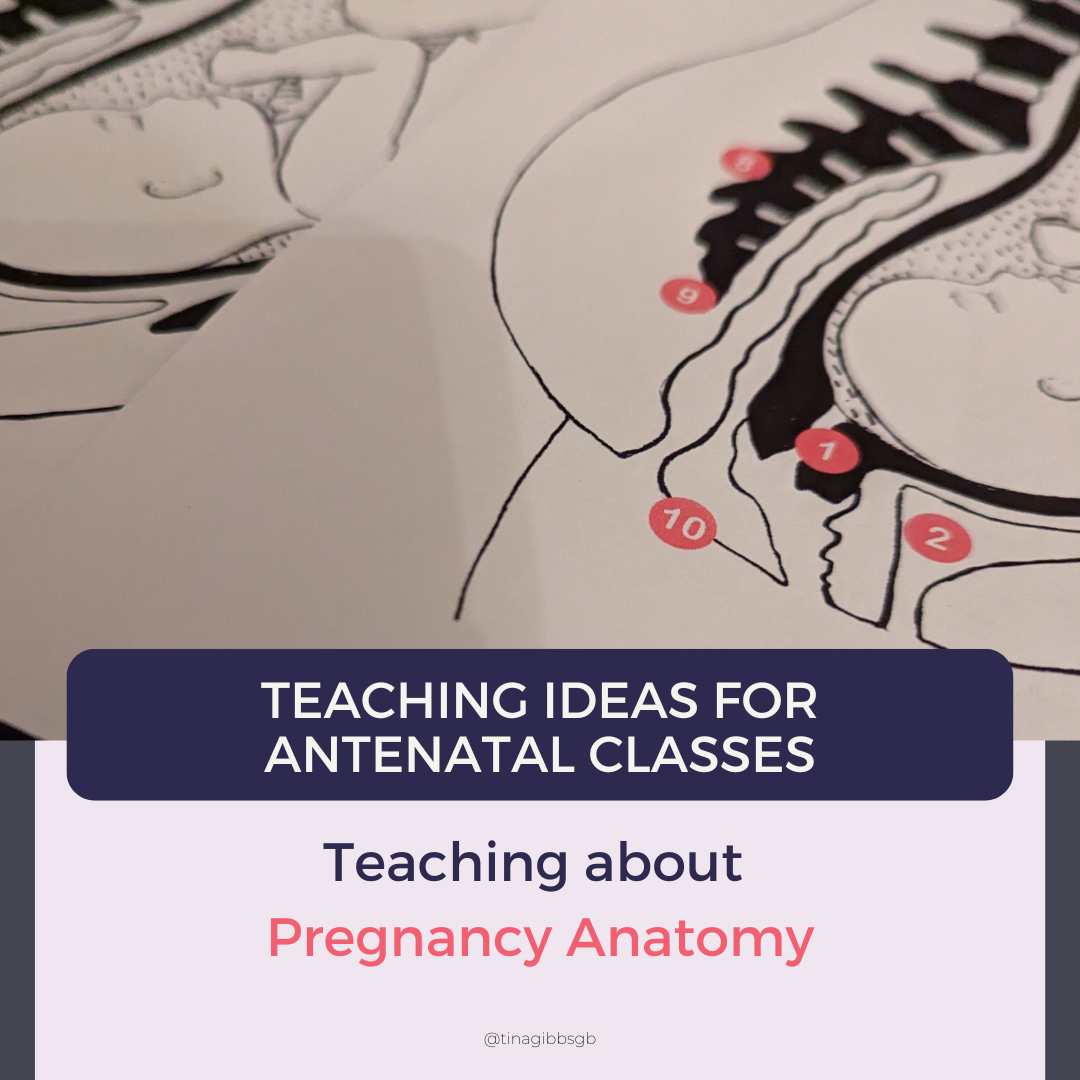
Teaching about pregnancy anatomy in an antenatal setting: one of the first topics I always covered in my childbirth preparation classes was “pregnancy vocabulary”.

Pregnancy vocabulary

In an in-person group, I often split the class into two teams. Each team gets an A2 poster – either the pre-pregnancy cross-section or the pregnant cross-section – plus body part labels such as “coccyx”, “uterus/womb”, “sacrum”, “vagina” and “cervix”. I explain that these are words they’re likely to hear on their journey into parenthood, and that we’ll refer to some of them throughout the course. Then I give them 5–10 minutes to add the labels to their poster (I use laminated labels with Blu Tack on my PVC posters).

Cross-section of a pregnant woman poster

You can download the body part labels for free here:

Pregnancy anatomy changes

Once the teams have finished, we come back together with the posters to compare the pregnancy anatomy images. Then we discuss common pregnancy discomforts, where they come from, and how to avoid or ease them.

In 1:1 sessions, I use both posters side by side, or my pregnancy anatomy changes posters.

Online, I use an animated pregnancy vocabulary slide like the one in this video:

Pregnancy vocabulary and anatomy slide

The same image is also in my antenatal class journals. I’ve found that parents-to-be like to take home paper handouts again – they especially love worksheets where they can colour in images and take notes. It all helps them focus and remember the information.

Pre-pregnancy vs pregnant body worksheets

My pre-pregnancy vs pregnant body worksheets come in three skin tones plus a colouring-in version, with and without annotations or lines – so they work as handouts too! For a fun warm-up, try my Pregnancy Anatomy Icebreaker or Uterus Anatomy Scavenger Hunt.

Posted on — Leave a comment

Hypnosis and Mindset Iceberg

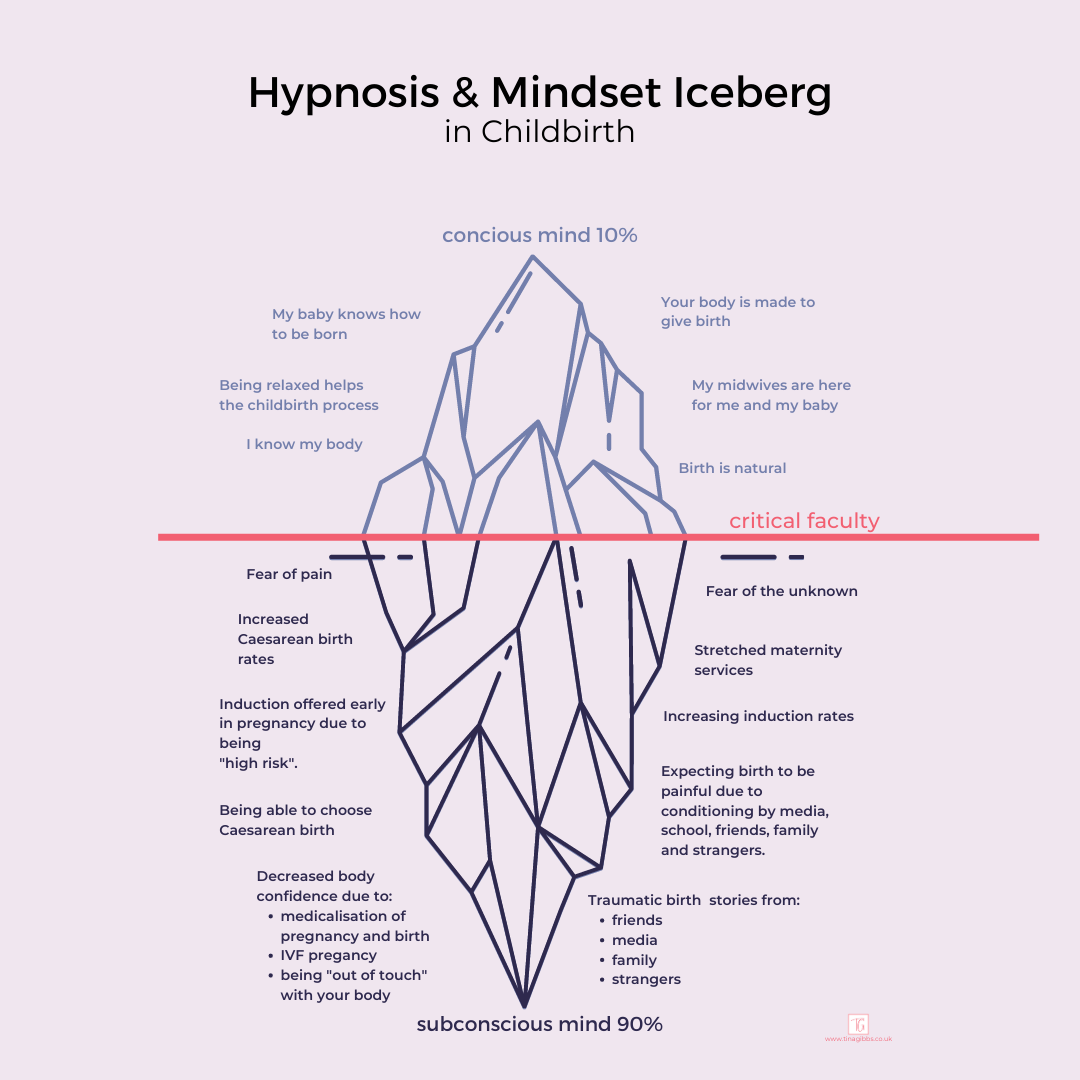
The hypnosis and mindset iceberg: the conscious mind, the subconscious mind and the critical faculty. How does all that apply to childbirth?

Let’s think about it. When you look at an iceberg, you only see its tip – most of it is hidden underwater. So how does that relate to hypnosis and your mindset for birth?

Consciously, you know that childbirth is a natural process and that most babies can be born without assistance. We know that when we relax, more oxytocin flows, helping the birth process along with strong, regular contraction waves. So why do so many expectant parents struggle to relax during birth, or even during pregnancy? Because throughout our lives we hear – and start to believe – that childbirth is painful. The media, family and friends tell us so. During pregnancy, tests, appointments, scans and precautions can reinforce the belief that birth needs intervention. You might even hear a traumatic birth story from a stranger in the supermarket queue!

Your conscious mind is the tip of the iceberg, and your subconscious mind is the hidden base. This is your hypnosis and mindset iceberg:

The hypnosis and mindset iceberg

Overcoming the iceberg

Practising self-hypnosis and mindfulness during pregnancy can help you quieten the unhelpful beliefs held in your subconscious. It helps you focus on the here and now, and make the right decisions for you before and during your birth. Remember: regular practice and reinforcement of the techniques are the key to an empowered birth experience! Find out more in How does hypnobirthing work?

Please also check out my online course! No videos, just text and images to learn in your own time. Includes hypnobirthing mp3s, scripts, workbook, handouts, infographics and much more! Lots and lots of information at your fingertips! Includes:

  • hypnobirthing mp3s
  • hypnobirthing scripts
  • written information
  • infographics and other imagery
  • printable handouts
  • printable workbook/journal

For perinatal educators: the iceberg is a powerful image to use in antenatal or parenting classes. Use it to explore expectant parents’ feelings, where they come from, and how the subconscious can influence decision-making, mindset and the birth, feeding and parenting experience.

Sources and further reading

All accessed on 24 January 2023. Please note that I am not affiliated with the owners of the websites above.