Posted on Leave a comment

This is why I teach!

breathing techniques for childbirth - horse breath visual

“This Is Why I Teach”: A Birth Story That Stopped Me in My Tracks

Every now and then, I get a message that stops me mid-coffee sip, mid-email, mid… everything.

Last week, I received a beautiful birth story from one of the families who attended my antenatal classes. And honestly? It made me tear up in the best possible way (yes, I’m blaming my perimenopausal hormones and not my cuppa.

They’d written to tell me that the breathing techniques we’d practised together had transformed their birth experience.

Not just helped. Not just come in handy.
Transformed.

They said they’d gone into labour feeling confident—like they had a plan, tools in their back pocket, and a calm mindset. They’d practised the breathing at home (which always makes my little teacher heart sing!), but it was in the birthing room where it really clicked.

They described the moment when a particularly intense contraction came. Instead of panicking or tensing up, they instinctively dropped into the rhythm of the breath pattern we’d used in class. “It was like my body remembered what to do, even when my mind was freaking out a bit,” she wrote.

She also told me the visuals made all the difference—those printable breathing flashcards we used, with calming colours and step-by-step instructions. They had them on the wall of their birth room, and the midwife even commented on how helpful they were.

Can we just take a moment for that?
A midwife commenting on your visual aids like they’re the main source of calm in the room? I mean… wowsers.

They ended the message by saying, “I honestly don’t know how our birth would’ve gone without those breathing techniques. It gave us something to do when things felt overwhelming.”

And that—that—is why I teach.

It’s not just about information or tick boxes or fancy diagrams (although I do love a good printable!). It’s about giving people tools they can actually use when it matters most. In the middle of the night, in the car on the way to hospital, in that moment of ‘I can’t do this’—they can. And they do.

So, if you’ve been wondering whether those strange slow breaths and funny balloon visuals are just fluff, trust me… they’re anything but.

They’re power.
They’re calm.
They’re magic in action.

And stories like this? They’re my reminder that what we do matters. A lot.

Posted on Leave a comment

Why You Should Teach Breathing Techniques for labour and birth

woman teaching calm breathing techniques

Why You Should Teach Breathing Techniques for labour and birth to expectant parents? If you’ve read my last post, How to Teach Breathing Techniques That Actually Stick, you’ll already know how to help expectant parents master those all-important breathing skills. But today, let’s get into the real juicy bit: why it’s absolutely worth the effort.

(And no, it’s not just so you can feel smug when someone describes you as “life-changing” in a review — although, let’s be honest, that’s a pretty sweet bonus.)

1. Breathing Techniques Aren’t Just Fluffy Extras — They’re Game-Changers

Breathing is one of those things we do all day without thinking. Teaching someone to breathe on purpose, for a reason, in the thick of intense sensations is like giving them a secret superpower.

Good breathing techniques:

  • Activate the parasympathetic nervous system (hello, calm brain).
  • Reduce fear (and as you know, less fear = less tension = less pain).
  • Improve oxygen flow to both parent and baby (which is basically like sending a VIP invitation to your body’s inner superhero team).

In short, solid breathing skills can turn “I can’t do this” moments into “I am doing this!” victories.

2. They Give Parents Something to DO When They Feel Helpless

When birth gets intense (and it will), people don’t often remember every detail from their antenatal classes. They’re not going to think, “Ah yes, time to initiate my complex three-step visualisation of blooming flowers.”

Nope. In those moments, they need something simple, portable, and effective.

Enter: Breathing.

It’s the ultimate in low-maintenance coping tools. No equipment, no yoga mat, no birth ball required. Just a pair of lungs and a little know-how.

3. You’re Building More Than Skills — You’re Building Confidence

Every time a parent practises a breathing technique and feels it working, they store up a little nugget of confidence for the big day. And confidence isn’t just a nice-to-have — it’s a birth-altering resource.

The more they trust their body and their ability to cope, the more they can stay in the driver’s seat during labour. (Or, let’s be real, on the birthing ball, the floor, the side of the bed, or wherever they decide to ride out those surges.)

Confidence built through breathing isn’t just about labour, either. It spills over into early parenting too — where breathing through chaos becomes a daily necessity!

4. Because “Just Breathe” Needs to Be More Than a Throwaway Line

We’ve all heard it. “Just breathe!”
Great advice, truly. But when you’re told to breathe without being taught how, it’s about as useful as telling someone stuck in a hedge to “just walk away.”

Teaching breathing techniques that actually stick means parents will have the all important muscle memory — they’ll know exactly what “just breathe” looks, feels, and sounds like under pressure.

5. Birth Workers (That’s You!) Deserve Tools That WORK

You pour your heart into your work. You are passionate about empowering parents-to-be. You deserve to teach techniques that don’t float away the second the first strong contraction hits.
You deserve to hear your clients say, “I just focused on my breathing, and it carried me through.”

That’s the power of teaching breathing techniques properly: you’re not just giving them information. You’re giving them transformation.


In Short:
Breathing techniques aren’t an optional extra — they’re a birth worker’s Swiss Army knife.
Teach them well. Practise them often. Make them stick.
You’ll be setting parents up not just for a better birth — but for a better start to their whole parenting journey.

(And possibly earning that “life-changing” review along the way. No biggie.)

To find some printables for your antenatal classes, check out my Teachers Pay Teachers shop or my product recommendations below:

Posted on 1 Comment

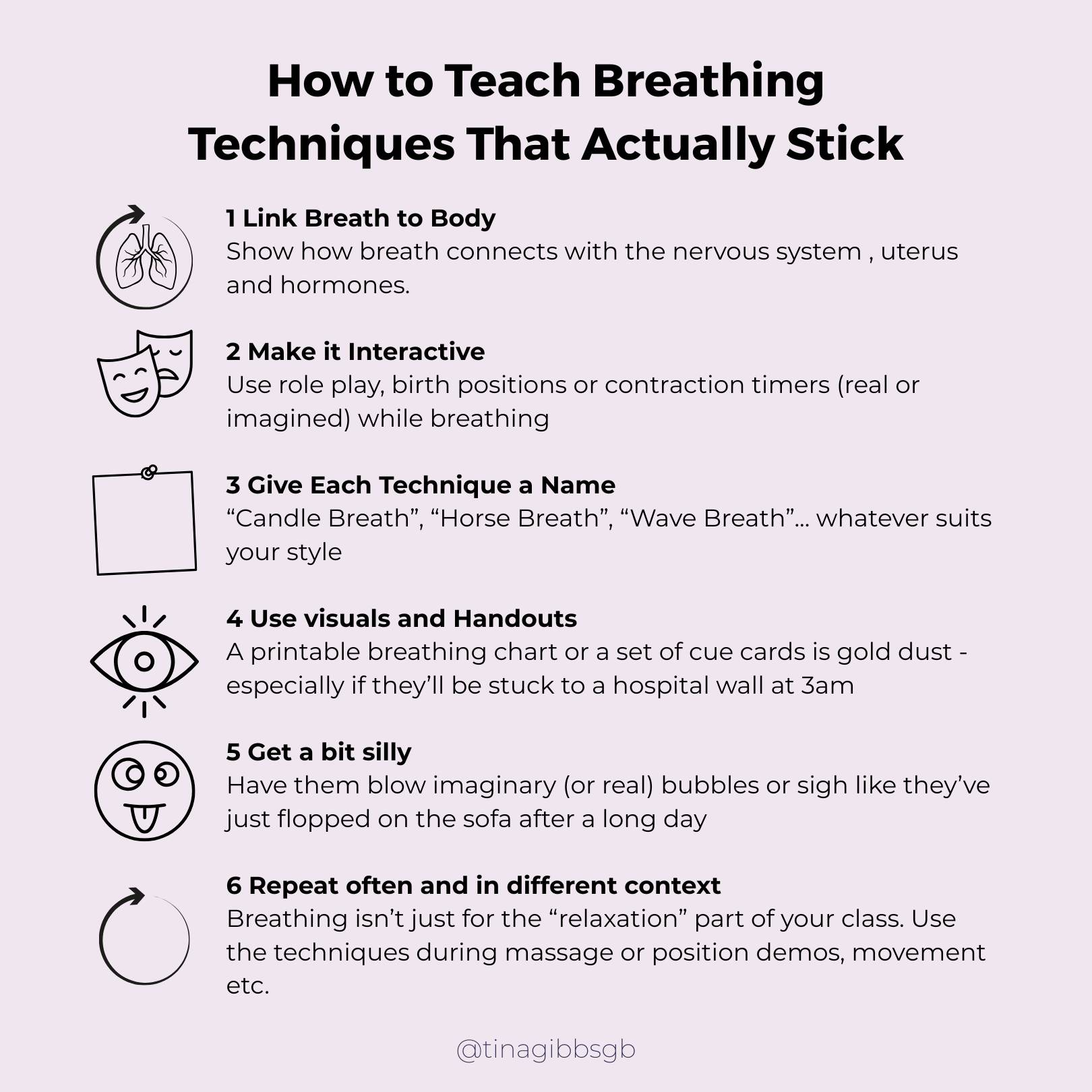
How to Teach Breathing Techniques That Actually Stick

quick visual guide to how to teach breathing techniques that actually stick

How to teach breathing techniques that actually stick is a practical guide for antenatal teachers, birth workers, and perinatal educators

Let’s face it—telling someone in labour to “just breathe” is a bit like shouting “stay calm!” during a fire drill. Great idea in theory, but not super helpful unless they’ve practised it beforehand.

Teaching breathing techniques is one of the most powerful tools in your antenatal toolkit—but it has to be taught in a way that’s simple, practical, and memorable.

Here’s how to make sure the breathing techniques you teach don’t just float away like a stray balloon once class ends:


🌀 1. Link Breath to Body

Start with the why. When parents understand that breathing isn’t just about “calming down”—it’s actually affecting their nervous system, their uterus, and their hormone flow—it all starts to click.

You could explain it like this:

“Slow breathing tells your body it’s safe. When your body feels safe, oxytocin flows and labour can progress more smoothly.”

Science meets simplicity = win.


🎭 2. Make It Interactive

Don’t just demonstrate—involve them. Get people to practise each technique while in different positions, using a contraction timer, or during a short movement activity.

Examples:

  • Pretend to ride a contraction “wave” while slow breathing
  • Match breath to a partner massage rhythm
  • Try one-minute breathing while squatting, leaning or on all fours

Movement + breath = muscle memory. They’ll be more likely to remember it when it counts.


🗂 3. Give Each Technique a Name

Humans are much better at remembering “Candle Breath” than “that slow exhale thing we did that one time.”

Try naming them based on imagery or feeling:

  • Flower Breath (gentle inhale through the nose)
  • Candle Breath (long soft exhale, like blowing out a candle without flickering the flame)
  • Wave Breath (riding the peak and drop of a contraction)

It’s fun, it’s sticky, and it helps when birth partners need to offer cues and encouragement later on.


💡 4. Use Visuals and Handouts

Breathing technique cards or printable charts are your best friends. Pop them in your class packs or hang them in your teaching space.

Visual prompts:

  • Help reinforce the technique
  • Can be stuck on a hospital wall or birth centre window later
  • Support birth partners too—they often need reminders in the moment!


🤸‍♀️ 5. Get a Bit Silly (Seriously)

Laughter is a fantastic tension reliever—and relaxed muscles make for more effective breathing. So don’t be afraid to add a playful moment or two.

Try:

  • Pretending to blow bubbles
  • “Sighing like you’ve just flopped on the sofa after a long day”
  • Holding up imaginary hot chocolate and slowly blowing to cool it down

Silly now = soothing later.


🔄 6. Repeat Often and In Different Contexts

Breathing isn’t just for the “relaxation” part of your class. It should be woven through everything:

  • During movement
  • While discussing pain relief
  • As part of decision-making scenarios
  • During massage demos

Repetition builds confidence. They’ll walk away feeling like breathing is their superpower (because it is).


💬 Bonus: Handy Phrases to Use in Class

Here are a few phrases you can sprinkle throughout your teaching to reinforce the message:

  • “Your breath is your anchor.”
  • “Soft breath, soft body.”
  • “You can’t control the waves, but you can learn to surf them.”
  • “Every breath you take helps your baby too.”

Little mantras like these stick—and may pop into someone’s head right when they need them most.


Final Thoughts

Breathing techniques are simple on the surface—but they’re incredibly powerful tools for labour. As educators, it’s our job to move beyond the basics and give expectant parents strategies they’ll actually remember and use.

So go ahead—breathe some fresh energy into your next class. You’ve got this 💪


Want a printable breathing technique card set, activity or visual aid for your classes?
Have a look at my recommended products below! Also check out my Teachers Pay Teachers (TpT) Store here!

Posted on Leave a comment

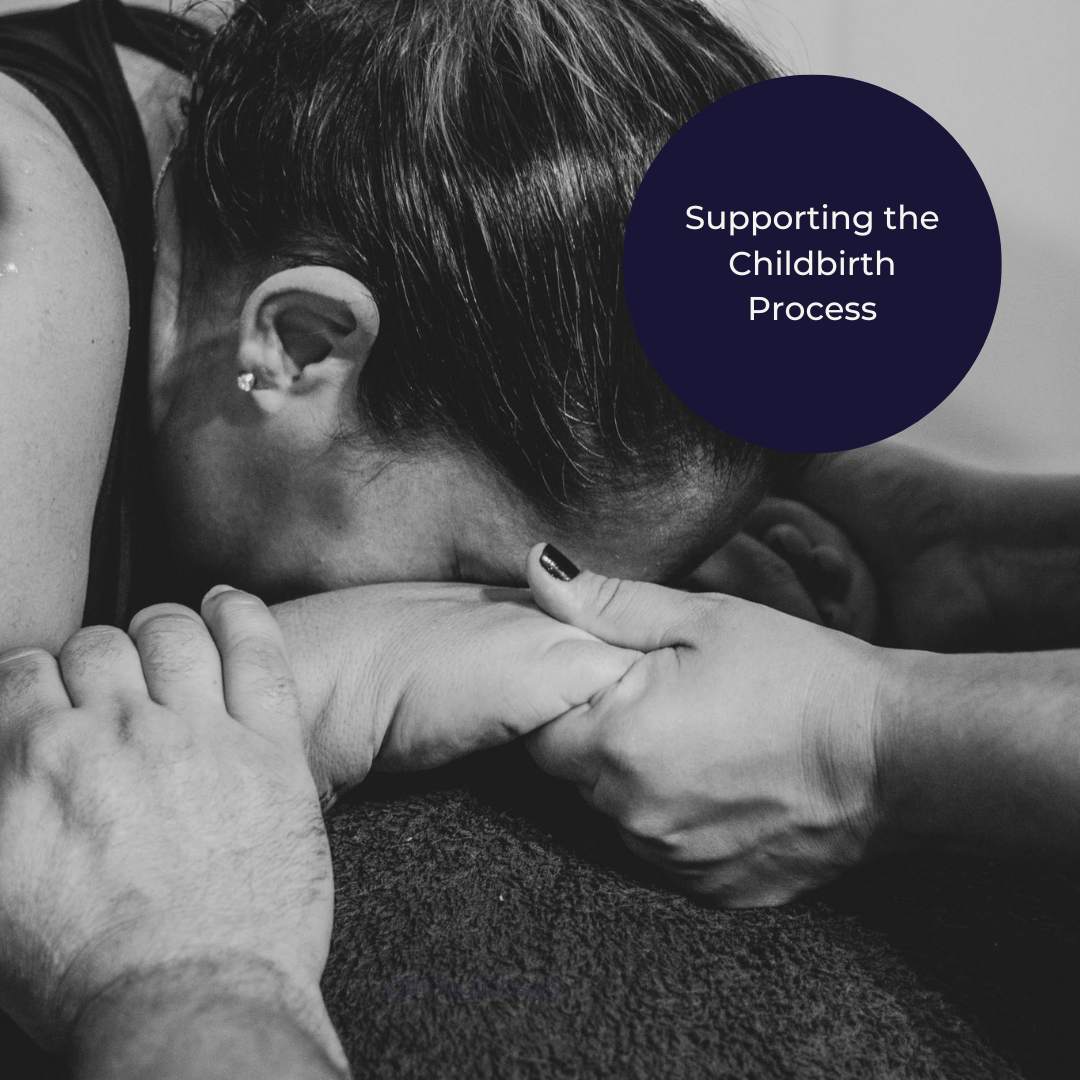
Supporting the Childbirth Process

Supporting the childbirth process

A Guide to Helping Parents Bring New Life into the World

Supporting the childbirth process: A Guide to Helping Parents Bring New Life into the World

Childbirth is one of the most significant moments in a parent’s life. While it is a natural process, it can also be physically and emotionally challenging. Support during labour and birth plays a crucial role in making the experience more positive and manageable. Whether you are a partner, family member, friend, or birth worker, knowing how to offer the right support can make all the difference.

Understanding the Childbirth Process

Labour typically unfolds in three stages:

  1. First Stage – This is the longest phase, where contractions gradually open the cervix. It includes early, active, and transition phases.
  2. Second Stage – This is when the baby is born as the parent pushes through contractions.
  3. Third Stage – The placenta is delivered, and medical staff ensure the parent’s well-being.

Knowing what to expect at each stage helps supporters provide reassurance and encouragement.

Emotional Support: The Power of Reassurance

A calm and confident presence can ease a labouring parent’s stress. Encouraging words, holding hands, and offering gentle reassurance help them feel safe and supported. Simple phrases like “You’re doing amazingly” or “I’m right here with you” can be powerful.

It’s also important to respect their preferences. Some may want quiet, while others benefit from verbal motivation. Being attentive to their needs ensures they feel in control and cared for.

Physical Comfort Measures

There are many ways to provide physical comfort during labour:

  • Massage and Touch – Gentle back rubs, counter-pressure on the lower back, or a warm hand on the shoulder can relieve tension and discomfort.
  • Breathing Techniques – Encouraging slow, deep breaths helps manage pain and anxiety. Practising these beforehand can be helpful.
  • Position Changes – Movement and different positions (such as squatting, standing, or leaning) can ease pain and help labour progress.
  • Hydration and Nutrition – Small sips of water and light snacks (if permitted) help maintain energy levels.

Advocating for the Labouring Parent

In the intensity of labour, communication with medical staff can be overwhelming. A supportive birth partner can help by ensuring the parent’s preferences are respected. This includes reminding healthcare professionals of their birth plan and asking for explanations about medical procedures if needed.

Advocacy does not mean making decisions on their behalf but rather ensuring they feel informed and empowered. Respecting their choices is essential for a positive birth experience.

Managing Pain: Options and Encouragement

Pain relief choices vary for every person. Some prefer natural methods, while others opt for medical pain relief such as gas and air, pethidine, or an epidural. Supporting their decision, without judgement, is crucial.

If they choose to avoid medication, distraction techniques such as music, dim lighting, warm baths, or hypnobirthing practices can help. If they decide on medical pain relief, encouraging them through the process and reminding them that every birth journey is unique can be reassuring.

If you are a birth worker reading this, you might find some of my printable activities helpful for your childbirth education classes and session. Below you’ll find my latest offers:

The Importance of Post-Birth Support

Supporting the childbirth process doesn’t end once the baby is born. The postnatal period is a time of physical recovery and emotional adjustment. Encouraging rest, helping with newborn care, and offering emotional support are just as important after birth as they are during labour.

Small actions, like bringing a meal, holding the baby while the parent naps, or simply listening to their experiences, can make a huge difference. Reassure them that it’s normal to feel a mix of emotions and encourage them to seek support if needed.

Final Thoughts

Supporting someone through childbirth is a privilege and a responsibility. Being informed, compassionate, and adaptable allows you to provide meaningful help. Every birth experience is different, but the right support can make it a more positive and empowering journey for the parent bringing new life into the world.

Posted on Leave a comment

Creative Pregnancy Announcement Ideas to Share Your Big News

Creative Pregnancy Announcement Ideas

Creative Pregnancy Announcement Ideas to Share Your Big News

Discovering you’re expecting is one of the most exciting moments in life, and announcing your pregnancy to loved ones can be just as thrilling! Whether you’re looking for something sweet and simple or planning a grand reveal, here are some fun and unique pregnancy announcement ideas that will leave everyone buzzing with joy.

1. A Personalised Puzzle Pregnancy Announcement

Why not have your family and friends solve a mystery to discover your exciting news? Customised jigsaw puzzles are a wonderful way to turn your pregnancy reveal into an interactive moment. Order a personalised puzzle online with a message like “We’re expecting!” or “Baby on the way!” Watch the delight unfold as they piece it together and realise what it means.

2. Printable Escape Room Reveal

For something truly unique and immersive, consider a printable escape room. This idea brings a bit of adventure to your announcement, making it a fun challenge for your loved ones. You can create a themed escape room where participants have to solve puzzles, follow clues, and unlock the final message – your pregnancy announcement! There are various themes you could explore, such as woodland animals, holidays, or a bespoke theme that reflects your family’s personality. If you’d like me to create a bespoke printable escape room for you, please get in touch! You can easily design a DIY escape room using printable puzzles and clues, or download a pre-made version. At the end of the game, participants unlock the big surprise – perhaps using a 4-digit code that reveals the news. It’s an exciting way to make the moment unforgettable! You can also purchase your baby shower printables from my site!

3. A Baby Book Reveal

Take an unexpected approach by gifting family and friends a classic baby book. Inside, write a heartfelt message announcing your pregnancy. You could also include an ultrasound photo or a handwritten note. This is a sweet, sentimental way to share the news, perfect for those who appreciate personal touches.

4. Pet Announcement

If you have a pet, let them take part in the big reveal! Dress up your dog, cat, or even your rabbit with a cute sign or bandana that says something like “Big Brother” or “Big Sister.” Snap a photo of your pet looking proud (or confused!) and send it to family and friends. This light-hearted approach is sure to get plenty of smiles.

5. A Family Photo with a Twist

Organise a family photo shoot with a little twist. Pose with your partner in a way that subtly hints at your pregnancy – holding a tiny pair of baby shoes, a tiny outfit, or an ultrasound picture. Later, you can send out the photos or post them online to reveal your news. A picture says a thousand words, and this one will say just the right thing!

6. A Bunting or Banner Announcement

Create a banner or bunting with the words “Baby on the way” or “We’re expecting!” Hang it somewhere special in your home and invite close family and friends over for a casual get-together. As they walk in, they’ll be greeted by your big news. This idea works beautifully for intimate gatherings or even a surprise video call.

7. A Creative Cake Pregnancy Announcement

Everyone loves cake! You can announce your pregnancy by bringing out a beautifully decorated cake with a hidden message inside. You might choose to have the cake filled with coloured icing or even a small note or toy that reveals your exciting news when cut. Whether you opt for a simple design or something a bit more elaborate, it’s bound to be a sweet surprise.

8. A Custom Scratch Card

For a creative and unexpected announcement, custom scratch cards are an excellent option. You can create personalised cards that have a message like “We’re having a baby!” hidden under a scratch-off layer. Hand them out to friends and family and watch their faces light up as they reveal the big news. It’s a clever, interactive way to share your happiness.

9. Baby-Themed Gift Reveal

Wrap up a baby item such as a onesie, a baby book, or a small toy, and give it to your family or friends as a “just because” gift. When they open it, the meaning will dawn on them, and you’ll get to see their priceless reactions. This is a great way to share the news in a personal and meaningful way, especially with those closest to you.

10. Holiday-Themed Announcement

If you’re revealing your pregnancy around a holiday, take advantage of the festive spirit! For example, a Christmas pregnancy announcement could involve a special ornament that says “Baby’s First Christmas – Coming Soon.” For Halloween, consider a tiny pumpkin or a baby skeleton costume with “Due in [month]” written on it. This adds a playful touch to an already joyful time of year.

No matter how you decide to announce your pregnancy, the most important part is making it memorable for both you and your loved ones. Whether it’s through a personal photo, an interactive escape room, or a simple gift, sharing this exciting news in your own way will make it truly special.

Online Birth Preparation Course only £35!

Please also check out my online course! No videos, just text and images to learn in your own time. Includes hypnobirthing mp3s, scripts, workbook, handouts, infographics and much more! Lots and lots of information at your fingertips! Includes:

  • hypnobirthing mp3s
  • hypnobirthing scripts
  • written information
  • infographics and other imagery
  • printable handouts
  • printable workbook/journal
Posted on Leave a comment

Teaching about Birth Preferences and Birth Plans: A Guide for Perinatal Educators

Teaching about Birth Preferences and Birth Plans

Teaching about Birth Preferences and Birth Plans. As perinatal educators, antenatal teachers, doulas, and birth workers in the UK, one of the most important roles we play is helping expectant parents navigate the often overwhelming world of birth preferences and birth plans. These tools empower parents-to-be to make informed decisions, advocate for themselves, and communicate their wishes clearly with healthcare providers. However, it’s crucial to teach this topic in a way that is flexible, inclusive, and respectful of the unpredictable nature of birth.

In this post, we’ll explore some effective strategies and activity ideas for teaching about birth preferences and birth plans, whether you’re working with groups or individuals, and whether your sessions are in-person or online.


Understanding Birth Preferences vs. Birth Plans

What Are Birth Preferences?

Birth preferences are a flexible approach that allows parents to outline their wishes for labour and birth while recognising that circumstances may change. This mindset encourages a sense of adaptability and can reduce feelings of disappointment if things don’t go exactly as planned.

What Are Birth Plans?

Birth plans are more detailed and structured, typically outlining specific choices regarding pain relief, birthing positions, who will be present, and what to do in case of complications. While still subject to change, birth plans can be a useful tool for clear communication with healthcare providers.


Group Activities

In-Person

1. Birth Preferences Brainstorming Session
Activity: Divide participants into small groups and provide them with a variety of scenario cards. Each card should present different birth situations, such as an unplanned caesarean or an early arrival. Ask the groups to brainstorm potential birth preferences for each scenario.
Objective: This activity helps parents understand the range of possibilities and encourages flexible thinking.
Materials: Scenario cards, flip charts, markers.

2. Birth Plan Role-Play
Activity: Organise a role-playing exercise where participants take on the roles of parents, midwives, and doctors. Using sample birth plans, each group acts out how they would discuss and implement the plan in different scenarios.
Objective: This role-play helps build confidence in communicating birth plans and adapting to changing circumstances.
Materials: Sample birth plans, role cards, props (e.g., stethoscopes, blankets).

Online

1. Interactive Birth Preferences Quiz
Activity: Create a quiz that participants can take during the session. The quiz should cover different aspects of birth preferences, asking parents-to-be to choose their preferred options in various scenarios. Discuss the answers as a group to highlight the diversity of preferences and the importance of flexibility.
Objective: This activity helps to engage participants and allows them to reflect on their own preferences.
Tools: Online quiz platforms like Kahoot or Google Forms.

2. Virtual Birth Plan Workshop
Activity: Share a birth plan template with participants and guide them through filling it out during the session. Encourage discussion and questions in real-time, either through chat or by unmuting participants to share thoughts.
Objective: This workshop ensures participants leave with a concrete, well-thought-out birth plan while feeling supported and heard.
Tools: Video conferencing software with screen-sharing capabilities, editable templates.


1:1 Activities

In-Person

1. Personalised Birth Preferences Discussion
Activity: Sit down with the parent(s)-to-be and have an in-depth conversation about their birth preferences. Use open-ended questions to explore their values, concerns, and hopes for the birth experience.
Objective: This personalised discussion allows for a deep understanding of the parents’ unique situation and helps tailor the birth plan accordingly.
Materials: Birth preferences worksheets, note-taking materials.

2. Creating a Visual Birth Plan
Activity: Work with the parent(s) to create a visual birth plan using images and icons to represent their preferences. This can be particularly helpful for those who find it easier to communicate visually rather than through text.
Objective: A visual birth plan is a quick-reference tool that can be easily shared with healthcare providers.
Materials: Magazines, scissors, glue, poster boards, markers, or digital tools like Canva.

Online

1. 1:1 Virtual Birth Preferences Consultation
Activity: Conduct a private video call to discuss the parent(s)’ birth preferences in detail. Use screen-sharing to show examples of birth plans and answer any questions they may have.
Objective: This ensures the parent(s) feel supported and informed, even in a remote setting.
Tools: Video conferencing software, digital birth plan templates.

2. Guided Birth Plan Creation via Shared Document
Activity: Use a shared online document to guide the parent(s) through the process of creating their birth plan. Make suggestions and edits in real-time, allowing them to see the birth plan come together as you discuss it.
Objective: This collaborative approach ensures that the birth plan is comprehensive and tailored to the parent(s)’ needs.
Tools: Google Docs or other shared document platforms.


Final Thoughts

Teaching about birth preferences and birth plans is about more than just providing information—it’s about empowering parents to feel confident and prepared for their birth journey. Whether you’re working with groups or individuals, in person or online, the key is to create a supportive environment where parents feel free to explore their options, ask questions, and express their hopes and fears.

By integrating these activities into your sessions, you can help parents-to-be create birth preferences and plans that are both realistic and empowering, setting the stage for a positive birth experience no matter what unfolds.

Remember, birth plans and preferences should always be flexible, and the ultimate goal is a healthy mother and baby, no matter the path taken to get there.


Let’s continue to support, educate, and empower expectant parents across the UK, helping them navigate their birth journey with confidence and clarity.

Posted on Leave a comment

Starting Solids: The Benefits of Using a Meal Planner and Food Diary for Weaning

Weaning food diary

Introducing solids is one of the most exciting milestones in your baby’s first year. It’s a time filled with curiosity, mess, and a whole new world of tastes and textures. However, it can also be a bit overwhelming. With so many questions—What should I feed my baby? How much should they eat? Are they getting a balanced diet?—it’s easy to feel uncertain. This is where a meal planner and food diary can become your best allies in the weaning journey.

Why Consider a Meal Planner?

1. Ensures Variety and Balanced Nutrition A meal planner helps you ensure that your baby is receiving a variety of foods, which is essential for balanced nutrition. Babies need a mix of fruits, vegetables, proteins, and grains to develop healthily. By planning meals in advance, you can make sure your baby gets a good mix of nutrients each week, and you can avoid repetitive meals that might limit their exposure to different foods.

2. Saves Time and Reduces Stress Planning meals ahead of time can significantly reduce the daily stress of deciding what to feed your baby. With a meal planner, you’ll know exactly what you’re preparing each day, which can save you time and make shopping easier. It’s also a great way to ensure you’re always prepared, even on those busy days when things don’t go to plan.

3. Helps Identify Allergies and Preferences Introducing solids is also the time when potential allergies might become apparent. By planning and documenting what foods are introduced and when, you can more easily identify if any particular food causes a reaction. A meal planner also helps you track your baby’s preferences, so you can see which foods they enjoy and which might need a bit more time.

The Advantages of a Weaning Food Diary

1. Tracks Your Baby’s Progress A food diary is an excellent tool for tracking your baby’s weaning journey. It allows you to document what they’ve eaten, how much they’ve eaten, and their reactions to different foods. Over time, this record will give you a clear picture of your baby’s likes, dislikes, and overall progress with solid foods.

2. Supports Healthy Eating Habits Recording your baby’s meals can help you establish healthy eating patterns from the start. You can monitor portion sizes and ensure your baby is getting regular meals and snacks throughout the day. This consistency is key to developing a healthy relationship with food as they grow.

3. Useful for Health Appointments Bringing a food diary to health visitor appointments can be incredibly helpful. It provides a clear record of what your baby has been eating, which can be useful if you have any concerns about their nutrition, growth, or any possible food intolerances. Health professionals can offer tailored advice based on the detailed information you provide.

4. Reflects on Your Weaning Journey A food diary is not just practical—it can also be a lovely keepsake. Looking back on those first foods, the messy meals, and the milestones like the first time they fed themselves can bring back fond memories. It’s a personal record of an important phase in your baby’s life.

How to Get Started

1. Find the Right Tools There are many meal planners and food diary templates available online, or you can create your own. Some parents prefer paper-based diaries, while others use apps for convenience. Choose what works best for you and your lifestyle.

2. Keep it Simple You don’t need to plan elaborate meals or write detailed diary entries. Simple notes about what your baby ate, how much they ate, and any reactions or preferences are enough to start with. The key is consistency.

3. Make it a Routine Incorporate meal planning and food diary updates into your weekly routine. Set aside a time that works for you—perhaps on a Sunday evening—to plan the week’s meals and review your baby’s progress.

4. Be Flexible Babies are unpredictable, and your plans might not always go as intended. It’s important to remain flexible and adapt as needed. If your baby doesn’t like a food one week, don’t worry—try again later. The goal is to make the weaning process as smooth and enjoyable as possible.

Download my weaning food diary here.

food diary meal planner starting solids baby weaning

Final Thoughts

Starting solids is a big step for your baby, and using a meal planner and food diary can make the journey more manageable and enjoyable for both of you. These tools provide structure, reduce stress, and ensure your baby gets the balanced diet they need to grow and thrive. Plus, they offer a wonderful way to track and cherish these precious firsts.

So why not give it a try? With a little planning and documentation, you can navigate the weaning journey with confidence and peace of mind.

Posted on Leave a comment

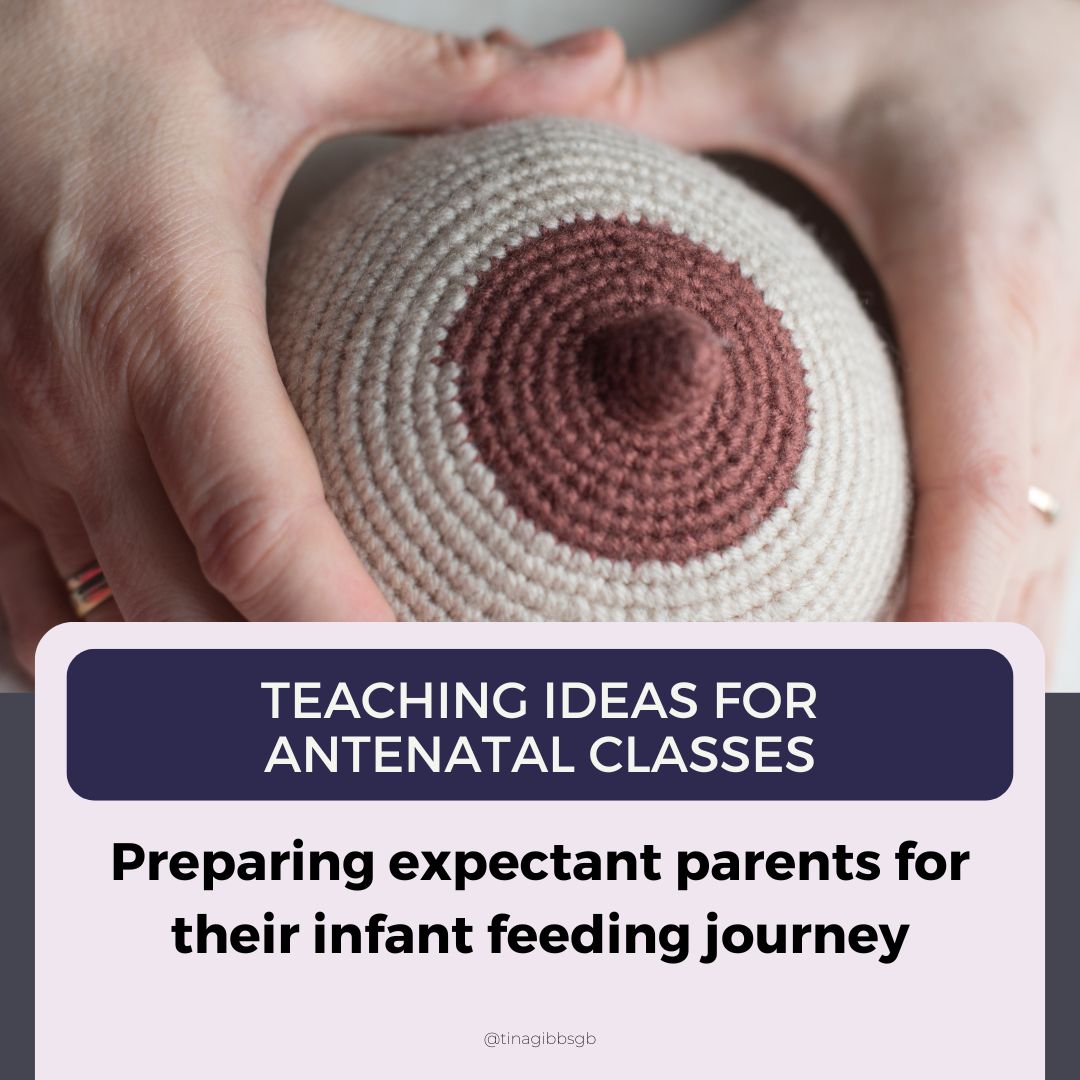
Preparing Expectant Parents for Their Infant Feeding Journey: A Guide for Birth Workers, Doulas, and Infant Feeding Supporters

preparing for infant feeding journey

As birth workers, doulas, and infant feeding supporters, you play a crucial role in preparing expectant parents for the journey of feeding their infants. Empowering parents with the knowledge and confidence they need can make a significant difference in their experience and the health of their baby. This guide will provide you with evidence-based information, practical teaching activities, and essential signs to look for to ensure feeding is going well or when additional support may be needed.

Teaching Activities for Expectant Parents

  1. Interactive Workshops: Organise hands-on sessions where parents can learn about different feeding positions, latch techniques, and the use of breastfeeding aids. Use lifelike dolls and breastfeeding pillows to simulate real-life scenarios.
  2. Visual Aids and Handouts: Provide clear, visual guides showing the anatomy of breastfeeding, how milk production works, and common feeding cues. Resources from the NHS, First Steps Nutrition Trust and UNICEF can be very helpful.
  3. Role-Playing Scenarios: Conduct role-playing exercises where parents can practice responding to different feeding situations, such as a baby who is fussy at the breast or a mother experiencing engorgement. This can help build their confidence in handling real-life challenges.
  4. Q&A Sessions: Create a safe space for parents to ask questions and discuss their concerns. Address common myths and misconceptions about infant feeding to ensure they have accurate information.
  5. Infant feeding resources for birth workers: Browse all my infant feeding activities, posters and tools here: https://tinagibbs.co.uk/product-category/infant-feeding/

Signs That Feeding is Going Well

For Breastfeeding:

  • Effective Latch: The baby’s mouth should cover a large portion of the areola, not just the nipple. You should hear rhythmic sucking and swallowing sounds.
  • Weight Gain: The baby should start gaining weight after the initial post-birth weight loss, typically regaining birth weight by about two weeks.
  • Regular Wet and Dirty Nappies: Expect at least six wet nappies and three or more dirty nappies per day after the first few days. Also see my “Your Baby’s Stool” Guide.
  • Contentment After Feeds: The baby should seem satisfied and content after feeding sessions.

For Bottle Feeding:

  • Steady Feeding: The baby should suck steadily and swallow regularly without gulping or choking. Use responsive and paced bottle feeding following baby’s cues.
  • Contentment: Similar to breastfeeding, the baby should appear content and satisfied after feeding.
  • Weight Gain and Output: The baby should gain weight consistently and produce an appropriate number of wet and dirty nappies.

Signs That Feeding May Not Be Going Well

For Breastfeeding:

  • Poor Latch: Signs of a poor latch include nipple pain, clicking sounds, or the baby slipping off the breast frequently.
  • Insufficient Weight Gain: If the baby is not regaining birth weight by two weeks or is not gaining weight steadily.
  • Fewer Wet and Dirty Nappies: Fewer than six wet nappies or less frequent dirty nappies can indicate inadequate milk intake.
  • Persistent Fussiness: If the baby is constantly fussy and seems unsatisfied after feeds.

For Bottle Feeding:

  • Frequent Gulping or Choking: This could indicate that the flow of milk is too fast or the baby is having trouble feeding.
  • Poor Weight Gain: If the baby is not gaining weight as expected.
  • Irritability or Discomfort: If the baby seems uncomfortable or has excessive gas, this might be a sign of feeding issues.

Sources and Places of Support

  1. UNICEF UK Baby Friendly Initiative: Provides comprehensive resources and support for breastfeeding and infant feeding practices. Their guidelines are based on extensive research and evidence. Visit UNICEF Baby Friendly
  2. NHS Choices: The NHS website offers detailed information on breastfeeding, bottle feeding, and common feeding challenges. It is a reliable resource for parents and professionals alike. Visit NHS Choices
  3. First Steps Nutrition Trust: This organisation offers valuable resources on infant nutrition, including guides on feeding and weaning. Their evidence-based information is crucial for supporting parents in making informed feeding choices. Visit First Steps Nutrition Trust
  4. The Breastfeeding Network (BfN) resources for practitioners, as well as independent breastfeeding support in the UK. https://www.breastfeedingnetwork.org.uk/
  5. Local Breastfeeding Support Groups: Encourage parents to join local breastfeeding support groups where they can share experiences and receive peer support. Many areas have groups run by trained volunteers who offer valuable advice and encouragement.
  6. Lactation Consultants and Health Visitors: Direct parents to professional support from lactation consultants or health visitors if they encounter persistent feeding difficulties. These professionals can provide personalised assistance and intervention if needed.

By equipping expectant parents with the knowledge and skills they need, you help lay the foundation for a positive infant feeding journey. Remember, your support and guidance can make a significant impact on both the parents and their babies.

Posted on Leave a comment

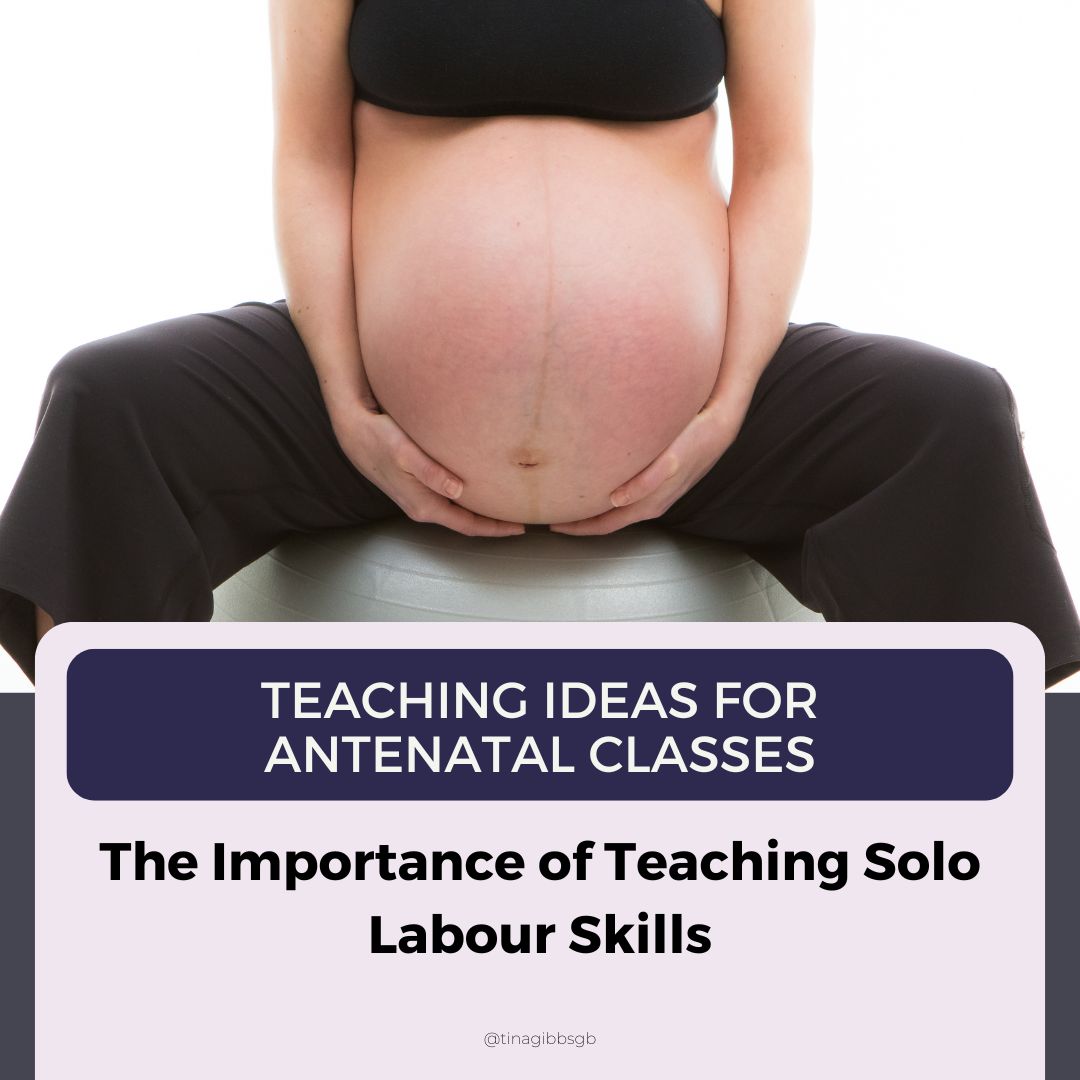
Empowering Expectant Parents: The Importance of Teaching Solo Labour Skills

As antenatal teachers, hypnobirthing instructors, doulas, and childbirth educators, we play a crucial role in preparing expectant parents for one of the most significant experiences of their lives. While much of our focus is on partnership and support during labour, it is equally important to equip pregnant women and people with the skills to cope with labour on their own. Whether due to the absence of a partner, unexpected illness, or logistical challenges, there are various reasons why a birthing person may find themselves alone during labour. Here’s why teaching these skills is essential and how it can empower those we support.

The Reality of Solo Labour

While many envision labour surrounded by supportive partners, family, or friends, the reality can sometimes differ. A birthing person might be alone due to:

  1. No Partner: Single parents by choice or circumstance may not have a partner to accompany them.
  2. Illness: A partner’s sudden illness or other health issues can prevent them from being present.
  3. Logistical Challenges: Work commitments, travel restrictions, or unforeseen emergencies can lead to a partner’s absence.
  4. Personal Choice: Some may prefer to labour alone for personal or cultural reasons.

Recognising these scenarios, it becomes clear why teaching solo labour skills is not just an option but a necessity.

The Rationale for Teaching Solo Labour Coping Skills

  1. Empowerment and Confidence:
    • Knowing they can handle labour on their own empowers expectant parents. It builds confidence, reducing anxiety and fear associated with the birthing process.
    • Self-reliance instils a sense of control and capability, which can significantly enhance the birthing experience.
  2. Practical Preparedness:
    • Solo labour skills include practical techniques such as breathing exercises, visualisation, and self-massage. These methods help manage pain and maintain calm.
    • Educating about the hospital environment, including how to communicate effectively with medical staff, ensures they are better prepared for any situation.
  3. Emotional Resilience:
    • Labour can be an intense emotional journey. Equipping birthing individuals with tools to maintain emotional balance, such as affirmations and mindfulness, is crucial.
    • Encouraging a positive mindset and resilience helps them cope with unexpected challenges and changes in their birth plan.
  4. Reducing Dependence:
    • While support is invaluable, over-reliance on others can lead to increased stress if things don’t go as planned. Teaching solo skills reduces this dependence, fostering self-sufficiency.
    • It also helps in situations where professional support like a doula or midwife may not be available at all times.

Practical Steps to Teach Solo Labour Skills

  1. Incorporate into Antenatal Classes:
    • Dedicate a session to solo labour techniques. Use role-playing scenarios to practice these skills.
    • Highlight the importance of mental preparation and teach strategies such as hypnobirthing scripts tailored for solo use.
  2. Provide Resources:
    • Create handouts or digital resources that detail solo coping strategies, relaxation techniques, and pain management tips.
    • Recommend apps or audiobooks that offer guided meditations and affirmations specifically for labour.
    • Provide your clients with mp3s they can listen to in preparation and during labour.
  3. Simulate Real Situations:
    • Use simulations to help expectant parents experience various scenarios, including being on their own during labour. This can demystify the process and build confidence.
    • Encourage questions and discussions about fears and concerns regarding solo labour.
  4. Support Networks:
    • Encourage building a broader support network beyond the partner. Friends, family, and community resources can be invaluable.
    • Discuss the role of virtual support options, such as video calls, to provide emotional support if physical presence isn’t possible.
    • Discuss the option of hiring a doula as an extra support during pregnancy, birth as well as early postpartum days.

Conclusion

Preparing expectant parents for the possibility of solo labour is not about fostering fear but about empowering them with confidence and practical skills. By teaching these vital techniques, we ensure that every birthing person feels capable, prepared, and supported, no matter the circumstances. As childbirth educators, let’s continue to expand our teachings to embrace all scenarios, promoting resilience and self-reliance in the beautiful journey of bringing new life into the world.

Posted on Leave a comment

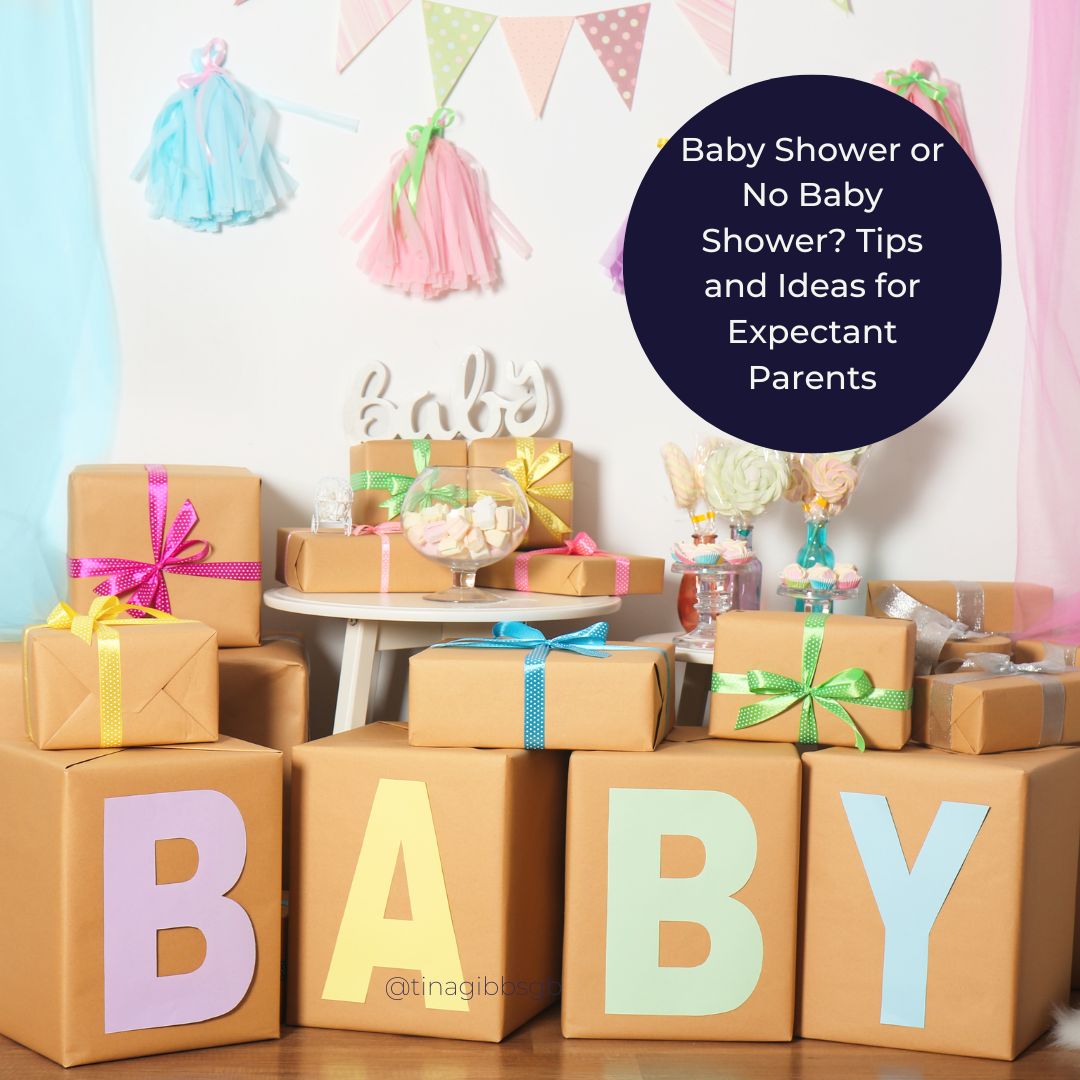
Baby Shower or No Baby Shower? Tips and Ideas for Expectant Parents

Expecting a baby is an exciting time filled with anticipation, joy, and perhaps a bit of nervousness. One question that often arises for expectant parents in the UK is whether to host a baby shower. While baby showers are a well-loved tradition in the United States, they have become increasingly popular across the pond as well. So, should you have a baby shower? And if so, how do you go about planning one? Here’s a guide to help you decide and give you some top tips and ideas if you choose to celebrate this special occasion.

To Baby Shower or Not to Baby Shower?

The decision to have a baby shower is entirely personal and depends on your preferences, cultural traditions, and comfort level. Here are a few considerations to help you decide:

Pros:

  1. Celebration of New Life: A baby shower is a wonderful way to celebrate the impending arrival of your little one with friends and family.
  2. Support System: It provides an opportunity for loved ones to offer their support and share in your excitement.
  3. Gifts and Essentials: You’ll likely receive gifts that can help with the costs associated with a new baby, from nappies to adorable outfits and necessary gear.
  4. Creating Memories: It’s a chance to create lasting memories and take lots of photos to look back on.

Cons:

  1. Planning Stress: Organising a party can be stressful, especially if you’re already feeling overwhelmed with pregnancy.
  2. Unwanted Attention: Some parents-to-be might feel uncomfortable being the centre of attention.
  3. Cost: Hosting a party can be expensive, although there are ways to keep it budget-friendly.

If you’re leaning towards having a baby shower but are worried about the hassle, consider enlisting the help of a close friend or family member to organise it for you.

Baby Shower Ideas

If you’ve decided to go ahead with a baby shower, the next step is planning the event. Here are some ideas to inspire you:

1. Theme Ideas:

  • Classic Blue or Pink: A traditional choice based on the baby’s gender.
  • Neutral and Natural: Earthy tones and natural decorations for a gender-neutral approach.
  • Storybook Characters: Winnie the Pooh, Peter Rabbit, or Beatrix Potter themes can add a charming touch.
  • Seasonal Themes: Celebrate with themes inspired by the time of year, such as a spring garden party or a cosy autumnal gathering.

2. Venue Options:

  • Home: A cosy and cost-effective choice.
  • Garden: If the weather is nice, an outdoor gathering can be lovely.
  • Tea Room: For a quintessentially British experience, consider hosting your shower at a tea room.
  • Community Hall: Ideal if you’re expecting a larger crowd.

3. Activities and Games:

  • Guess the Baby Food: Blindfolded guests taste different baby foods and try to identify them.
  • Nappy Raffle: Guests bring a pack of nappies for a chance to win a prize.
  • Baby Predictions: Guests guess the baby’s birth date, weight, and other fun details.
  • Craft Station: Set up a station where guests can decorate onesies or create custom baby blocks.
  • Printable gender reveal escape rooms
  • For more game ideas, check out my printable baby shower games!

4. Food and Drink:

  • Afternoon Tea: Finger sandwiches, scones, and a selection of teas.
  • Buffet: A variety of finger foods and snacks to suit all tastes.
  • Mocktails: Refreshing non-alcoholic beverages that everyone can enjoy.
  • Cake: No party is complete without a delicious cake. Consider a themed cake to match your shower.

Top Tips for a Successful Baby Shower

  1. Plan Ahead: Start planning early to avoid last-minute stress.
  2. Delegate Tasks: Don’t be afraid to ask for help with planning and hosting.
  3. Set a Budget: Determine how much you’re willing to spend and stick to it.
  4. Send Invites Early: Give your guests plenty of notice, especially if they need to travel.
  5. Consider Comfort: Ensure there are plenty of seats and that the venue is comfortable for all guests, especially the mum-to-be.
  6. Capture the Moments: Designate someone to take photos or hire a photographer to ensure you capture all the special moments.
  7. Thank Your Guests: Prepare thank-you cards in advance to send out after the shower.

Ultimately, whether you decide to have a baby shower or not, remember that this is a special time for you and your growing family. Celebrate in a way that feels right for you, and enjoy the journey towards meeting your new bundle of joy.