
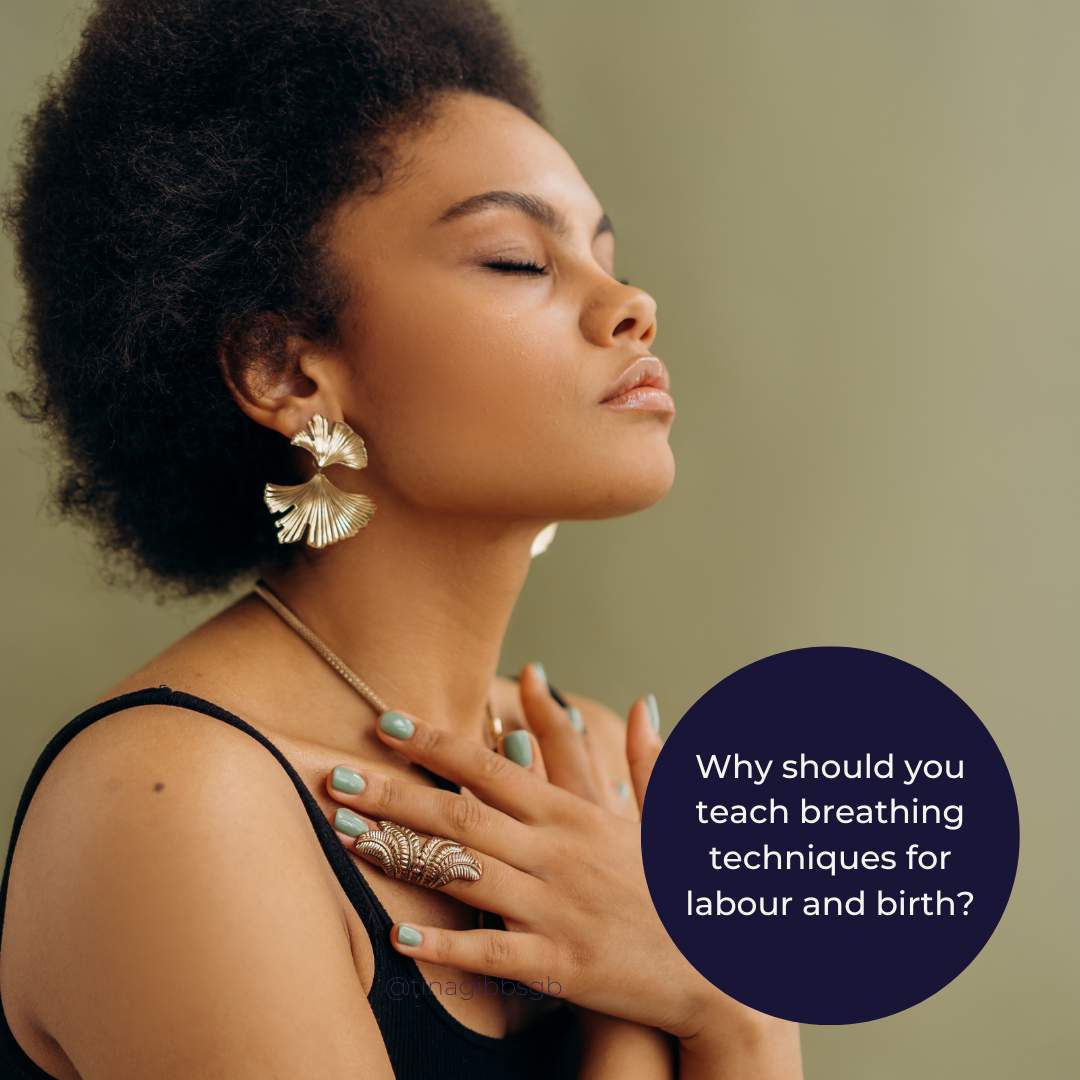
Why should you teach breathing techniques for labour and birth to expectant parents? If you’ve read my last post, How to Teach Breathing Techniques That Actually Stick, you’ll already know how to help expectant parents master those all-important breathing skills. But today, let’s get into the really juicy bit: why it’s absolutely worth the effort.
(And no, it’s not just so you can feel smug when someone describes you as “life-changing” in a review – although, let’s be honest, that’s a pretty sweet bonus.)
1. Breathing Techniques Aren’t Just Fluffy Extras – They’re Game-Changers
Breathing is one of those things we do all day without thinking. Teaching someone to breathe on purpose, for a reason, in the thick of intense sensations is like giving them a secret superpower. NICE guidance says that people who choose to use breathing and relaxation techniques in labour should be supported in their choice (NICE NG235).
Good breathing techniques can:
- Help switch on the body’s “rest and digest” response (hello, calm brain).
- Reduce fear (and as you know, less fear = less tension = less pain).
- Help parents stay calm and focused, keeping those hard-working muscles well supplied with oxygen (NCT).
In short, solid breathing skills can turn “I can’t do this” moments into “I am doing this!” victories.
2. They Give Parents Something to DO When They Feel Helpless
When birth gets intense (and it will), people don’t often remember every detail from their antenatal classes. They’re not going to think, “Ah yes, time to start my complex three-step visualisation of blooming flowers.”
Nope. In those moments, they need something simple, portable and effective.
Enter: breathing.
It’s the ultimate low-maintenance coping tool. No equipment, no yoga mat, no birth ball required. Just a pair of lungs and a little know-how.
3. You’re Building More Than Skills – You’re Building Confidence
Every time a parent practises a breathing technique and feels it working, they store up a little nugget of confidence for the big day. And confidence isn’t just a nice-to-have – it’s a birth-altering resource.
The more they trust their body and their ability to cope, the more they can stay in the driver’s seat during labour. (Or, let’s be real, on the birth ball, the floor, the side of the bed, or wherever they decide to ride out those surges.)
Confidence built through breathing isn’t just about labour, either. It spills over into early parenting too – where breathing through chaos becomes a daily necessity!
4. Because “Just Breathe” Needs to Be More Than a Throwaway Line
We’ve all heard it. “Just breathe!”
Great advice, truly. But when you’re told to breathe without being taught how, it’s about as useful as telling someone stuck in a hedge to “just walk away”.
Teaching breathing techniques that actually stick means parents will have the all-important muscle memory – they’ll know exactly what “just breathe” looks, feels and sounds like under pressure.
5. Birth Workers (That’s You!) Deserve Tools That WORK
You pour your heart into your work. You are passionate about empowering parents-to-be. You deserve to teach techniques that don’t float away the second the first strong contraction hits.
You deserve to hear your clients say, “I just focused on my breathing, and it carried me through.”
That’s the power of teaching breathing techniques properly: you’re not just giving them information. You’re giving them transformation.
In Short:
Breathing techniques aren’t an optional extra – they’re a birth worker’s multi-tool.
Teach them well. Practise them often. Make them stick.
You’ll be setting parents up not just for a better birth, but for a better start to their whole parenting journey.
(And possibly earning that “life-changing” review along the way. No biggie.)
Please note: this content is for educational and information purposes only. It is not medical advice and is not a replacement for advice from your midwife or doctor. Always seek advice from your healthcare professional.