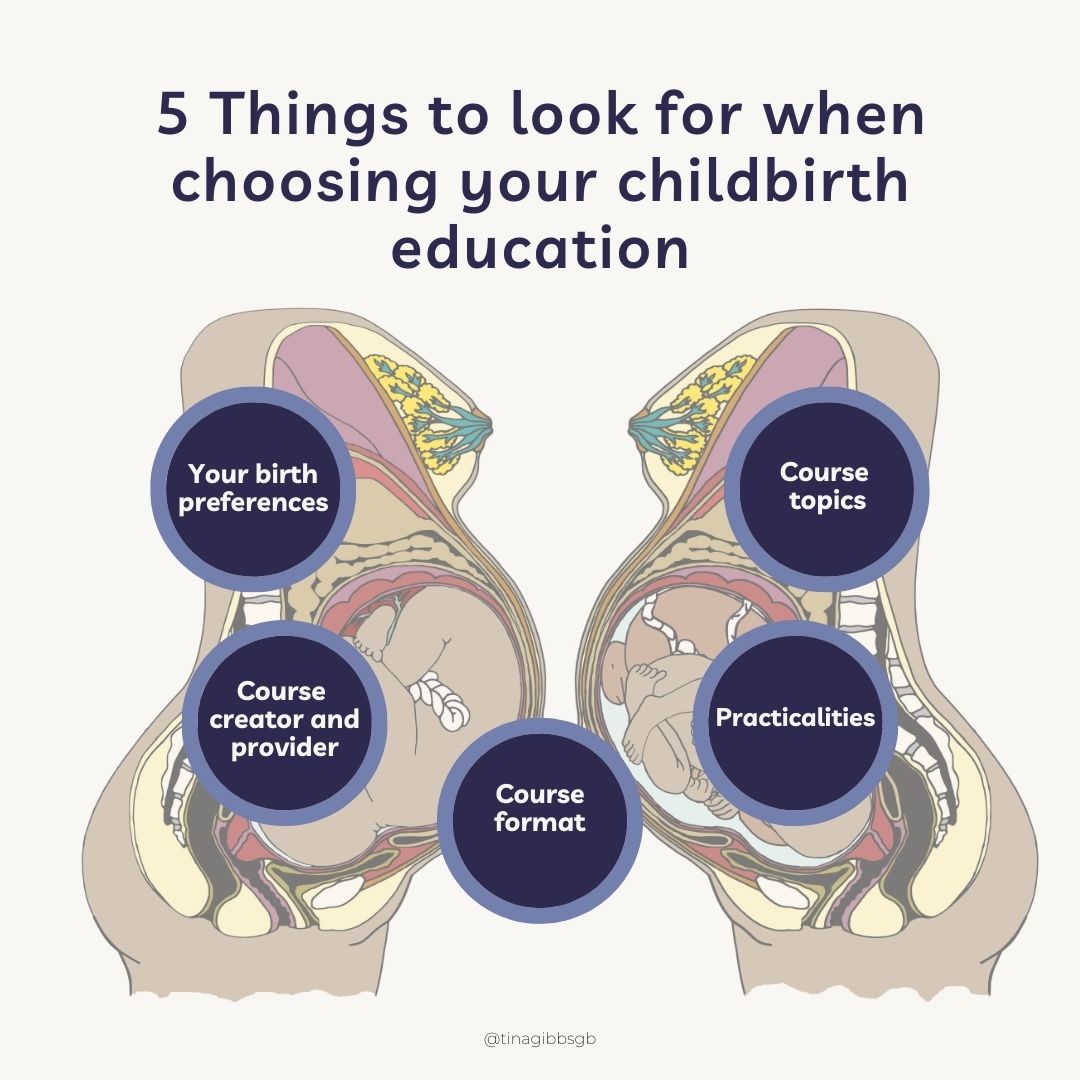
You want to be prepared to for the birth of your baby or babies. Here are 5 Things to look for when choosing your childbirth education!
As the birth of your baby approaches, you may have a lot of questions. What does a contraction wave feel like? How will I know when to call the midwife? What kind of breathing techniques can I use? How do I know when it is time to push?
You may also experience a range of emotions such as excitement, nervousness, stress, and even anxiety. The good news are, you can ease your fears and gain confidence in birthing your child when you prepare for the birth of your child. Choosing the right type of childbirth course for you (and your partner) is crucial. Your childbirth preparation course should give you practical knowledge about the physiology of birth as well as where to find practical and emotional support.
5 Things to look for when choosing your childbirth education
1. Does the course agree with your idea on childbirth?
Whether you are you planning for a vaginal birth, caesarean birth, waterbirth, homebirth, etc… you want to ensure that your chosen childbirth education course supports your wishes and preferences. How you choose to give birth is up to you.
Knowing the general philosophy of the birth course you are considering is essential. The techniques that you’ll be learning should be something that you can see yourself doing and something that you believe in. The techniques should support you to achieve the birth you are aiming for.
2. Which topics are covered during the course?
If this is your first birth experience, your childbirth preparation course should cover everything your need to know about your options and what to expect. If you have given birth before, then you may wish to choose a refresher course for you. You may also wish to prepare the older sibling(s) for the birth of their little brother or sister. Learning the about childbirth may lessen your anxiety and help you make informed choices when birthing your baby. Choosing the wrong type of course for you may increase anxieties, so choose your childbirth course and their leader carefully.
3. Who created the course?
Who created the childbirth preparation course? Are they a medical professional or a teacher? Are they an expert in childbirth education? Check their certifications and experience! You want the person and organisation offering your childbirth preparation course to be established and reputable. Ask them to show you proof of their qualification(s).
4. What format is the course in?
Check the format of the course. You may prefer a course which focuses on the birth only, or one that includes practical baby care. If you are interested in hypnobirthing, does the course include hypnobirthing or maybe you prefer a stand-alone hypnobirthing course.
Are partners also coming to the classes or learn anything during the course or is the course for mothers/birthing folks only? Which format do you prefer?
5. Practical things to consider
- Where and when is the course held? Are the dates, time and venue convenient for you?
- What is your budget? What are your options at your budget?
- For an in-person course
- is there parking available or is it easily accessible via public transport?
- Is the venue clean and spacious?
- What are the chair/seating arrangements like? Do you want/need to bring a birthing ball, cushions etc.?
- Are refreshments included?
- Accessibility of the venue (where needed)
- For an online course
- are you confident in using the platform the course is being offered on?
- is it a live course or has live elements or is it fully self-paced? – for live elements: are they recorded? If not can you make all the sessions?
- Is your internet connection reliable?
- Have you got a pc or laptop to access the course on? This will make your online course a more positive experience.
- Have I got a comfortable (seating) setup where I can join the online childbirth preparation course?
What type/style of childbirth preparation course you choose is entirely up to you! Use your B.R.A.I.N. acronym when choosing the right course for you:

What are the benefits, risks (or repercussion), alternatives (for each option)? Trust your gut, your intuition. And think about how you might feel if you do nothing, i.e. you don’t choose a childbirth preparation course?
If you are looking for a childbirth preparation course (1:1) in Nottinghamshire, check out my offers. I also have a fully self-paced online course for just £35. Including hypnobirthing, mp3s and much, much more!
Online Birth Preparation Course only £35!
Please also check out my online course! No videos, just text and images to learn in your own time. Includes hypnobirthing mp3s, scripts, workbook, handouts, infographics and much more! Lots and lots of information at your fingertips! Includes:
- hypnobirthing mp3s
- hypnobirthing scripts
- written information
- infographics and other imagery
- printable handouts
- printable workbook/journal

