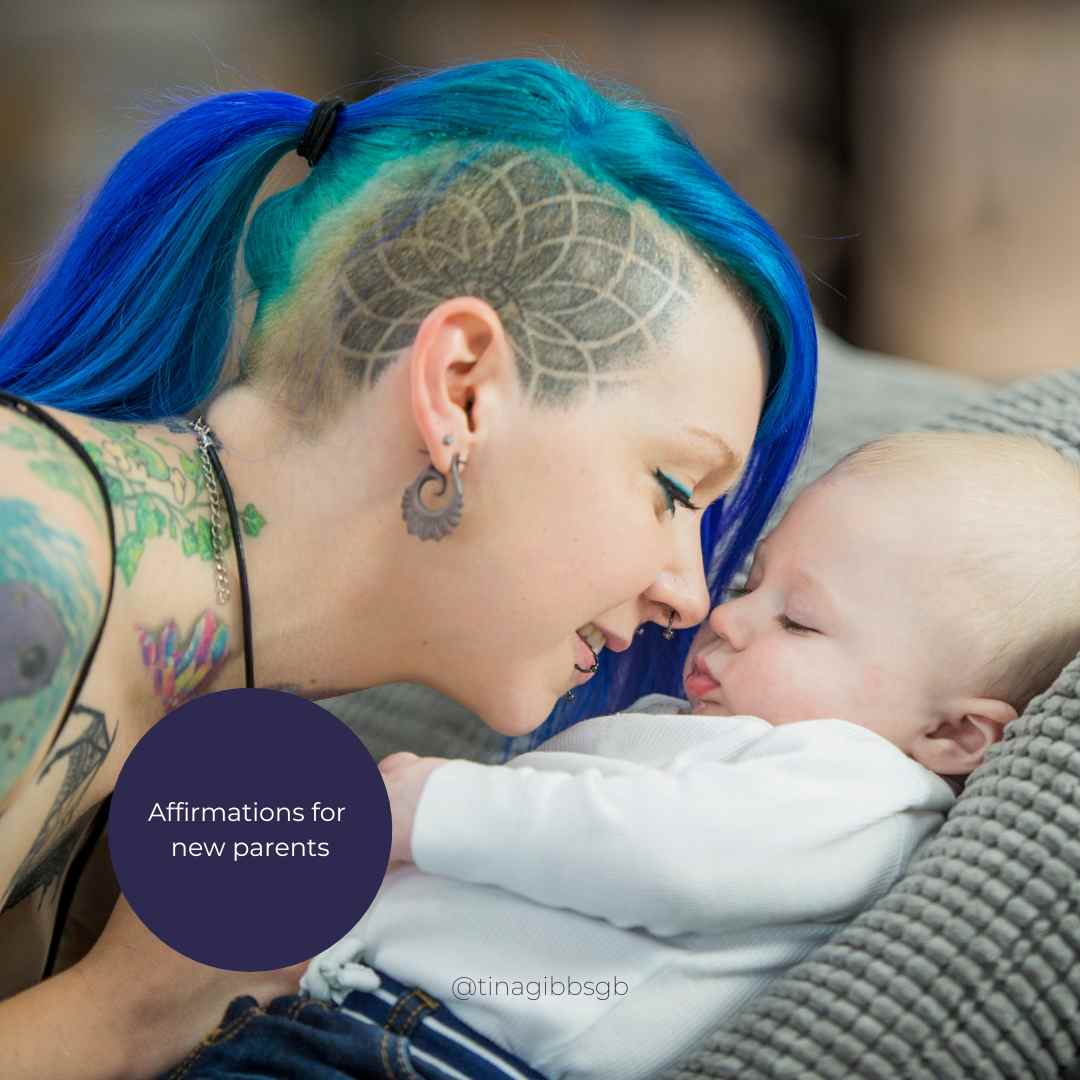
What is the role of the birth partner after the birth of your baby? How can your (birth) partner support you and your baby in the early post-partum period and where can your partner find support for themselves?
Giving birth is a transformative experience for every parent and their immediate support network. After the arrival of your baby, the role of the birth partner becomes even more crucial. In the early postpartum period, there are several ways your partner can support you and your precious little one.
First and foremost, your birth partner can provide emotional support. They can offer words of encouragement, understanding, and reassurance during this beautiful yet challenging time. They can listen to your thoughts and feelings, allowing you to process your emotions and adjust to the changes that come with becoming a parent.
Your partner can also assist with practical tasks. This can include helping with nappy changes, bathing your baby, rocking them or taking them for a walk. By taking on these responsibilities, your partner can allow you some much-needed rest and physical recovery. They can also help maintain a clean and comfortable environment for both you and the baby.
In addition to taking care of you and the baby, the birth partner should also prioritize their own well-being. Caring for a newborn can be overwhelming, and your partner needs to find support for themselves as well. Parents should encourage each other to reach out to friends, family, or support groups to share their experiences and seek advice. You can also seek professional guidance if needed, as many hospitals and clinics offer resources specifically designed to help birth partners navigate their new role.
Remember, this is a time filled with joy, but it can also be challenging. Open communication and mutual support between you and your birth partner are key. Together, you can navigate the joys and challenges of early parenthood and create a strong foundation for your new family unit.
In addition to the above, you may also want to consider hiring a postpartum (postnatal) doula. A doula can support your family in the early postpartum emotionally as well as practically.
If you have any specific questions or concerns about postpartum support, feel free to ask!
What are affirmations? And how can they help new parents?
Affirmations, aka positive affirmations, are phrases that you repeat to yourself over and over again to change your mindset. You can say them out loud our in your head. Receive them as part of treatment with your hypnotherapist or other therapist. Most commonly they help you to change a negative into a positive thought or negative into positive thinking.
Affirmations can help you feel more in control and empowered during your experience as a new parent and also when nursing your new baby!
Affirmations can improve your ability to problem-solve and decision-making while under stress such as sleep deprivation or peer pressure. Making the right decisions for you and your baby enables you to feel empowered while being the good enough parent for your baby.
You can download all my affirmations for new parents for free here.
Here are some videos you can loop if you like for when you are nursing your baby:
Using affirmations can really help new parents to focus on what they can control and let go of what is outside of their control.
Create a bubble of calm, confidence and control. Set aside a few minutes every day to focus on yourself and your bond with your baby. Imagine, that you and your baby are inside a bubble, your safe space. Leave all the daily chores, visitors, etc. outside that bubble. It’s just you and your baby. Focus on your breathing. Use a calm breathing technique which suits you. You can use the moving circle in gif below if you like. For that designated time, it is just you and your baby. In a safe space, focusing on your bond.
Circle of calm, confidence and control – a technique for new parents
Alternatively, you may also focus on your positive parenting affirmations while you are inside your bubble of calm, confidence and control.
Practice your affirmations daily. You’ll feel better for it. Look after yourself and your mental health. Making time for yourself and your baby will strengthen your bond, improve your mental wellbeing and may also improve postpartum healing.
Having a baby means that your time for yourself, for you as a couple and time with friends and family will have to be divided differently. You have to find a new balance which works for you and your family. Both mothers and fathers benefit from bonding with their baby and taking care of themselves. Your family benefits from parents allowing time and space for themselves, as a family together as well as parents as a couple.
Have a look at the images below. Each circle represents an person. The larger ones (grey and blue) are the parents and the smaller one is the baby (lilac). Where the circles overlap is how much time they spend together. There may be very little or no couple time possible unless you get some help such as a postpartum doula or babysitters… One parent may spend more time with the baby than the other. The time where there is no overlap with a person, is the time you’ll have to divide between chores, you-time, work, family and friends, pets, hobbies etc. The process of re-balancing your personal time to a balance that works for you and your family, may take some time. Give it time. Use some time every day with positive affirmations to help you re-balance your time and life.
Sources and further reading
F, H. R., Supriyana, S., & Runjati, R. (2021). Self-Empowerment, Affirmation And Relaxation Training Against Stress Levels And Cortisol Levels In Pregnant Women: Systematic Literature Review. STRADA Jurnal Ilmiah Kesehatan, 10(1), 335–343. https://doi.org/10.30994/sjik.v10i1.636
Sari, R. P., Vivi Silawati and Putri Azzahroh (2022) “The Effectiveness of Positive Affirmations Combination of Face Acupressure and Aromatherapy Against Anxiety in Preoperative Sectio Cesarean Patients At Sentosa Hospital Bogor”, Science Midwifery, 10(3), pp. 2164-2170. doi: 10.35335/midwifery.v10i3.629.
Wiesenfeld, B.M., Brockner, J., Petzall, B., Wolf, R., & Bailey J. (2001). Stress and coping among layoff survivors: A self-affirmation analysis. Anxiety, Stress and Coping: An International Journal, 14, 15–34.
Worthman C.M., Plotsky, P.M., Schechter, D.S., & Cummings, C.A. (editors). (2010). Formative Experiences: The Interaction of Caregiving, Culture, and Developmental Psychobiology. New York: Cambridge Univ. Press
You are planning or have had a Caesarean birth? What to expect for your recovery after Caesarean Birth.
Emotionally How you will feel after a caesarean birth depends on what your expectations on the birth of your baby were as well as on what happened before and during the birth.
The caesarean rate in England is close to 25% (Birth Choice UK, 2011), therefore there is always a chance you may have a caesarean birth. You may feel happy that your baby is finally born but you may feel disappointed that you had a caesarean birth if a vaginal birth is what you were hoping for. If possible, prior to giving birth, try to accept all possibilities for your birth. Births very rarely go exactly as you plan them. Attending an antenatal course will help you to find out more about different options help to prepare you for possible birth outcomes.
Talking over your caesarean birth with a health professional, soon after may help your emotional recovery. You should get a chance to talk to your midwife or obstetrician before you leave the hospital.
If you do not get the chance to talk to any health professional prior to leaving the hospital arrange an appointment as soon as possible. You may then be able to discuss how the caesarean may affect future pregnancies.
Physically The physical recovery after caesarean birth usually takes about 6 weeks. You will not be insured to drive a car for 6 weeks after your caesarean. However, if you do feel ready to drive, talk to your insurance company, they may insure you if your GP has signed you off. A caesarean is a major operation and you will experience some pain and discomfort. Even when laughing, coughing or other small movements will make your scar hurt. Supporting your wound with your hands or a pillow will help.
Tips to aid your recovery and ease discomfort
Drink plenty and eat and drink as soon as you feel hungry or thirsty. Eat foods that are high on fibre to help prevent constipation.
Keep your wound clean by washing and drying it daily. You can use a freshly washed flannel to clean your wound. If you do use soap make sure you rinse the wound thoroughly. To dry, pad rather than rub the wound with a clean towel. Change your towel and flannel daily.
Go to the loo hourly to reduce pressure from your bladder on scar.
Wear loose clothes and soft cotton underwear. Your knickers should be one or two sizes bigger or wear a pair of your partner’s There are special knickers which fit over your scar.
Tell your midwife if you notice any signs of infection of the scar, e.g. redness, extra soreness or discharge. Also tell your midwife if you are having a temperature.
You will be encouraged to start exercising gently the day after your operation to help speed up your recovery. You may be able to see a physiotherapist but should at least be given a leaflet by your midwife. Take it slowly and do not start any more strenuous exercise until at least 10 weeks after the operation.
Pain relief There will be pain relief available in hospital and your doctor will give you something to take at home, too. Depending on how much pain you are in, the options may vary. Most pain killers are safe to take when breastfeeding. Please discuss your options with your midwife, obstetrician or other health professional.
Scar – if you would like to know what your scar will / should look like please visit the Caesarean Birth and VBAC Information. In the menu on the left hand side there is a link to Caesarean scar pictures. Caesarean Birth and VBAC Information has a wealth of information on Caesarean Birth, recovery as well as VBAC (vaginal birth after caesarean).
Breastfeeding You can start breastfeeding straight after the caesarean. Additional skin-to-skin as well as extra support may help. Because of the wound, breastfeeding can be more challenging during the early days. Please ask for help when needed. Most pain relief is safe to use when breastfeeding. Please mention that you are breastfeeding to your health professional.
Future pregnancies If you have your baby by Caesarean it does not necessarily mean that you will have to have your subsequent babies by Caesarean. You can discuss future pregnancies with your GP and whether or not you will have another Caesarean will depend on
risks and benefits of caesarean for you and your baby
your personal preferences and priorities
However, if the reason for your first caesarean was a condition that will not change for future pregnancies e.g. shape of your pelvis / birth canal, it is very likely that a caesarean will be necessary for all births.
Online course including Caesarean Info
Please also check out my online course! No videos, just text and images to learn in your own time. Includes hypnobirthing mp3s, scripts, workbook, handouts, infographics and much more! Lots and lots of information at your fingertips! Includes:
Fun and games, such as escape rooms (digital downloads): visit my Etsy store.
Physical items, such as posters, banners, cards and models:stay right here!
Shipping: I currently ship physical items within the UK only. Delivery is free 2nd class (or similar courier timings), and faster shipping is available at an extra cost.