Posted on Leave a comment

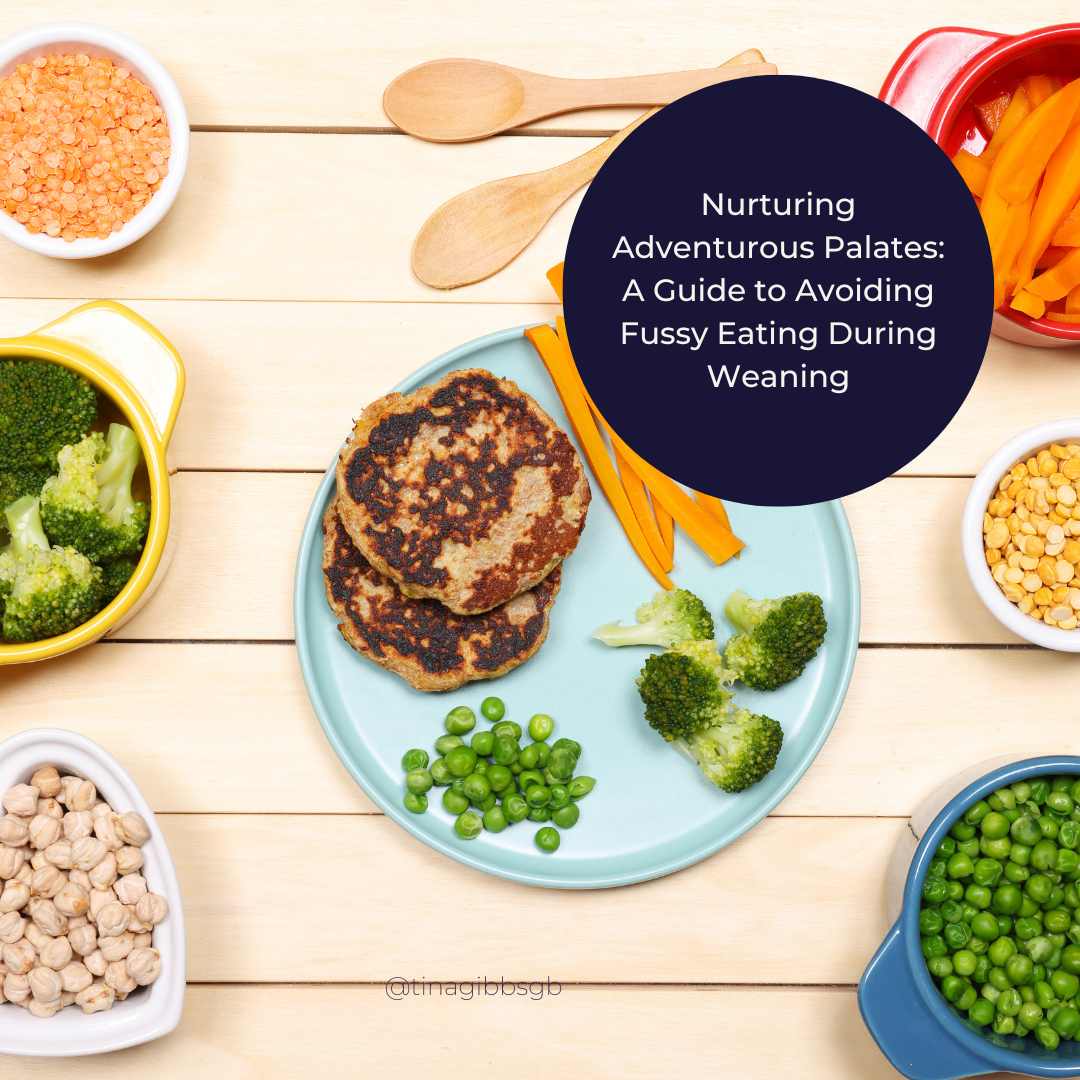
Nurturing Adventurous Palates: A Guide to Avoiding Fussy Eating During Weaning

Avoiding Fussy Eating During Weaning


Avoiding Fussy Eating During Weaning. Embarking on the journey of introducing solids to your baby is an exciting milestone, but it can also be a challenging one, especially if you’re concerned about the possibility of raising a fussy eater. The good news is that with a thoughtful approach and some key strategies, you can lay the foundation for a lifetime of healthy eating habits. In this blog post, we’ll explore tips and advice on how to avoid creating a fussy eater during the weaning process, drawing insights from reputable sources such as the First Steps Nutrition Trust and NHS UK.

  1. Early Exposure to Variety

Research consistently shows that early exposure to a variety of flavours can positively impact a child’s acceptance of different foods. The First Steps Nutrition Trust emphasizes the importance of introducing a wide range of tastes, textures, and food groups during the weaning period.

  1. Consistent Routine

Establishing a consistent routine for meals and snacks can help create a sense of predictability for your baby. According to NHS UK, having regular mealtimes promotes a structured approach to eating. Avoiding distractions, such as television or electronic devices, during meals can also contribute to a positive eating environment.

  1. Lead by Example

Children often mimic the eating behaviors of those around them. Set a positive example by enjoying a diverse and balanced diet yourself. Eat while your baby/toddler eats. Let them see you eat. Family meals can be a great opportunity to showcase a variety of foods and make eating a social, enjoyable experience.

  1. Patience and Persistence

It’s normal for babies to initially reject some foods. First Steps Nutrition Trust advises parents to be patient and persistent, offering the same food multiple times in different ways. Repetition is key, and research indicates that it can take up to 15 tries for a baby to accept a new food.

  1. Avoiding Pressure and Power Struggles

Pressuring a child to eat or using food as a reward can contribute to fussy eating habits. NHS UK recommends avoiding power struggles and letting your baby decide how much to eat. Trust their appetite and respect their signals of fullness.

  1. Gradual Texture Progression

Introduce textures gradually, moving from soft finger foods (baton shapes are best at 6 months of age) to gradually harder finger foods and smaller pieces. This progression helps develop oral motor skills and encourages exploration. First Steps Nutrition Trust emphasizes the importance of incorporating a variety of textures to enhance sensory experiences.

  1. Be Mindful of Portion Sizes

Understanding appropriate portion sizes for your baby’s age and developmental stage is crucial. NHS UK provides guidelines on portion sizes for different age groups, helping you ensure that your baby receives the right amount of nutrients without overwhelming them.

Remember, your baby’s main nutrition still comes from their milk (breastmilk or formula or a combination).

While introducing solid foods is an exciting milestone, it is important to remember that their primary source of nutrition will still come from breastmilk or formula. These provide essential vitamins, minerals, and antibodies (breastmilk only) that support your baby’s growth and development.

Breastmilk is often referred to as “liquid gold” for its numerous benefits. It not only provides the perfect balance of nutrients for your baby, but it also contains antibodies that help fight off infections and boost their immune system. Breastfeeding also promotes a strong bond between you and your baby.

Alternatively, if you are using formula, rest assured that it is designed to meet your baby’s nutritional needs. Formula provides the necessary nutrients for their growth and development, and it is an excellent substitute for breastmilk if you are unable to breastfeed or choose not to.

It is important to remember that solid foods from the age of six months should complement, not replace, their milk intake.

Your baby will adjust their milk intake automatically as they start eating more solid foods.

By incorporating these tips and strategies into your weaning journey, you can set the stage for a positive relationship between your child and food. These can help with avoiding fussy eating during weaning. Remember that every baby is unique, and it’s essential to be flexible and responsive to their cues. Drawing on the advice from trusted sources like the First Steps Nutrition Trust and NHS UK can provide valuable guidance as you navigate the exciting and sometimes challenging world of introducing solids to your little one.

Posted on Leave a comment

Baby-Led Weaning explained

Starting Solids (Weaning) Workshop, Nottinghamshire

As you may know, I am running private starting solids sessions (weaning) in Scarrington, Nottinghamshire. The starting solids (weaning) workshop explores different ways you can wean your baby including baby-led weaning.

What is baby-led weaning?

Baby-led weaning, also known as BLW, is a method of introducing solid foods to your baby. BLW allows your baby to be in control of their eating experience from the very beginning. Instead of relying solely on purees and spoon-feeding, BLW encourages your baby to self-feed and explore a wide variety of age-appropriate foods, tastes and textures.

The concept behind baby-led weaning is quite simple yet revolutionary. It promotes the idea that babies are capable of feeding themselves and have an innate ability to know how much and what they need to eat. With BLW, there’s no need to spend countless hours pureeing fruits and vegetables or worrying about the perfect consistency of mashed food. Instead, parents can offer their little ones soft, easily graspable finger foods that they can explore, touch, and taste on their own.

By adopting baby-led weaning, parents can increase a positive relationship with food for their children right from the start. It allows babies to develop their motor skills by practicing the pinching and grasping movements needed to pick up food. It also encourages them to explore different textures, tastes, and smells, which can help expand their palate and reduce picky eating habits later in life.

One of the many benefits of baby-led weaning is that it promotes self-regulation and helps babies develop a sense of satisfaction. Since they are in control of how much they eat, they can learn to recognize their own hunger and fullness cues, leading to a healthier relationship with food as they grow older.

It is important to note that baby-led weaning does not mean entirely abandoning purees or spoon-feeding. It can be a complementary approach, with babies being offered a combination of finger foods and purees as they navigate their journey to solid foods. The key is to offer a wide range of nutritious foods, while also embracing the mess and allowing babies to explore and enjoy their meals at their own pace.

In summary, BLW is a method that empowers babies to take an active role in their eating experience. It promotes independence, motor skill development, and a positive relationship with food. Whether you choose to embrace it fully or incorporate elements of it alongside traditional feeding methods, baby-led weaning can be a wonderful way to introduce solids to your little one.

Starting Solids (Weaning) Workshop, Nottinghamshire. Baby-led weaning, Puree weaning

Sources and further reading:

  • Brown, A., Jones, S.W. and Rowan, H., 2017. Baby-led weaning: the evidence to date. Current nutrition reports6, pp.148-156.
  • Cameron, S.L., Heath, A.L.M. and Taylor, R.W., 2012. How feasible is baby-led weaning as an approach to infant feeding? A review of the evidence. Nutrients4(11), pp.1575-1609.
  • D’Auria, E., Bergamini, M., Staiano, A., Banderali, G., Pendezza, E., Penagini, F., Zuccotti, G.V. and Peroni, D.G., 2018. Baby-led weaning: what a systematic review of the literature adds on. Italian journal of pediatrics44(1), pp.1-11.
  • First Steps Nutrition Trust: https://www.firststepsnutrition.org/eating-well-infants-new-mums
Posted on

Baby Weaning – signs of readiness

starting solids baby weaning

Baby Weaning or starting solid foods with your baby. How do you know when, how and where to start? Where can we find some tried and tested recipes? Are we exploring baby-led-weaning (BLW) or are we starting our baby on purees first? So many questions new parents have with regards of weaning their baby.

The current recommendation (at the time of writing) is to start weaning your baby around 6 months of age.

Baby Weaning – Signs of readiness

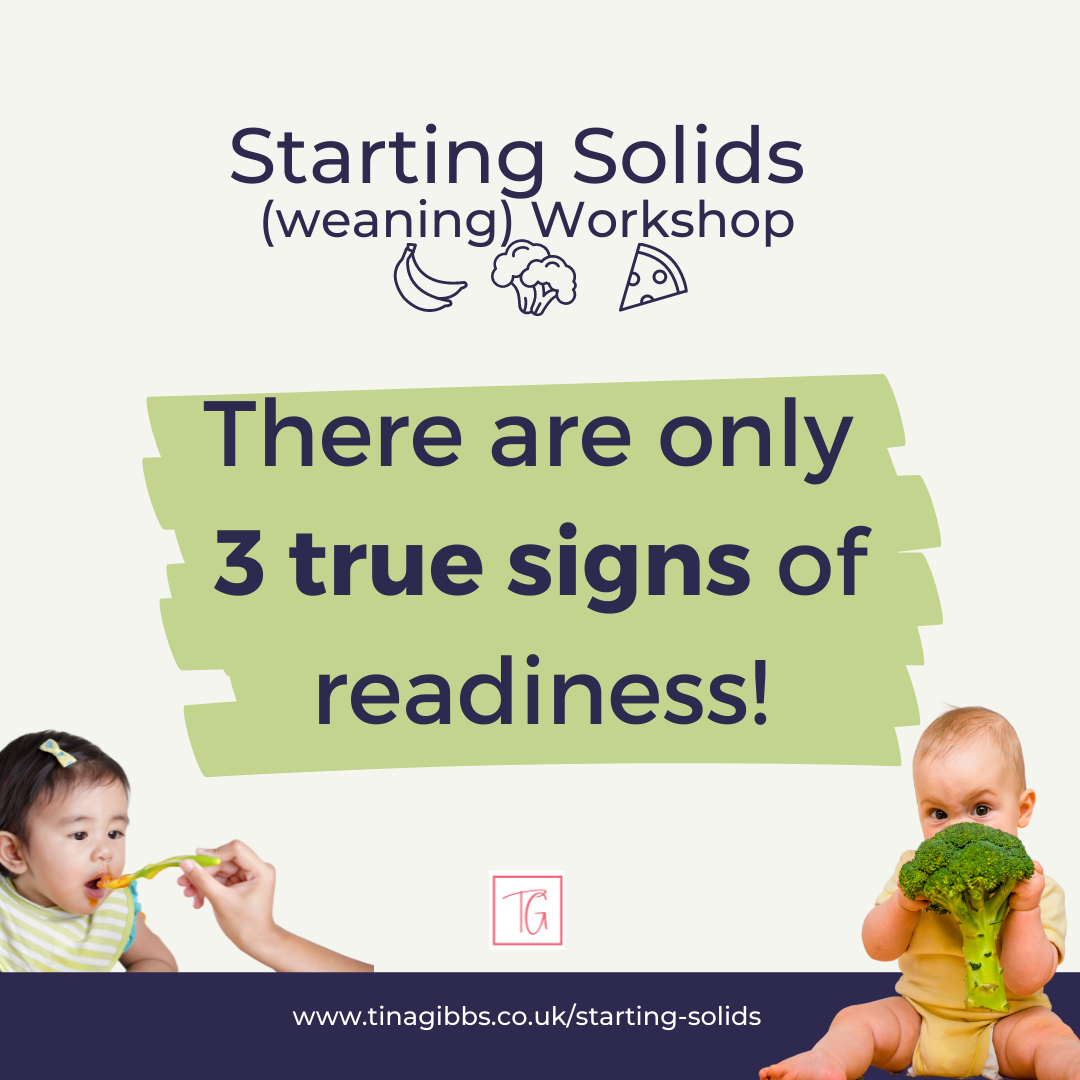
There are (only) three true signs of readiness

Your baby…

  1. can sit up unaided and hold their head steady.
  2. puts things to their mouth accurately
  3. has lost their tongue thrust reflex and can swallow

The golden rules – How to start

When introducing solid foods to your baby and during their first year of life follow these golden rules:

  • Offer simple and unprocessed foods – Make the main part of the meal of simple and unprocessed foods.
  • Offer natural foods – Your child needs to see & touch their food so that they can
  • connect food tastes with how things look and feel – this enables them to learn how to choose foods for themselves.
  • Let your baby get involved in the eating experience – Make eating a pleasurable, calm and relaxed experience. Eat together with your baby. Starting solid foods is not just nutrition it is learning and play, too!
  • Avoid ultra-processed foods – If there are too many ingredients on the label (5+) avoid giving it to your little one!

Baby-Led Weaning or Purees?

Start introducing solids at about 6 months of age alongside breastmilk or infant formula. Your baby’s milk will still be the main source of energy and nutrients for your baby.

Whether to start off with purees, finger foods or a combination pretty much depends on your baby, your personal preferences and your life style.

Some babies will happily start off with finger and mashed foods, and may move on swiftly to a range of tastes and textures. However, other babies may progress
more slowly and start off eating smooth foods off a spoon. When spoon-feeding, offer foods they can hold themselves alongside, to encourage your baby to move on to mashed and finger foods.

  • Smooth foods have no big lumps, pips, seeds or skin.
  • Mashed foods are raw or cooked foods mashed to a slightly lumpy consistency.
  • Finger foods are raw or cooked foods shaped/cut into batons. It is best to cut them bigger than a baby’s hand, so that your baby can hold them more easily. Use your (adult) finger as a sizing guide.

Always pay attention to your baby when they are eating. Never leave them alone.

Finger foods – tips for parents
  • Remove any pips, stones or stringy bits
  • Cut foods such as grapes, blueberries in half or quarters
  • Avoid nuts, popcorn and any hard-ish chunks of food
  • Stay with you baby when they are eating
  • Start off with soft and cooked foods such as vegetables and fruit
  • Wash your raw foods thoroughly

Learn more about weaning your baby

If you’d like to learn more about weaning your baby, book a starting solids (weaning) workshop with me! I offer the workshop in different formats:

1:1 (up to two adults with their baby/babies) or group (up to 8 adults with their babies). You can book these in-person to be held in Scarrington, Nottinghamshire at my home or I can travel to your home with a 10-mile radius of Scarrington/Bingham. Alternatively, I also offer a online live video course option.

In addition to the traditional starting solids workshop, I also offer a live online cook-along version. This is available online and as a 1:1 format only.