
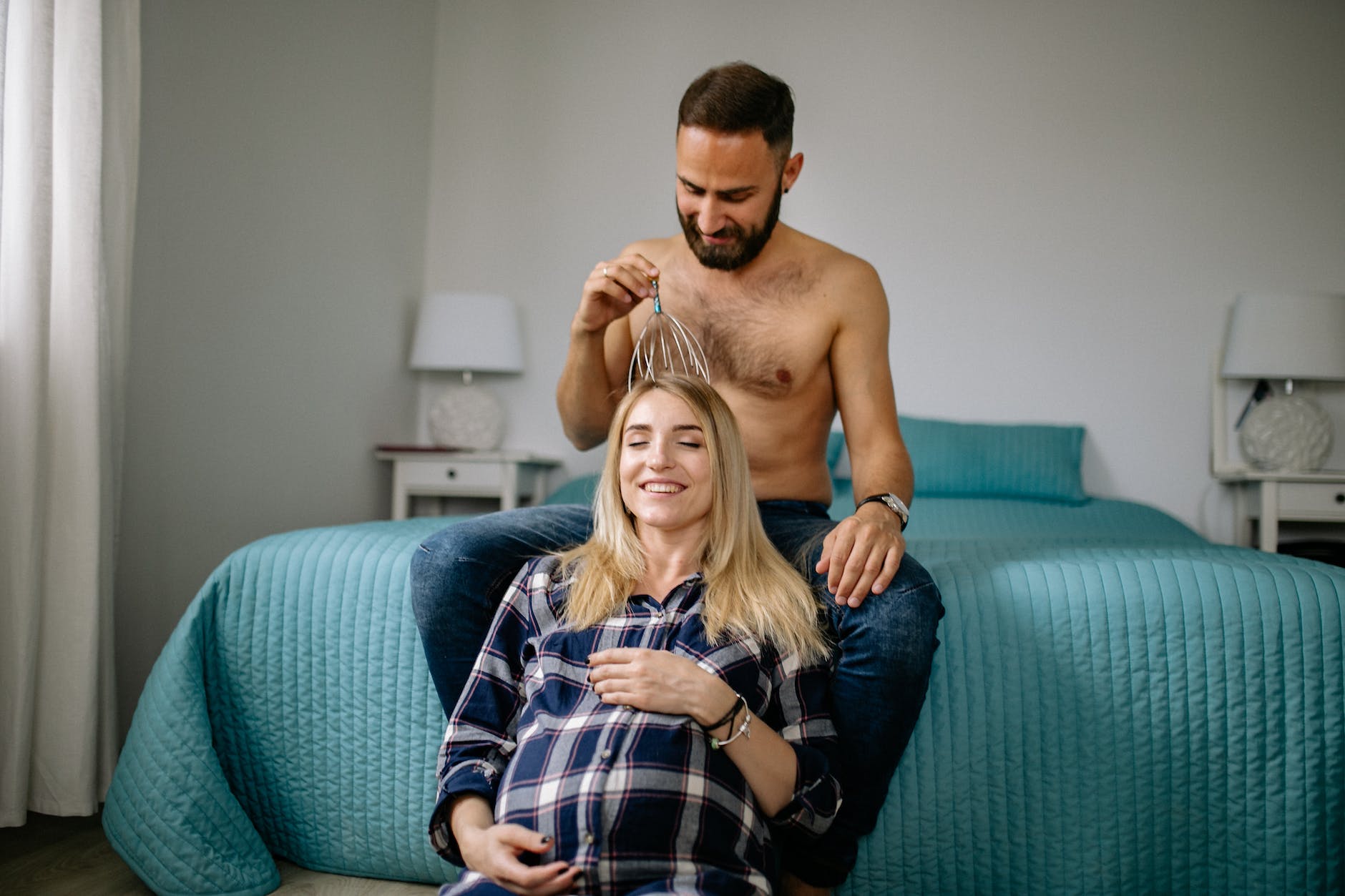
Massage during labour and birth: what is it, and why might it help?
Massage involves one person using touch to work on another person’s soft tissues. It’s often used to ease tense muscles and can help people relax.
Different massage techniques suit different people during labour. Some find firm, intense massage over the lower back most helpful, while others find light effleurage[1] or soothing strokes more relaxing.
You can practise massage techniques during pregnancy, which helps you relax now, too! My self-paced online childbirth preparation course includes simple techniques to try. If you’re a birth worker, my Childbirth Massage Techniques flashcards are a great way to teach them in your classes.

Research suggests several ways massage may help during childbirth:
- It may lower stress hormones and increase levels of serotonin[2] and dopamine[3] in the brain.
- Gentle, non-painful massage may flood the body with pleasant sensations, so the brain notices painful sensations less.
- Deep, intense massage may work through a mechanism called Diffuse Noxious Inhibitory Control: it stimulates the brain to release endorphins, the body’s own painkillers, which help you feel less pain from contractions.

Things to bear in mind when using massage during labour and birth:
- Aromatherapy: essential oils are powerful and can interfere with contractions if used incorrectly. Before buying or using them, speak to an accredited aromatherapist and your healthcare professional, and always dilute them. Your midwife may be trained in aromatherapy and able to advise you directly.
- Communication: say whether the massage is helping and how it could be better – firmer, lighter and so on.
- Continuous touch: always keep at least one hand on the person’s body during the massage.
- Oils: massage can feel more soothing with an unscented oil, such as organic cold-pressed sunflower oil. Don’t use oils on broken skin.
- One-handed massage: if you’re using one hand, rest the other on their body so they know they have your full attention and where your other hand is.
- Positions: the person being massaged may be kneeling, sitting, lying on their side or standing – and the birth partner needs to be comfortable too.
- Previous injuries: don’t massage areas affected by previous injuries without checking with a healthcare professional first.
- Timing: some people like massage during contractions; others prefer it in between.
Further reading and sources:
- Bastard, Janet & Tiran, Denise. (2009). Reprint of: Aromatherapy and massage for antenatal anxiety: Its effect on the fetus. Complementary therapies in clinical practice. 15. 230-3. 10.1016/j.ctcp.2009.06.010.
- Evidence Based Birth. Massage for Pain Relief during labor by Rebecca Dekker (2018). Available at: https://evidencebasedbirth.com/massage-for-pain-relief-during-labor/ Accessed 10th June 2019.
- Positive Health. Massage Techniques for Childbirth by Linda Kimber (1999). Available at: http://www.positivehealth.com/article/childbirth/massage-techniques-for-childbirth Accessed 10th June 2019.
- Smith, Caroline & Levett, Kate & Collins, Carmel & Jones, Leanne. (2012). Massage, reflexology and other manual methods for pain management in labour. Cochrane database of systematic reviews (Online). 2. CD009290. 10.1002/14651858.CD009290.pub2.
- Vital Touch. Step by Step Guide to Pregnancy and Labour Massage. Available from: https://vitaltouch.com/product/step-by-step-guide-to-pregnancy-massage/
[1] Effleurage: a form of massage using repeated, gentle circular strokes with the palm of the hand.
[2] Serotonin: a chemical messenger (neurotransmitter) that helps regulate mood.
[3] Dopamine: a chemical messenger (neurotransmitter) linked to pleasure and reward, and a precursor of adrenaline.