Understanding induction of labour
It was a Tuesday evening class — the kind where everyone comes in with a mix of excitement, nerves, and a few birth horror stories whispered over a cuppa.
I was halfway through setting up when one of the parents asked, almost in a whisper,
“Can we talk about induction tonight? My midwife mentioned it… and honestly, I’m a bit scared.”
I could feel that question ripple through the group — nods, quiet agreement, and the sort of attentive silence that means everyone wants to know too.
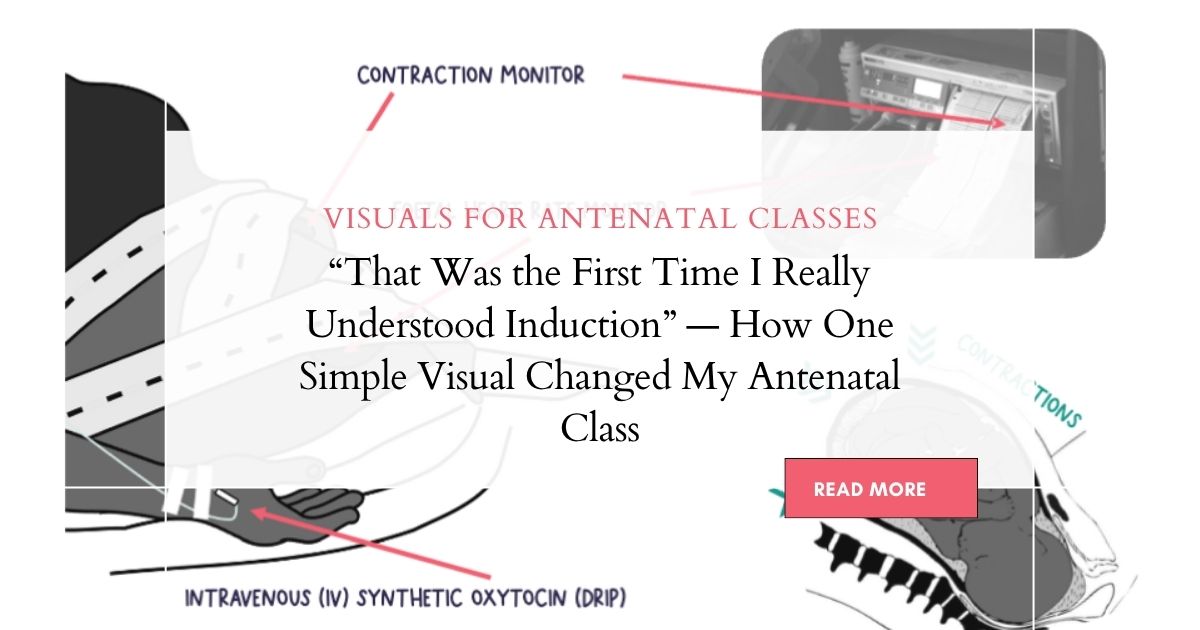
So I pulled out my Induction of Labour Poster Set.
Eight visuals, each one showing a different method of induction and augmentation — from the sweep to the hormone drip. I pinned them up, and suddenly the room changed. The tension eased. People started asking, “Wait, that’s different from breaking waters?” or “So it doesn’t always mean straight to the drip?”
By the end of the session, one dad-to-be smiled and said,
“That was the first time I’ve actually understood how it all works.”
And that’s when I realised — these visuals weren’t just pretty teaching aids. They were conversation starters, confidence builders, and clarity-makers.
Why Birth Educators Need Visual Tools
Whether you’re a childbirth educator in the UK, a doula in the US, or a midwife in Australia, we all face the same challenge:
explaining medical processes in a way that empowers rather than intimidates.
Induction of labour can be one of the most emotionally charged topics for expectant parents. They’ve heard stories, read online debates, and sometimes carry fears about losing control or being “told” what to do.
That’s where visual learning makes all the difference.
When clients can see the options — how each method works, what it involves, and when it might be used — the conversation shifts from uncertainty to understanding.
These posters give parents a chance to say, “I didn’t know there were choices,” or “Now I get what my midwife meant.”
And that’s exactly what we want as educators: informed, calm, confident families making decisions that feel right for them.
What’s Inside the Induction of Labour Poster Set
This digital birth education resource includes:
- 8 illustrated posters explaining different methods of induction and augmentation
- Sizes: US Letter, A4, A3, and A2 (perfect for printing in any country)
- PDF format – easy to print, share, or display digitally
- No watermark – just clean, ready-to-teach visuals
- Editable (text only) PowerPoint and Google Slides versions
Each poster combines calm, clear imagery with gentle, accessible language — ideal for antenatal classes, doula consultations, hospital teaching rooms, or online workshops.
Creative Ways to Use These Posters
1. Antenatal Class Display:
Hang the posters around the room before class begins. Invite participants to walk around, read, and note any questions. It’s a brilliant icebreaker that sparks discussion from the start.
2. Visual Learning Stations:
Divide the posters into “stations.” Let small groups rotate between them, jotting down what they know, what surprises them, or what they’d like to ask. Then bring everyone back together for a guided conversation.
3. 1:1 Doula Sessions:
Print the posters smaller (two per A4 sheet) and bind them into a mini flipbook for client consultations. It’s a tactile, personal way to explore options in a comfortable, non-medical setting.
4. Virtual Teaching:
Share the PDF slides on your video-call or teaching platform. The clear visuals hold attention beautifully online.
5. Clinic or Birth Centre Displays:
Add them to your waiting area or classroom wall — they instantly make the space feel calm, professional, and welcoming.
Why Birth Workers Love This Set
- It’s inclusive and beautifully designed, using calm tones and gentle language.
- It encourages informed discussions and supports birth without fear.
- It’s ready to print and use immediately — no design work needed.
- And it fits seamlessly into your existing teaching toolkit, no matter your setting or country.
Whether you teach in a community hall, hospital room, or your living room, these posters add professionalism and warmth to your teaching space.
Bring Calm and Confidence to Your Next Class
Birth education isn’t just about information — it’s about transformation.
It’s that moment when your clients’ eyes light up with understanding, when they move from anxious to assured.
These Induction of Labour/Labor Posters are designed to help you create more of those moments – where information clicks, choices make sense, and families feel prepared for every possibility.
If you’re ready to bring clarity, calm, and confidence to your teaching…
Download the Induction of Labour Poster Set today and watch your classes come alive.
Further reading for educators:
NHS, Inducing labour (accessed November 2026)
NICE, Inducing labour (NG207) (accessed November 2026)
Please note: this content is for educational and information purposes only. It is not medical advice and is not a replacement for advice from your midwife or doctor. Always seek advice from your healthcare professional.